Pictogram
Tree 101
Can anyone help identify this tree? I think it is a weed tree, but only guessing this because of its preponderance at the flanks of a highway overpass and the visual yuck factor. Its bark is yellow-green -no leaves just yet. The largest one I saw was about 15 feet tall.
Bark
Form
Three in one image.
If its a weed, the next time we are moving a trail, I can suggest that we don't need to replant them, as had been the case on our last outing. As it turns out, expertise in native and non-native plants its pretty useful on trail projects.
Trans Plant
This was its old spot in the side yard. I raked, cleaned out the garbage and will now leave it to the Norway maple seedlings that love this spot under the yew tree. The hydrangea moved to an oak/laurel forested yard in Stony Brook, LI. It's a perfect fit, and I hope it survives its second major transplant in 8 years. Also, I hope it flowers in its new home because, although it flowered profusely in its first home, these two transplants have never flowered for me. Everyone suspects the soil, although everything else flowers just fine.
Do save plants from the bulldozer, if for nothing else than the satisfaction of getting an enormous, well-established specimen for only your labor. This vine/shrub, Hydrangea anomala subsp. petiolaris, would probably sell for over one hundred dollars retail at this size.
One Weird Tomato
Planting The Leftovers
The broccoli, leeks, and parsley
Popped out of the box pretty easily
And into the ground they went
And a new fabric tent was built
Because the wind was blowing
And the worms were present
On a neighbor's overwintered cabbages.
The broccoli planted three weeks ago
Hasn't grown an inch, nor the leeks or chard.
The soil is dry, despite the day's rain
And the Fed hasn't turned the water on.
Large
Opinions Of The Times
Maybe the only truth in that article is that the problems with invasive species in North America (or anywhere else) are irreversible. Yet I tire of people anthropomorphising the plants and flipping the topic to anti-immigration fanatics. This kind of talk reminds me of Republican political tactics; the way they skew a socioeconomic issue towards some religious-cultural one in order to pick up support and redirect people's frustration.
I do not know one person who believes that invasive plants are a problem who also happens to spew anti-immigrant hate. In fact, those I know tend to be hyper-conscientious. So this old saw, first offered by Michael Pollan, is really weak. Sensitive people get it -there are language parallels between anti-immigration and anti-invasive. So what? You are either saying people who support dealing with invasive plants are anti-immigrant or you're saying we're not. Enough of the "just sayin."
We should never confuse human culture or ethnicity with differentiated species. When human beings emigrate to the United States, do they not live amongst human beings? Is the author suggesting that different cultures and ethnicities have different eco-systems? When we deal with alien plant species, we are talking about a plant within a community of hundreds or thousands or more of species in a single biological system. Please do not insult us so much -does the author imagine that the reader is so limited that they cannot see ethnic diversity as a plurality of cultures, not a plurality of species which have very specific inter-relations with each other? Yes, cultures may have specific inter-relations with eachother, but in the end we all eat, sleep, and screw.
I know of no one who requires natives only, with the possible exception of government roadside or trail side contracts. And while we celebrate the nation of immigrants from which most of us descend, let us consider whether those folks who speak of the strength and virtue of said "immigrant" plants, also feel superior to those who were less successful when they found themselves up against our manifest destiny of industry and guile.
If you do not care about invasive plants, just say you don't care. If you cannot part with an invasive species in your garden, just say you're never going to pull out those plants. But please, stop avoiding responsibility and justifying your own indifference by throwing epithets around.
My Labor Where My Mouth Is
Early morning, vernal pool, High Rock Park.
With a skin of ice.
The vernal pools are formed in depressions matted with a forest's worth of leaves.
But my inclination, a gardener's inclination, is to do those very things. My thinking had completely changed the way I see the direction of future parks, to the point where I had actually proposed to The National Park Service a park in the form of a farm. Of course, as far as I could tell, they had no idea what I was talking about, and acted as if I never sent them that 8 page proposal.
So I needed a more conventional way of working with nature in our parks, but at the same time, I had rejected the idea of working for Parks or any of the various alliances that service them. Enter the New York New Jersey Trail Conference. What's that? From their website:
"The Trail Conference is a nonprofit organization with a membership of 10,000 individuals and 100 clubs that have a combined membership of over 100,000 active, outdoor-loving people."
What do they do? In short, they create, map, and maintain hiking trails in New York and New Jersey. I own their maps, which are the best, printed indelibly on Tyvek. As it happens, they are organizing more actively in New York City these days. Just think about all the trails in all the parks we have between the five boroughs. The NYNJTC has trail building expertise, they have standards for blazing (trail marking), they can organize labor to get things done in ways Parks cannot always seem to manage. I like a small organization.
Volunteers discuss what was learned on the trail.
I love beech trees as they hold onto their ghostly leaves throughout winter.
A larger vernal pool, filled enough to be draining over the roadway on which I stood.
Plum Island
I learned from Pruned that a Long Island haunt of mine, only seen from afar, and painted too, is now up for sale by our federal government. If you travel to the far end of the north fork of Long Island, park at the ferry terminal, and walk another quarter mile or so, you will find yourself on a spit of land that points to Plum Island.
I imagine it was beach plums that aroused its nomenclature, but in the end this plum in the sound was only known for housing the Plum Island Animal Disease Center, a research facility that stored many of the most notorious animal diseases of the world. Despite the lot of negative press in the last twenty years, I did not realize it had been shut down. The promotional documentation looks beyond that recent history, making the island look like a charm.
I haven't been to that very tip in some time, but it's worth a drive or even bike ride in good weather. On the way, you can hit some of the north fork nurseries, stop at a farm stand or wineries. And after a few tastings, you can entertain making an offer on our notorious, yet charmed, island.
Upcoming Freebies
Thanks to Chris at Flatbush Gardener. Check out his list of upcoming gardening events. I'm curious about the plant swap, as I have held a couple of plant giveaways myself. So many spreading perennials, so little space.
I want to add to this list that you can (apparently -I haven't yet) pick up free wood chips at Greenwood Cemetery. Just bring containers and a shovel. I plan to do so for the beach farm soon.
It's April, Fool
Finally we're receiving some rain (radioactive as it may be), because, believe it or not, I've seen things drying out a bit -at least at the surface where the young'ns roots are. The beach farm broccoli and peas and leeks are just sitting there wondering why NYC weather is acting all average, all normal, instead of heating up nice and fast like we've been getting used to over the years. On the other hand, the freezing temperatures we've been having at night (although that's largely over) never did in any of my tender starts like it seemed sure would if it were November.
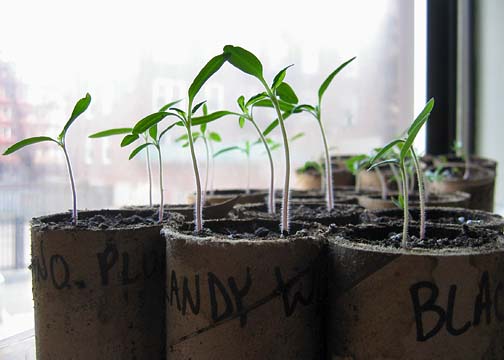
Of course, it's not November, it's about April and the sun is quite a bit stronger now, leaving much heat in the objects and ground around the plants to radiate all night. Speaking of the sun, you should see what it has been doing to my tomato starts. You should see them, but you can't because I haven't photographed them. They are cookin on our kitchen window seed starting shelf, and I mean that in the fast-growing sense. I cannot imagine raising them in their paper tubes for another month and a half -what, will I need to put tomato cages around them?!
I've recently taken up a new activity -one I've thought about for quite some time and finally signed-up. I'll report on it later, but I will say that it has to do with landscape, parks and hiking, and you can do it too.
Feathers Of A Bird
As I sit here I'm hearing the birds go spring crazy in the trees just outside the window. I opened it. I feel as if I am somewhere else. It's awfully quiet outside beyond those birds. Where is NY this evening?
Check out this website: The Feather Atlas
Could you cut this pork from the federal budget? I couldn't.
Undercover Sludge
"Synagro works with commercial and community partners to design and execute smart, efficient and integrated solutions to their unique waste capture and conversion needs. Our extraordinary team of technical and regulatory experts leads the field in pioneering systems that redirect the byproducts of civic and industrial growth into compelling new modes for achieving sustainable balance"
Characters in this past episode had at least two times made mention of Synagro's product, the 'new mode,' and that they use it at home on trees and plants and wouldn't you know it -the plants love it. What is their product? They make 'compost' out of the solid residues found at the bottom of municipal and industrial wastewater treatment facilities.
We already know that this product is used to fertilize farm fields in the United States and probably abroad as well. But what it leads me to wonder is just this: If we are already eating food grown with a composted "everything that gets dumped down a residential toilet, sink, industrial catch basin, and institutional trough," then why are we unwilling to use composting toilets at home and spread the wealth on our own gardens?
At least we could control much of what's in it.
Pharaoh Won't Read Your Emails
On Friday I went to a program at Cooper Union marking the 100th anniversary of the Triangle Shirtwaist Factory Fire. My wife, Betsy, gave the opening remarks, as she works at CU and happens to be the president of the staff union. The program lasted three hours, a little long, but had a handful of outstanding moments.
My maternal grandmother and all her sisters were teenage seamstresses in this NYC, only one generation removed from the brave young women who went on strike, who took regular beatings from police, thugs, even prostitutes hired by the owners. Despite their struggle, Triangle was never unionized, and never made any safer, and then it burned in less than 30 minutes, while many were trapped inside, killing 146 (mostly women) from smoke inhalation, burning alive, and jumping from the 9th story. Most of the victims were teenage girls and women younger than 23.
I give Betsy a hard time about some union issues and I tend to think this is because I grew up in a union household (I.B.E.W. local 3) and largely wanted to rebel against it. Unions squash ambition I liked to think. Unions demand groupthink I liked to say. I was a member during my early years, forced into it, really, by the circumstances of the hard economy of the early 90s. What jobs were there for artists anyway. A man I used to work with, Walter from Ghana via England, used to ask me why I was a white collar guy pretending to be blue, to which my young shoulders shrugged.
He told me his story, how he wanted to be a finish carpenter in England, and was the rare black man in the carpenter's union there, but they would never let him out of rough carpentry, and eventually left for the U.S., where he ended up being a handyman for my bosses in an electrical distribution warehouse in Manhattan.
But how I seriously digress, and want to steer this back to my point, which is to show you the video I recorded of Cecil Roberts of the United Mineworkers of America, speaking on Friday night. My awareness of him was remote at best, but in seeing him speak, as a union evangelist, I must admit to getting spirited chills.
Beach Farm Checkup
I went to the beach farm today, so close after traversing the Verrazano. The broccoli's fabric tent was holding up, despite the prior snow and the winds. I found it quite warm under the fabric and, if anything, the soil is too dry and could use some rain. The water is still not turned on, which is reasonable given the frozen temperatures.
Earlier in the day I stuck my hand in my pocket for warmth, only to find a hundred spinach seeds that must have fallen out of a packet some weeks ago; seeds never planted at the farm.
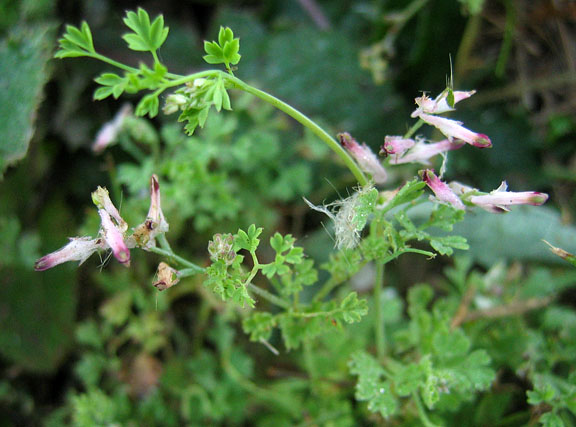
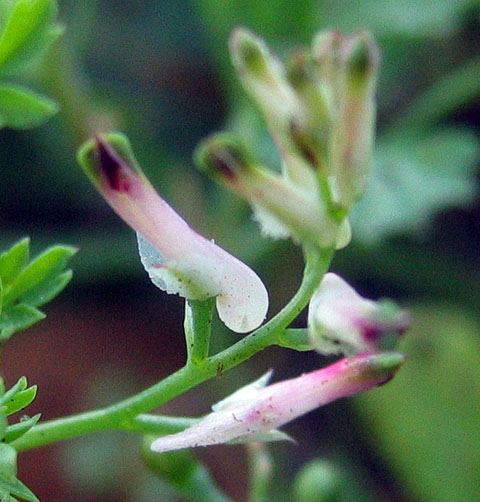
There are three kinds of weeds flowering on the farm. Freezing winds, what weed shall care, it's flower time.
Florida Common
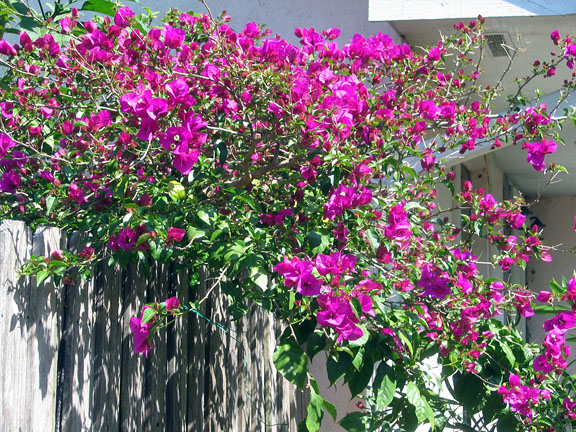
When you think of Florida flowers, you think of the neighbor's bougainvillea.
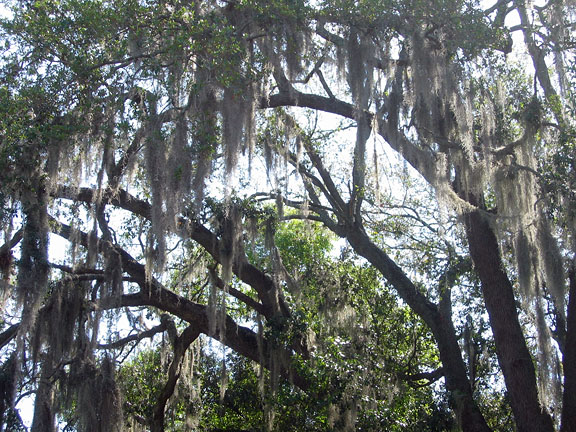
Or the Spanish moss (epiphyte) on another neighbor's oak.
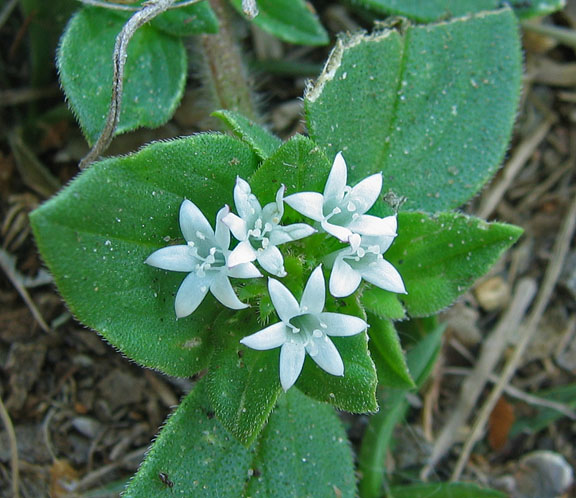
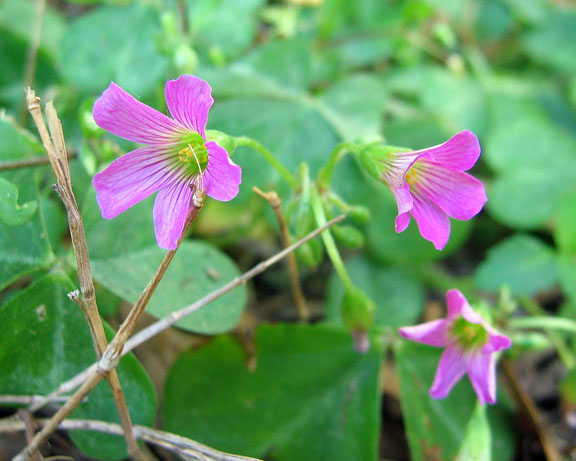
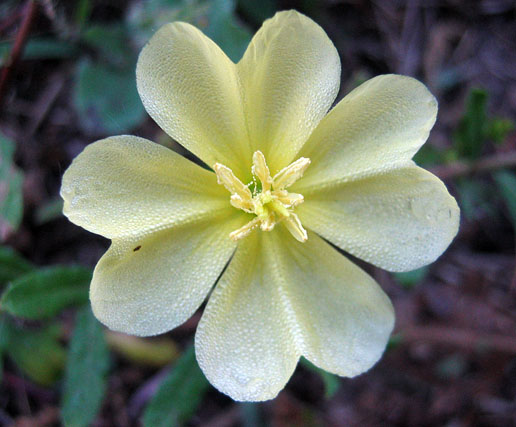
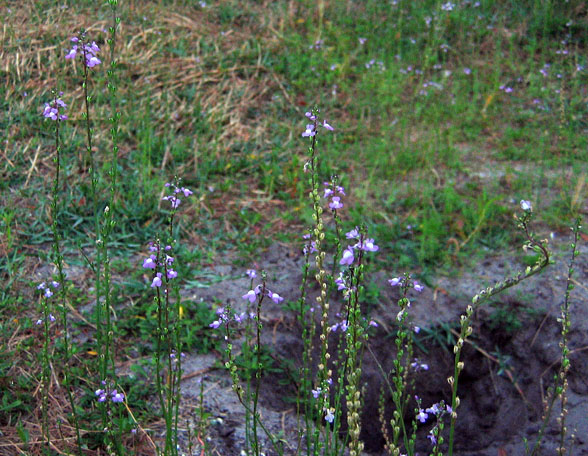
But my eye was fixed on the minor blooms of the 'lawn', which I have little gumption for identifying, though always worth cataloguing.
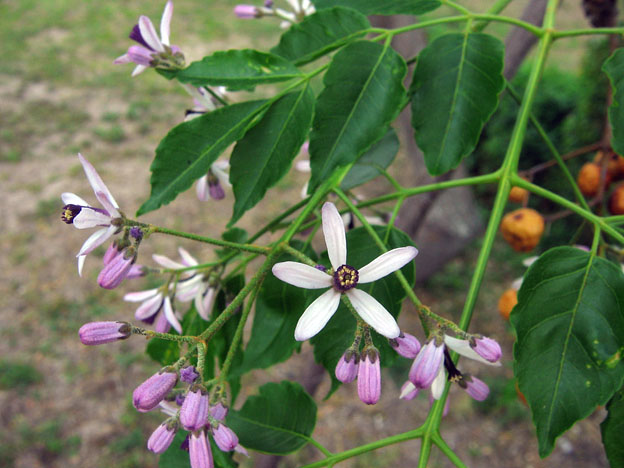
This flowering tree was responsible for a heady scent as you drive the highways at night.
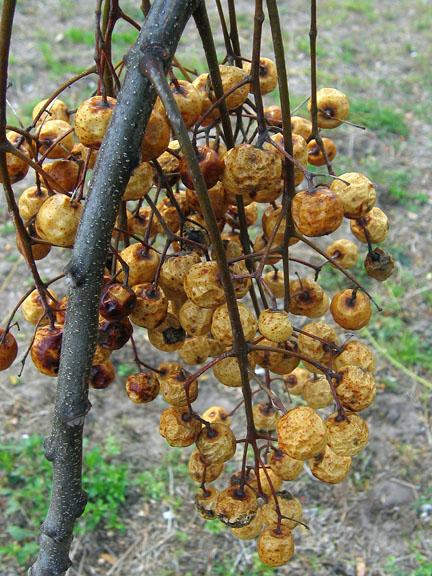
These are its fruit.
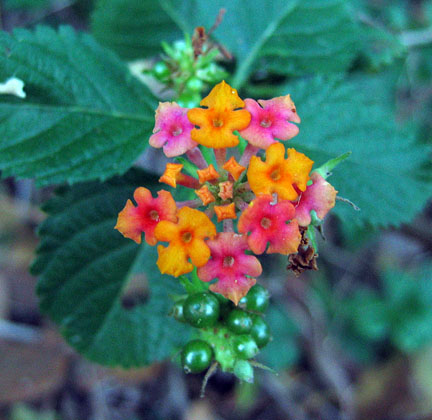
The lantana in the shrubs.
A closeup.
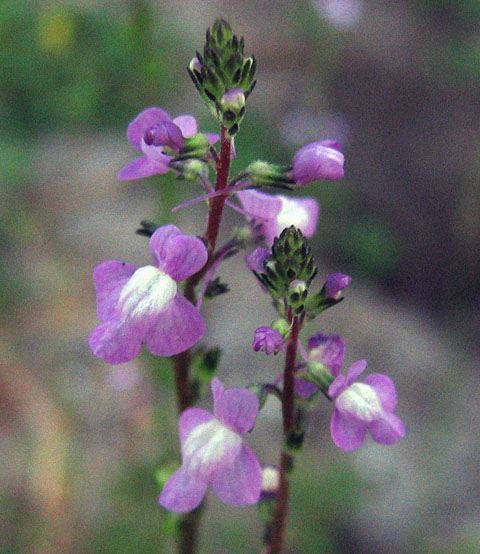
Down at the edge of the pond.
A closeup.
Tomato Seedlings
Snow Is Good
Consider the combination of high and low temperatures that is being reported we (and our plants) are about to receive:
- Today: 45 and 27
- Friday: 41 and 25
- Saturday: 41 and 25
- Sunday: 41 and 23!
In New York City, the nearby ocean, the moist air, and certainly the time of year, influence the temperatures. When our temperatures are in the forties for highs, the sky cloudy, partly cloudy, rainy, damp, the fluctuation between high and low has been, from what I remember, not significant, maybe 10 to 15 degrees. In fact, the average for these dates run about 45-53 for highs, with lows around 30-37.
Last year, however, March 27th (this Sunday's date) had temperatures between 44 and 29 degrees F. Although colder than average, this is within the 15 degree fluctuation and with a low that is less troublesome at 29 degrees. This Sunday's low of 23 degrees makes for a temperature fluctuation of 18 degrees, which as numbers go, is just a few more than the usual 15. But three degree difference means that our tender, young plants will spend many more hours freezing, and, by my classification, makes for an unusual temperature event.
I have already raked up the leaves, transplanted perennials, and planted frost-hardy vegetables. Only now do I understand why a fabric row cover that provides only two degrees protection can become a highly useful tool in the field. So consider this -welcome any snow that falls and remains over the next several days. One, two, or more inches of wet snow will help to protect emerging plants from several hours of freezing much like a row cover does -but possibly better.
Update: Weather Underground has been slowly upping the low temperature forecast, but also lowering the high, so that now the temps lie squarely within the average 15 degree fluctuation. No matter, they're now saying we have a low of 25 on Sunday, which, believe it or not, is considerably better than 23!
Just In Time For...
...uh, thundersleet? Our flight was delayed, but only just enough to squeak us in before the heavy precipitation and lightning. It made for a turbulent final 40 minutes. The sleet was heavy on the corrugated roofs of the A train's outdoor platforms, and I was glad not to be out there.
Incidentally, I had looked up while we were crossing the F train Smith bridge and noticed that every single person on our moderately filled train was looking down at a little screen. Everyone. I believe this is the first time that I've seen such a totality of electronic immersion.
Anyhow, by the time I made it to Smith, the precipitation had changed over to dollops of wet snow. Yet I was pleased to see that little of anything had stuck in the untrammeled parts of the walk from my station further south. From 87 and sunny to 35 and thundersleet in 2 hours. That, my friends, is the magic of air travel.