Sex In The Garden

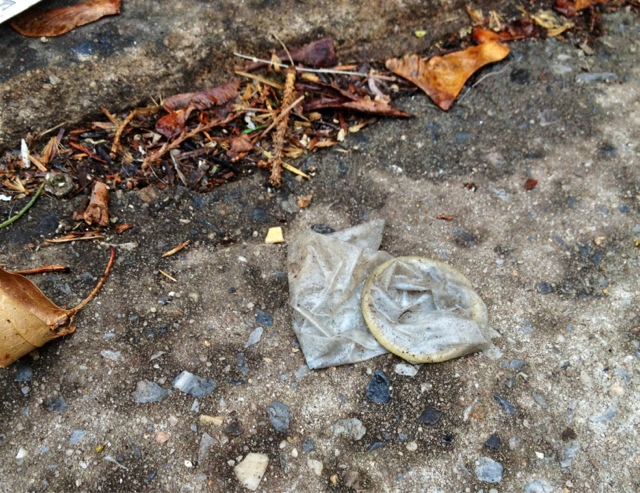
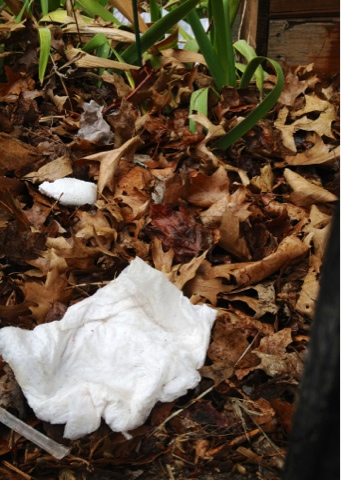
A few thought people having sex in the garden was unlikely, but, finally the evidence is in - condoms and napkins in proximity. I gotta get me one of those pickers we use in the park.

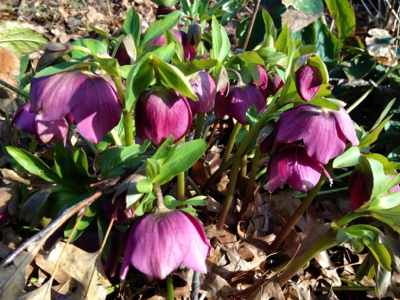
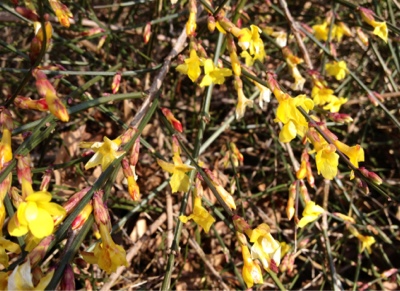
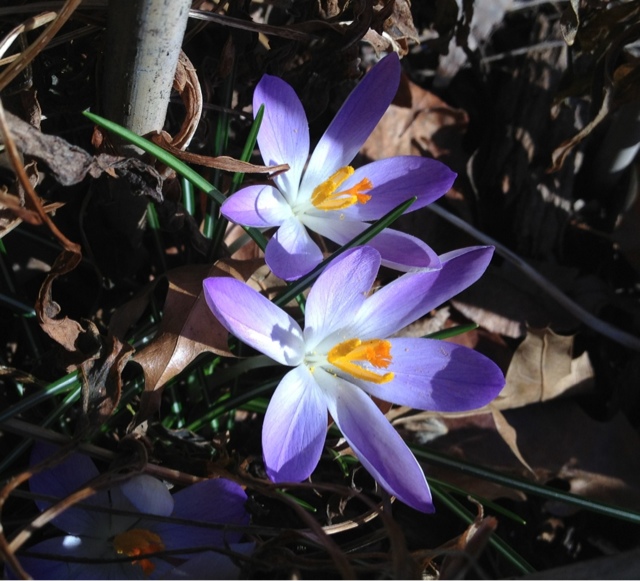
On a good note, the crocus are blooming.


The Desire To Take This And Not Throw Away That...


...Is the way to lose that and not gain this.

:Yoshida Kenko, no. 188, Essays in Idleness


Some of you may know that I've taken up garlic growing this past year. My plot upstate is a borrowed one, and as such requires less commitment than one for which I could be paying. In other words, in Kenko's words, I get to take this and keep that. This weekend, I am about to challenge my commitment, as I head out to my former haunt on the North Fork of Long Island to look at farm land for rent. It's hard to imagine how, just three summers ago, staring at a desolate and weedy community garden led me to the point where I may actually be renting farmland. What? When I say it, it sounds off the wall. Then, I think of the admonishments of Kenko.

As you may also know, I am not only a guy who can't seem to get enough growing. I also paint. So how is it that a guy with a day job can also find time to paint and farm a field of garlic (and what else)? Maybe the more pointed question is this: how can I be thinking of committing to another financial loser like farming (assuming that you knew painting was a money loser)? The USDA points out that farm households that generate between $10,000 and $250,000 in sales receive about 4% of their income from their farm. For those who sell less than $10,000 worth? Well, they are actually net losers of income by about 13 percent.

Farming is a passion, a lifestyle, a heritage, and folly. These days, unless you are a mega-corporate farmer, passionate and penniless farming may lead to little more than a hobby.

Those who make a business of any art or trade, even if they are unskillful, are always superior when compared with skillful persons who are amateurs. The reason for this is the difference between never relaxing one's care and being always earnest in the one case, and being entirely one's own master in the other.

:Kenko, no. 187

The middle of winter sows doubt. The thought of renting, and, mind you, the opportunity is good and affordable as land goes, leads me to feeling willful and clever, not unskilled and earnest. I am an amateur.

...We should weigh in our minds which is the most important of all the things which we would desire to make our aim in life, and having decided which is the first thing, we should abandon all others and devote ourselves to that one thing.  When in the space of a day, nay, even of an hour, a number of tasks present themselves, we should perform that one of them which is even by a little the most profitable, and neglect all others to hasten on the important matter.

:Kenko, no. 188


Waste Not


Last autumn I was on a garlic seed production research tear. I came across a company in china called Pretty Garlic. Log onto their website to read the mythical origins of pretty garlic -something about a sick girl saved by garlic. In reading their how-to-grow garlic page, I was a little surprised by the frank use of the term "human wastes" as supplement to growing garlic. Right click this screen-capture image so you can read it in full. After reading this, it was easy to see how American farming has been consumed by public relations, because I honestly don't think conventional farms are operating much different here than they are in China.


In the U.S., we come up with all kinds of euphemisms for human waste, so why wouldn't we do the same when talking about sewage-based agricultural products. I believe Biosolid is the preferred term, apparently generated by a focus group or PR campaign some years back to improve the image of sewage sludge.  See the EPA website for their bland assessment of applied sewage sludge products. The FAQ that most concerns me is this one:

11) Are there regulations for the land application of biosolids?
  The federal biosolids rule is contained in 40 CFR Part 503. Biosolids that are to be land applied must meet these strict regulations and quality standards. The Part 503 rule governing the use and disposal of biosolids contain numerical limits, for metals in biosolids, pathogen reduction standards, site restriction, crop harvesting restrictions and monitoring, record keeping and reporting requirements for land applied biosolids as well as similar requirements for biosolids that are surface disposed or incinerated. Most recently, standards have been proposed to include requirements in the Part 503 Rule that limit the concentration of dioxin and dioxin like compounds in biosolids to ensure safe land application. (Italics mine)
I'm not interested in using biosolids or sewage sludge-based compost on my garden mainly for the questions that the above answer dredges up. Questions like: how come we can spread dioxins, currently, on agricultural fields? There are limits for heavy metals contamination in agricultural fields, so wouldn't the annual application of cadmium, for instance, increase the load of contamination year to year? 


Someone can make the argument that it is completely unknown what quantities of heavy metals in garden or agricultural soils it actually takes before human health is affected. I concur. We have no idea. Lead, for instance, is limited to 400 ppm in NYS restricted residential soils (not intended for gardening), but Minnesota limits it at 100 ppm, while background levels appear near 20 ppm. Try to find scientifically studied limits for Cadmium, chromium, aluminum, zinc, molybdenum, mercury, etc., etc.

Last summer I smelled something near awful around my father-in-law's garden. I didn't know what it was until I later spotted him spreading grains of something all around his flowers and shrubs. In detective mode, I searched out the bag he had used and opened it up for a whiff. Yup. Milorganite. Something I had heard of, but given little thought to. Retail-branded sewage sludge from Milwaukee, Wisconsin. 
 My problem with municipal treatment is its catchall process. In other words, anything your neighbor drops down his sink, toilet, or catch basin, finds its way into your treatment plant. Are they really capable of eliminating all the contaminants from that pool? What about industrial wastes flushed into the system?

We do have to do something with all the waste we generate. But what? In the mid-19th century, after several outbreaks of cholera and other infectious diseases, Sir Edwin Chadwick proposed a sewage network for London that included the collection of human wastes for dispersal on farm fields, but this part of his plan was unfeasible and the sewage ended up in the Thames until sewage treatment plants became viable.

In our own time, sewage treatment based products are spread onto farm fields. Some municipalities pay farmers to take their waste. Some municipalities pay private companies (like Synagro) to collect and dispose of the sludge in various ways. Some municipalities create product, like Milorganite, for sale to the public. No matter which way you do it, Chadwick's original idea has come to pass, but a lot more goes into our sewers now than in his day.

What do you think? Have you already spread 'biosolids' onto your garden, knowingly or not?

The San Francisco Public Utilities Commission had in past years delivered free 'organic compost' to any citizen of the city who wanted it. The scandal that ensued was called Chez Sludge because of the involvement, however indirect, of Chez Panisse's Alice Waters, famous for her promotion of organically-raised produce.

In another more horrifying scandal, the backyards of poor black families in Baltimore were covered in sewage sludge in order, said those responsible, to protect the children from seriously high lead levels in their backyard soils. I believe the term for this theory is "Sludge Magic," promoted by a former EPA scientist and USDA official (Read this document). In short - the theory states that once soil contaminated with dangerous levels of lead is mixed with 'highly processed' sewage sludge it is safe for children to ingest. Really? By the way, excuse the low-rent links, as there was no media attention to this story.

If you asked people whether or not they would be inclined to compost their own feces and urine to spread on their vegetable garden, I think many would say they would rather not. Yet, somehow, once it becomes a product, it is then acceptable. Maybe it has something to do with what I call the bologna effect. If you had to make the bologna yourself, you might just not want to eat it, but since it comes in that nice roll at the supermarket, it's not so bad with mustard on bread.


You've Seen It


I've seen it. Last night was the first time I chose to picture it -daffodils well-suited to the mid-March-like snowfall we had. Two weeks ago I saw yellow daffs in the children's garden at BBG.


USDApolitical


There isn't one ounce of my being that believes this new USDA garden zone map has been developed for political reasons. I also don't believe that climate change is political, but the pundits have been successful at branding it as such. The climate is ours, all of us, and therefore is not subject to politicking. It is either one way or the other, or variable, but never is it the agenda of individuals. Denying climate data, or screaming apocalypse are political acts, however, because those acts are tools of ideologues and vested interests.

Garden zones? No, those are just the facts, ma'am. Any NYer will tell you, this ain't no zone 6. Can we have a zonal 6 night? Yeah, sure, it's possible, but unlikely. The zone maps deal in averages after all, and I feel confident that my garden's micro zone is closer to 8a than 7b. Temperature data for these maps is collected at several points in any given area and will tend to quash extremes. On average -that is the USDA zone map agenda. To give you, the gardener, a sense of low-temperature averages in one simple product.


The most important aspect of the new map is in the presentation: it's downloadable, it's large, it's state selectable. These are important developments! Now I've taken it upon myself to rebuild, via the magic of a very popular image editing tool, the USDA zone map so that we can see, in proximity and quite large, the tri-state NYC metro region's zonal configuration. If you right click the image and then click open link in a new window, you will be able to see the full-size image. That'll make it easier to locate your place on the map, especially if your location is near a zonal boundary. 

What would be really great, now, is for us to collect garden/temperature data in our NYC boroughs so that we can generate a localized micro-zone map. And mine is 8a or higher.

For  links to the current USDA zone maps, click here.


Corporate Pepper


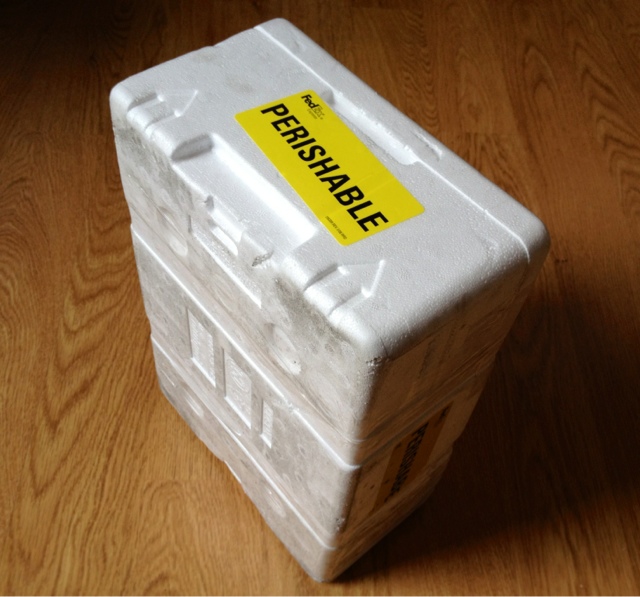
I stepped out this morning and discovered the white foam perishables container on my step. Already -they've arrived. I hadn't informed the Sunset produce representative who contacted me that I had blogged about the episode after I lodged a complaint that their peppers tasted like mothballs. Poor form? Maybe, so I won't be able to relay our exact conversation, but I think I can deliver the gist.

First contact was the rather stiff, corporate kind. The rep called it an 'off-flavor' and appreciated that it was brought to their attention. They wanted to have my number for a phone conversation and the original packaging. I couldn't deliver either, so I forwarded the rep a hi-res photo of the package that I used for the last blog post.

Sunset Inc.'s style of communication became a bit more conversational after I sent them the image. Afterward, I was told they were able to get any important information needed from it so that they could do a 'full product trace.' They did believe the incident was 'isolated,' however, they would be contacting the grower to ensure that 'best practices' were 'occurring at the farm level.' They assured me that no other complaints of this kind had been filed.

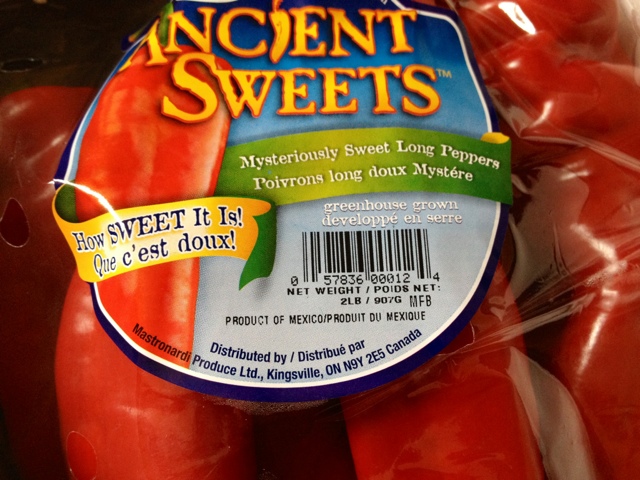
To 'reaffirm my confidence' in their product, they politely asked if they could have my address so that they could send me a complimentary package of Ancient Sweets. I cannot say enough how much that name gets under my skin, but still I said yes. There was no way they were going to send me another mothballed pepper. In fact, they probably have a locker full of the biggest, cleanest, sweetest, bestest long red peppers just for this type of problem. I placed the quarter at the bottom so you could see how large these peppers are. Incidentally, this new bag of peppers was grown in Mexico, not Nicaragua, as my original package had shown.

In the final communication the representative thanked me for 'allowing them to show their gratitude' and apologized for the 'inconvenience' and 'off-flavor.' Their 'Procurement Team' had been in contact with the grower yet found nothing outstanding that would lead to that taste. New peppers are just about out the door of their 'facility' and I should expect them shortly. And the last sentence from the last email regarding my mothballed peppers:

'As a reminder, always wash your produce with cool potable water before consuming.'


Eating Peppers Temporarily Mothballed


Two weeks ago I was shopping at Fairway. I needed red peppers for a recipe I was making that night, but Fairway didn't have any. Hmm, well I was off to Court Street to pick up something else, so I stopped into the Italian grocery and they had this incredible deal on just the kind of pepper I was looking for. If you can believe it, I bought the last two pound bag of long red peppers for $3.99! Almost too good of a deal for me to trust, but then I needed the peppers.

When I began to prepare the meal I tasted the fresh peppers and I thought there was an odd flavor to them, definitely not pepper, although they were highly sweet as the label said they would be. I kept coming up with manure, but the wrong kind of manure. Yet that never satisfied me, what was that flavor?

Two weeks later I decided to use the rest of these peppers. Boy, they sure held up well in the fridge. I chopped one and tasted the bottom tip. Bang! Mothballs! That is the flavor, however much milder than the mothball-flavored candy my grandmother used to have around the house. But truly, mothball-flavored peppers. OK, not going to use those, but I did google just that. I came up with very little, except a vegan blog post from 2007 where the author mentions the very same phenomenon. A modest number of commenters who googled the same found that site and posted their experience.

There appears to be a Canada connection. Ok, out-of-season red peppers, mothballs, Canada. It's funny enough to mention that I took the above photo to post about what a great deal I got on these peppers in Brooklyn and what it ends up doing is illustrating how these incredibly cheap peppers from Nicaragua via Canada taste a hell of a lot like mothballs - naphthalene or 1,4-dichlorobenzene (guys, you know this one -urinal biscuits).

I contacted Sunset and I will let you know what, if anything, they have to say about it.


How Warm Has It Been?


I sit in our dutiful van, rocking, nose running, both due to the brisk wind coming from the southwest that brings in the damp coolness of the ocean. We feel cold under it, but the plants don't seem to mind.

Sunny and in the forties, today became an opportunity for my midwinter visit to the beach farm. Last year around this time the beach farm was covered in several inches of snow.


How warm has it been? Well, all the broccoli that I didn't pull last November has continued to put out side shoots. The garlic, fortunately, stopped putting on new growth. Take a look at that earthworm -it's warm enough that they are active above the surface. The down side is that all of the undesirable creatures have not been killed off by several hard freezes. White flies that came in on my nursery-grown brassicas have hung on quite tenaciously. After pulling four heads for tonight's dinner, I placed them on the fence, where the white flies, irritated by the stinging wind, began to move about to find safer quarters.

We enjoy the warmer than average winter, but afterwards we will curse it.


Januworry


I make an effort, a rather minor one, to keep the seed tray small. Catalogues aren't as exciting when there is no room to grow. This year, I focus. Brassicas for the fall in the garlic beds. Tomatoes, tossing out the less than stellar, trying new varieties. Herbs: cilantro, basil, fennel seed (yes!), and parsley. Snap peas and cucumbers in their place. One or two eggplant.

There is no room any longer for peppers in my life. Greens? Oh, I did buy some head-forming lettuce. Where will that go? And carrots? I know what I did wrong last year, but where? Oh, yes -the bed of weed garlic! That's where the carrots can go. Vineale is pulled in late spring.

Did I say focus? I bought 5 varieties of french filet beans. Why? Something or other about outdoing myself. I've always had success with bush beans, so when someone says that filet types are too much work, I need to see for myself. Three greens, one yellow, and one purple.

But where will they go?

The orchestration, the choreography, of a small plot is no small affair. It is a complex logistics dividing space and time, condition against condition. City gardeners know this, where limitations are posed by outlying parameters, not one's will to turn more and more soil.

The seed tray holds the future, but it is the worry of January.


Home


I'm back in NYC, have been for nearly a week. It's good, but there is always an adjustment when you've been away for three weeks.

I read recently that gardening, itself, was nostalgic. I was surprised by this. Really? Not just modes of gardening or styles of design? Gardening itself. Maybe I am more startled by my own surprise than by the notion that it is nostalgic.

We live in cities -dense concrete and steel environments sprinkled with trees and shrubs. More often than not the plants in our daily lives have been an afterthought, plunked in a sidewalk cut by giant wet saws. Parks are our refuge, environments that, through aging design, appear nostalgic, but are kept vibrant by constant and changing use.

Is gardening nostalgic? I've often joked about our current phase of back to the land. I call it back to the potting soil. This cyclic manifestation of perceived imbalance and corruption, is it nostalgic? I don't have the brain power to think to deeply about this right now, but I'll ruminate on it for awhile.

I received a pile of books for the holidays. Halfway through Karel Capek's The Gardener's Year, but then there are the heavier titles: The Machine in the Garden (Technology and the Pastoral Ideal in America) by Leo Marx, Social Formation and Symbolic Landscape by Dennis E. Cosgrove, and Landscape and Power edited by W.J.T. Mitchell.

Meanwhile, it's back to school, back to the studio, back to bi-weekly tuesday trash in Prospect Park, back to website work for the garlic farm, and back to blogging on a computer, instead of the less than ideal mobile device.

Snow storm this weekend?


New City Parks


We always miss it, but not this time.

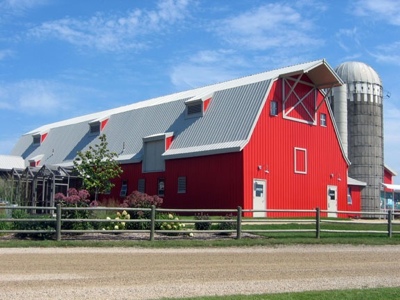
Minneapolis has a parks district called Three Rivers. Within this district, at its most western boundary, lies a park named Gale Woods Farm. Mr. Gale donated his property to the city with the condition that it remain a working farm. These days you can see the animals being raised, watch the corn grow, and buy some of it in season.

This is a very powerful concept: buy meat and produce at the city park. On every visit I have missed the slaughter and consequently missed the opportunity to try the meat. But not this year. Because of my Iowa exhibit I stayed in town longer and, because of that, I was around long enough to find some roast pork at their store.

I say store, but it is really just a reach-in fridge. I bought a shoulder roast which was delicious, although not quite cut in the way familiar to me. The flavor was simply more powerful and very moist but without the salt solution most pork is bathed in today. I will buy that city parks meat again if I am again around during the slaughter.

Could you imagine something like this in NYC?

The Gravel Pit At Sundown


A reminder that Minnesota is a glacially formed landscape. A pit full of gravel and others that look like river stones. Its steep sides host cedar, birch, and grasses.

No Snow


Given the dry and significantly warmer weather, it's been nice to walk around the trails. The smell of decay is rich and enjoyable. The grasses in the wetland are sweet and the woodland edge earthy.

It is unlikely that I would go into the middle of the smaller amphitheater wetland because of water in summer or deep snow in winter. But this weather created the perfect conditions for entering all the wetlands -frozen ground and matted grasses.