Grandfather's Lasagna (adultered!)

I was about to make the meat lasagna, well known in my family as the one that was 8 inches tall and served for lunch(!!) on Thanksgiving day when my grandfather was still cooking. At the last minute I discovered that a guest I assumed was a carnivore was actually just a ichthyovore/crustaceaovore! Never take shrimp eating for meat eating. So, I jumped into college mode and adapted the meaty lasagna to a portobello mushroom and spinach one. I think the last, but first, time I made this was in grad school, to host all my artistic peers at my little place near the Rio. The only difference then: I grew my own spinach -and that spinach was fantastic.

The Vegetables


First I heat up a cast iron skillet, add a drop of olive oil and add the sliced mushrooms.


Mainly, I am looking to pull some moisture out.


I love how these look, like handlebar mustachios.


The same for the fresh spinach, but in a saucepan with a teaspoon of olive oil for each batch.

The Cheeses


Off to the fresh mozzarella: I used salted, but I think it's a matter of preference.  I used one pound and this lasagna was HUGE. Cube it, roughly at 1/2 inch.


Then there's the ricotta cheese, which you all know we say like "ri gaw ta." One pound will probably due for normal people making normal lasagna. I added maybe two pounds to my cheese mixture.  Add to this grated pecorino romano, the salty kick the ricotta needs. We go by taste on this, but I could say add a 1/4 to 1/2 pound to the mixture, depending on the quantity of ricotta. Then add the cubed mozzarella to the mixture and stir it up real good. Put the mixture in the fridge until your ready to layer.

Now I bought way too much ricotta. I had some frozen because I planned to make this lasagna a month ago, but I wasn't sure the freezer didn't kill it. So I bought Caputo's store-made at 6.99 a container -a good price considering the container is 3 pounds! I froze the remaining unused ricotta, and with the remaining unused mixture, spread it on some semolina and sunk into fatty heaven.


Incidentally, this is the cheese grater I use for grating the Pecorino or Parmigiano. I never liked the kind that makes the cheese into a powder. Also, I've been trained by family to insist on this simple knuckle scraper.

Pasta Interlude


There are only so many choices of dried lasagna pasta. I used Ronzoni -it was on sale. I've never used the no boil kind -I don't know why. For my embarrassingly large lasagna, I needed three pounds. I use a large stock pot, 2/3 full of water, salted, with a drop of olive oil. Get that water boiling real good. Cook the pasta till near done, but not al dente like you expect of your pasta dish -a little harder, because it will cook in the oven some.

I remove the lasagna strips from the water with a spoon and a slotted spaghetti spoon, putting them in another nearby pot. I leave the cooking water in the pot, get it up to boiling again, and put in the next batch. Repeat until all three pounds are done. Of course, normal folks who use a pound or pound and a half, will not need to repeat.

After the pasta is removed, let it cool a bit (some will water rinse cool, but I don't). I lay the strips on a plate or cutting board flat just to keep them handy for the layering.


The Layering

I start will a little olive oil rubbed on the pan (in this instance a fairly hardy aluminum pan, doubled, from the corner store). A drop of sauce, made previously, is added to the pan too. Then I lay the first layer of pasta, twice. All pasta layers are double, covering the seams from the layer immediately below. Lengthwise, crosswise, no one cares -go crazy.


On top of the first layer I lay the spinach and globs of the 3 cheese mixture. I add grated Parmigiano  because, well, why stop with three cheeses? Incidentally, I cannot show you the whole pan, it is so large, if I had panned back, detail would be lost!


After adding another two layers of pasta, I add the mushrooms and some sauce. I don't want a sloppy lasagna, so I emphasize keeping the water out of it. For this reason I don't add too much sauce because it's mostly water and because sauce can be added later at the plate. I also do not mix my sauce with the cheeses because I believe (maybe wrongly) that the sauce will turn the cheese quicker when stored in the fridge. Lasagna doesn't have a long fridge life, for me two to three days at best. Freeze for long term storage.

Add another two layers of pasta, gently pressing down with a wooden spoon, and repeat until the layers have overflowed their banks. On top, I slice some more mozzarella, thinly, and lay it across the final layer. I add some sauce. I cover the pan with some aluminum foil and place in the oven at around 275 degrees and cook for about an hour. If you like crispy edges, take the foil off in the last 15 minutes. Cut and serve.

If this were a meat lasagna, it would be filled with something we call fennel meat -which is basically a beef meat loaf filled with fennel seeds, and pork, which can be loin or even country ribs. Both are cooked prior, in tomato sauce (I cook it in the oven, but mom does in a pot), cooled and cubed and layered much like the spinach and mushroom. You can use this sauce for your lasagna, since clearly you're cooking for carnivores.

Grandfather's Lasagna (adultered!)
  • 3 lbs lasagna pasta
  • 1.5 lbs fresh mozzarella -cubed, some slices
  • 2 lbs fresh ricotta (pollyo in a pinch)
  • 1/2 lb pecorino romano -grated
  • 1 lb portobello mushrooms -sliced
  • A lot of fresh spinach -maybe 2 big bags
  • tomato sauce
  • some parmigiano -grated 
  • some xv olive oil
  • baking pan big enough for all this!


The Sovereign Nation of Broccoli or Let Them Eat McDonalds


Last night a friend called me, inviting me to Beaver St. to what seemed like a secret rendezvous of people discussing their food sovereignty action plan. The panel of 5 focused primarily on urban farms and gardens, a bit about GMOs and town hall discussions, and touched on healthy food scarcity. I didn't learn much new at this event, but then each panelist was limited to only 10 minutes of introduction to themselves and what they do.

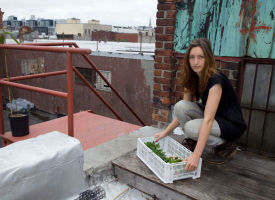
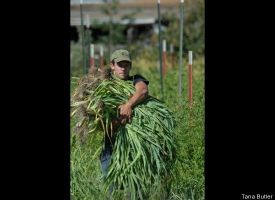
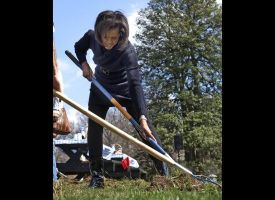
Annie Novak, operator of Rooftop Farms in Greenpoint, was on the panel. My friend whispered to me that she was rated as the hottest organic farmer by Huffington Post readers, beating out First Lady Michelle Obama. Looked it up this morning, and there it was.


#1

#2

#3


#1

#2

#3

Not that that has anything to do with food justice or sovereignty.

Bilen Berhanu, the outreach coordinator for Greenthumb, spoke most interestingly, but briefly, about her years as an Ethiopian child in a major city,  where she first learned of the bloated, hungry bellies of Ethiopian children on tv, via LiveAid!  Ben Grosscup, event organizer and fundraiser for the Northeast Organic Farming Association, or NOFA, spoke about organizing town hall meetings where communities can discuss and create non-binding resolutions on things like banning genetically-engineered vegetable seeds in their towns and whether or not farmers should have a say in the direction of agricultural science. Another speaker, who I will call Ms. Leiner because I cannot recall her first name, came from the south Bronx, which she described, tongue in cheek, as SoBro. Her perspective was from the ground up, activism, fighting to empower the citizens of her neighborhood. For her, capitalism is the problem (along with systemic racism), and this could have been a point of contention amongst the group's participants had they had a chance to argue.

For instance, Ms. Novak is participating in a capital-intensive food project -any rooftop is an excellent flat and sunny locale in these here boroughs, but access to them is a privilege in most circumstances. It takes social privilege or organizational prowess (capital) to gain access and the legal permissions to use this resource. On the street level, we have rubble strewn lots, fenced by chain-link and razor wire, with no obvious contact information should someone have the initiative to plant a vegetable garden. Owners and possible gardeners live in different communities, often have class barriers between them, and different ideas about social justice. Beyond these simple classifications, access and empowerment appears complicated by a large number of factors. The question remains, how do we provide the same quality of food for all people? After the panel, I didn't feel any closer to an answer.

A woman in the audience made a good point about farm land in what she termed "the global south." She said how the disenfranchised have lost the best farming land to corporations who now use that land with intensive practices, shipping all the produce to places like the United States. Our need for low-cost produce has helped prop up social systems where people cannot grow their own food in their own countries. Adding that growing one's own food is one major way to alleviate this social disaster.

This morning I received an email from Christina, who authors Bowsprite: a New York Harbor Sketchbook, and coincidentally, it was all about her visit to hear Michael Pollan speak about his new book, Food Rules (incidentally, I wonder if this will be his last on food for awhile). Anyhow, I put some of the points from the talk below:


I wrote out some points of the lecture for a friend who was working on a tug and could not be there. Just thought I'd send it to you because some of it is funny!

from Michael Pollan's "Food Rules" : 

Don't eat food your grandmother wouldn't recognize: that plastic tube of Gogurt, is it food? is it toothpaste?
Don't eat food that doesn't rot. The bugs want it for a reason!
Avoid food advertised on TV.
Eat food cooked only by human beings, not corporations.
"Who do you know who cooks with high-fructose corn syrup?"

Don't eat food prepared by humans who have to wear a surgical cap.
Eat it if it is a plant, not if it came from a plant.
If it is passed through the window of your car, it's not food.
Don't eat it if it is called the same thing in all languages.
Don't eat cereal if it changes the color of the milk.
Pay more, eat less (as grandmother says, "better to pay the grocer than the dr")
If you're not hungry enough to eat an apple, you're not hungry! (this one made me really laugh)

The banquet is in the first bite (also known as the Law of Diminishing Marginal Utility to those in finance). Eating more gives you more calories, not more pleasure.

Spend as much time eating as it took to prepare the meal.
Rule #55: eat meals. It's so obvious, but it's so hard. People eat bkfast, lunch, dinner, and the 4th meal that lasts all day: snacking. Cut on snacking, eat sit-down meals. Studies found 1/5 of young adults' meals are eaten in the car.

Don't get your fuel from the same place as your car. They are processed corn stations.

Cook. Corporations can never cook as well as you, even if you do not cook well.

Christina asked what I thought of Window Farms. I checked out their website and my initial thought is, "please don't call these farms, at best -gardens." Windows in many apartment buildings and houses are terrible for growing for a variety of reasons. I'll list a few:
  • Light is not constant, and its intensity reduced
  • Temperature near the glass is often too hot or too cold and drafty
  • Poor air circulation often leads to diseased plants
A key photo on their home page is the hanging apparatus in a greenhouse window, which is an entirely different environment from a home.

Another organization Christina mentioned was Growing Power, Inc., which I have heard of and have been inspired by their work. Will Allen, the CEO, recently won a Mac Arthur Fellowship (the genius prize). He's made this transformation look easy!

The battle over food wages on...


So Hard, Yeah Yeah Yeah Yeah, So Hard...

Catchy. Icy. The garden soil is hard like it hasn't been since, maybe, 2004. On Long Island, USDA zone 6a, as a child, I remember winter soil, rock hard, bleached by cold wind's parching. This isn't that, but closest it's come in a long while. I got lazy, took averages of late for new norms. Ah, throw a twist into it, wontchya! It'll be fine, really and of all those pathogens in the soil, maybe some'll die off. Here's to hoping. The big question is, will the salvia elegans survive the deep freeze? Its roots are probably pretty deep by now, but if the crown doesn't make it...And what about those potted herbs?

Take A Word Of Advice...Serve Real Florida Orange Juice...Orange Juice On Ice


I think this photo says it all.


 Citrus in Altoona, Florida. Image taken Sunday, January 10, 2010 by wunderphotographer CAVU.

Personally, I'm happy to have a winter where I don't have to worry that a high pressure ridge will set up over Greenland, blocking the easterly flow of weather systems,  allowing cold air to settle deep into the south while freezing my lemons off!


I can imagine all those global warming conversations now... but the reality is that it's been as warm in Greenland as it has been cold in Florida. A few days ago it was actually warmer at 10 am in Narsarsuaq, Greenland than in parts of Florida. Yesterday, you'd have a nicer time at the beach in Antarctica than you would have had at Daytona Beach. This is all part of how climate is not weather, but you knew that.


Fodder or Folly

I landed on this video presentation regarding a fairly well-worn topic these days: local food production. I watched it primarily because I am putting together a proposal for a, how should I say it, "micro-park" that takes the form of a food garden. Inherent to this project (folly?) is my life long interest in gardening, an interest in park design, our current obsession with food origins, and nagging thoughts that we have an increasingly abstract and aestheticized view of the farm and food garden. A quiver of doubt slung over my shoulder, I go back to my proposal. Below, the presentation:


Fish and Chips


This weekend is Mulchfest, the annual treat for seeing small trees rapidly sucked in and spit out as wood chips. From 10 am to 2 pm at various locations around NYC. Carry bags to certain locations so you can bring the remains home. See the link above for all locations.

And please, tackle your tinsel.


But It Could Be Worse

January 6, 1988 will always be remembered as a bad day for chickens. Nearly 3.5 million chickens died at Heber Springs, AR on that day as 16 inches of snow fell on the town. Snow and ice up to three inches thick claimed another 1.7 million in north Texas while an additional two million died in Alabama.
-from Wunderground.com


Cheek By Jowl

On this snowy Saturday, as I had planned, I shopped different neighborhoods by subway and foot to buy the various foods I will bring to my mothers tomorrow, for our Christmas dinner with my family. In a couple of days, my wife and I head out for Minnesota, to be with her family and get a well-earned respite from all the busy-ness.

I have taken it upon myself to be a kind of ambassador from Brooklyn at family gatherings, despite the fact that everyone in my family has immigrant roots in the borough. I'm the kind of ambassador who brings food from my country, and this year it's several kinds dry sausage. I was hoping for the wild-boar cacciatorini at Stinky, but they were out. Disappointed, I bought a dry chorizo instead. Over at Caputo's I picked up a soppressata, and was intent on getting an herbed saucisson, but again -out. So I picked up a regular cacciatorini and a smoked scormozza, which is an aged mozzarella. I went to the other Caputo's, the bakery, to get some bread -essentially for my brother, who sees Brooklyn bread as gifts in and of themselves. He will receive ciabatta and seeded semolina.


I took the G train up to Greenpoint to stop in a little Polish bakery (Jaslowiczanka, 163 Nassau) that sells small babka. I bought four (ridiculous!), two blueberry and two with chocolate glaze. On the way, and because my sister heard Polish, I was admonished to find some kielbasa, smoked, which I could find in my neighborhood, but since I was traveling for babka...I stopped in this very busy place, generically called Meat Market (Podlasie, 121 Nassau), and was overwhelmed by smoked meats, and particularly bacon, which I have only my lack of knowledge of the Polish language to keep me from buying huge quantities! I selected two dry kielbasi by pointing, the cute Polish girl assisting with giggles as she asked the girl at the register how to say my number (for*teen) in English. Maybe on a less busy day I'll go back and risk looking foolish to find out what to call all those lovely looking smoked meats.

All this I will bring to my mom's place, via MTA railroad, in a snowstorm, along with gifts, this Sunday. Next post from the Big Woods of Minnesota.

The Ups and Downs of Being Back

Now that I am back from the pleasant quiet and sleepy pace of the Big Woods, I'm tossed right into the thick of NYC. Today, moving my old paintings and art supplies from my wife's studio to the storage (how miserable that is on its own), I promptly received two tickets from the Traffic Dept of NYC. One for an 'unattended commercial vehicle' and the other for parking on the sidewalk, for a total of $160. I was going as fast as I could, only damaging my stuff in the process! Since when must you be with the truck you are loading (and how can you be?) and since when can't you park on the sidewalk in front of commercial loading bays on extremely commercial Van Brunt in Red Hook? Must be all part of the retail-ization of the waterfront area. So my four hours with a rental truck cost me $200 instead of $45 doing something I really hated doing anyhow.

Thanks NYC, for kicking more dirt in the face of working class artists.

That aside, it is nice to be back. I am looking forward to making some lasagna (essentially the same recipe as my grandfathers- I make it so little, little chance for evolution) for some friends this weekend. Looking forward to the snowy weather on friday, I am actually beginning the meal that day.

New York State Frost Dates


If you are wondering "when is that last or first frost date here in NYC," below are two maps,  courtesy of the wonderful people at Cornell University, of first and last frost dates of the New York State season. These frost dates are "roundabout," so it is always wise to follow the weather when thinking of planting tender plants or deciding whether or not to harvest those last few tomatoes. Any given year we can push or pull these frost dates. Looking at those dates tells me we in NYC are very lucky indeed.


___________________________________________________________________


Home Land Security


This is my father-in-law's old family house. Built by my great-grandfather-in-law (ha!), it was in the family for three generations, on a farm of cows and chickens, bees and orchards.


But someone else lives in it now, after it was moved to this location, not far from the original property. The original was built by the family, a set of plans ordered from a Sears catalog.


This is a kid's playground placed at the intersection of the subdivision's lanes. See the paddle-shaped sign front and center?


The town named the playground after my father-in-law, a forlorn tribute to his attempt to have this land preserved as a park or his years on the parks commission. Rex was the kind of child to find delight and discovery in a park of woods and wetlands, not ever in need of a manufactured playscape.


Twenty-eight acres of woodlands and farm was converted to about 70 homes. Names relating to the old landscape were retained for road names, like Sugar Mill Lane or Ladyslipper Circle: Rex had a sap house for making maple syrup, and my mother-in-law, Barbara, grew orchids (ladyslippers) amongst other things.


Happy Trails


Last year I built this parks-type sign for the trails Rex built on the property he moved to in a neighboring town. He has an open attitude about his trails, i.e. he lets bow-hunters hunt deer and neighbors hike.


Rex lives on the western portion of the lakes district of Hennepin County, Minnesota. It's the western most extent of the Big Woods, and full of glacially-created lakes and wetlands. Driving around a few summers ago, I noticed that this glacially-sculpted landscape would be an excellent location for a woodland trail. I became aware of an arc formed along an esker traveling roughly north to south, extending a short distance from Rex's property. In Google Earth, I mapped out the rough route you see above and below.


Ideally the trail would follow the arc from his trails all the way to the Dakota Rail Trail south of the Gale Woods Farm. But property being as it is, the trail would have to go around the farm field belonging to one of his neighbors. Afterward, it would follow the eastern side of the esker along Little Long Lake and it's string of smaller lakes all the way to the Dakota RT. Once there, you could walk east to the town of Mound, and Rex could even stroll by his old property on Lake Langdon while on his way to town.

Not far to the north is another rail trail, the Luce Line State Trail. From Rex's current trails, we could strike a trail along Painters Creek all the way to an intersection with the Luce Line. Painters Creek is part of the Minnehaha Watershed, and has been straightened or re-routed in places. A hiker following its course from Lake Minnetonka could potentially follow it all the way to Baker Park. Some of the trail would need to be boardwalk as the creek routes through wetland marshes.

I think my inspiration for this trail is the Long Path, the NJ through NY trail that one could hike from Fort Lee, New Jersey all the way to near Albany. Utilizing many public park trails along the way, the path also traverses private property. Where property owners won't provide trail access, hikers must take the roadways. The NY-NJ Trail Conference works with landowners to keep trails off the roads and advises hikers to respect private landowner's wishes.

Could the landowners, private and public, join to create a trail like this? To be continued...


Cheek By Jowl


On this snowy Saturday, as I had planned, I shopped different neighborhoods by subway and foot to buy the various foods I will bring to my mothers tomorrow, for our Christmas dinner with my family. In a couple of days, my wife and I head out for Minnesota, to be with her family and get a well-earned respite from all the busy-ness.

I have taken it upon myself to be a kind of ambassador from Brooklyn at family gatherings, despite the fact that everyone in my family has immigrant roots in the borough. I'm the kind of ambassador who brings food from my country, and this year it's several kinds dry sausage. I was hoping for the wild-boar cacciatorini at Stinky, but they were out. Disappointed, I bought a dry chorizo instead. Over at Caputo's I picked up a soppressata, and was intent on getting an herbed saucisson, but again -out. So I picked up a regular cacciatorini and a smoked scormozza, which is an aged mozzarella. I went to the other Caputo's, the bakery, to get some bread -essentially for my brother, who sees Brooklyn bread as gifts in and of themselves. He will receive ciabatta and seeded semolina.


I took the G train up to Greenpoint to stop in a little Polish bakery (Jaslowiczanka, 163 Nassau) that sells small babka. I bought four (ridiculous!), two blueberry and two with chocolate glaze. On the way, and because my sister heard Polish, I was admonished to find some kielbasa, smoked, which I could find in my neighborhood, but since I was traveling for babka...I stopped in this very busy place, generically called Meat Market (Podlasie, 121 Nassau), and was overwhelmed by smoked meats, and particularly bacon, which I have only my lack of knowledge of the Polish language to keep me from buying huge quantities! I selected two dry kielbasi by pointing, the cute Polish girl assisting with giggles as she asked the girl at the register how to say my number (for*teen) in English. Maybe on a less busy day I'll go back and risk looking foolish to find out what to call all those lovely looking smoked meats.

All this I will bring to my mom's place, via MTA railroad, in a snowstorm, along with gifts, this Sunday. Next post from the Big Woods of Minnesota.


Snow

Its unusual for us here in NYC to have cold air in place when an early winter Nor'easter comes our way. While many have canceled their plans, I am not and hoping our mass transit holds up to some snow! According to this latest radar image, we are about to get a heavy dose.


image courtesy of wunderground.com


Dwarf Japanese Spirea, in autumnal colors, with dry snow.


The winter white spires of Russian Sage, faint spots of aster, and snow.


Knockout Rose, uh, knocked out.


Been Goosed


As I sit here, I hear a flock of geese heading what sounds to be east, but what do I know of goose navigation. Steer clear of those planes please.

After a rowdy Saturday night (ahem, not so much) with some pals (and too many santas -what's with that frat-ish fad?) from my small (but big) world of art, I came home and brewed a cold. Drats! I still went out on Sunday to print my final sheets of paper for my moku hanga class. I wanted to give a hollar for April Vollmer, who is the artist and teacher who has introduced me to this technique, the same technique used by the Ukiyo-e printmakers of 19th century Japan. Her work is often filled with botanical imagery and she has exhibited her work at the Brooklyn Botanical Garden. See some examples of her printmaking here. If you like her work (and are looking for that handmade gift), you can purchase prints here.

As a beginner, my own skill in this technique is limited, but the process is fun and I've long been interested in the Ukiyo-e prints and their depiction of people in the landscape. This print is a segment of a much larger painting in the works of the Ammonoosuc River Valley; the valley compressed in my image between Mount Washington and the Mount Washington Hotel.