Farm Camp


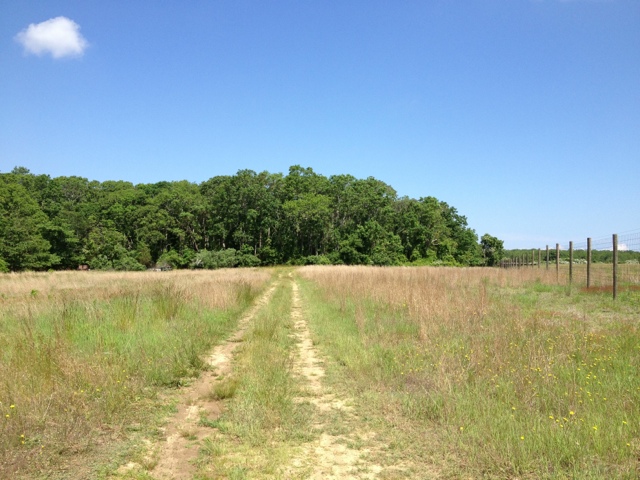
This was our farm camp, not far from the town of Montauk or the farm. We tried to keep things simple, after all, this was a work trip.


It's truly nice, however, when you have warm showers and toilets, cleaned every day, at your work camp.


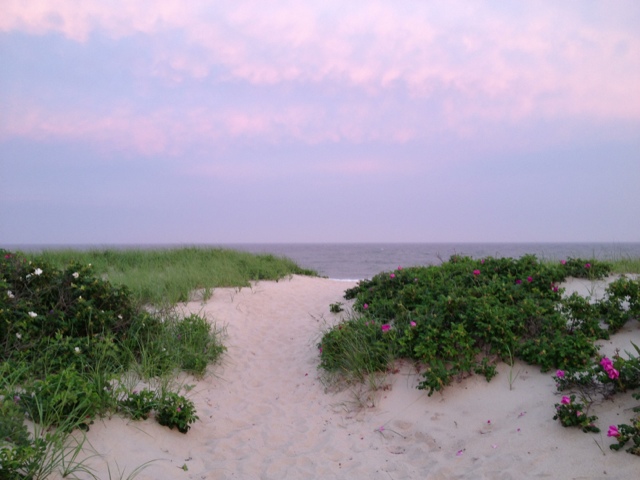
And of course, there was also the ocean and sandy beach.


After the first night of camping it is inevitable that we will rise early, before sunrise, and jump at the chance to see the sights by first light.


To the west southwest.


To the east, north east.


Lathyrus japonicus, Beach Pea.


And of course, Beach Rose, Rosa rugosa, in abundance.


______________________________


Monday morning. The first task of the week was to find florists in the Hamptons who may be interested in our Allium Ampeloprasum (ahem, Elephant garlic) scapes. The garlic scape sales weren't too hot, so it was worth trying a non-culinary approach to selling these more robust flower stalks. We clipped a bunch, put them in a water jug, and drove from florist to florist. We made one sale, to a florist named Alejandra in East Hampton. I was somewhat surprised by rejection of these stems, especially at the florist with the spare, sculptural aesthetic who's main concern was stems smelling of garlic (they do not) in a hot room (well, maybe a little bit). We gave him our samples and called it a day because we had another task to tackle -find a barn in the area that we could rent to cure the garlic. That turned to out less successful than the our florist hunt. We did, however, get to introduce ourselves to many of the farmers in the area and that has value.


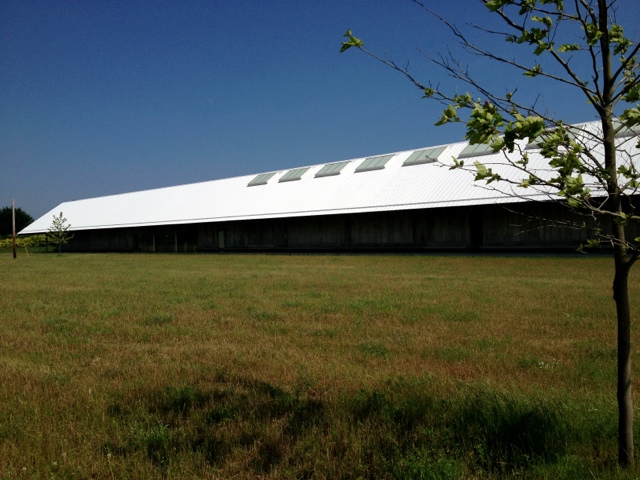
We made some lunch and headed to the Parrish Art Museum, of which I'd always known, yet had never visited when it was at the former site, and thought it was high time to do so.


The Birch and Aspen leaves tap dance in the constant breeze.


A storm brewed to our north. 


Which put on impressive clouds at the beach by the time of our return.


But it cleared up and we climbed into the tent just after sundown. 


Allium Ampeloprasum


So who wouldn't want these? What florist wouldn't see their appeal? Most of them, apparently. We had one Hamptons' florist buy fifty stems, but all the others wouldn't bite. What do you think?


The Garden


Before we left for "farm week," I wondered whether or not we would miss the lilies. As it turns out, not at all. You can see one blooming in the far back, but they've waited for us to return. Before we left, I deadheaded the Salvia and Dame's Rocket and they are in bloom once again. The Dicentra eximia blooms effortlessly and the Geranium 'Johnson's' has exploded with new growth and flowers.

Overall I am fairly impressed with how the side yard turned out this season (knocking on nearby Zelkova). Each plant has been spaced decently and so far no one has come in to trounce anything! The path stones are nearly covered by rapidly spreading Sedum and Potentilla indica. The pots have been filled by Betsy with annuals (some which over-wintered). The Gaura and Russian Sage have been successfully transplanted from the front yard which is now only part sun-shade. The lilies survived transplant.

Although this one is too short for the competing Solidago and Asters.

It's quite the bountiful garden. Echinacea and Gaura are in bloom, as well as the self-seeding Borage and Alyssum. The native Liatris is about to bloom and the Sedum has been blooming pink for two weeks now.


Meanwhile in the front yard my grandmother's tea has its best year for blooming yet. There are several buds about to open not two weeks after the first flush of many more has ended. The 'Knockout' rose that I hacked back late and hard has made its comeback, all the while the generally sun loving perennials struggle if they are unlucky enough to now find themselves in the shade of a Zelkova. The front yard is now due for a major, new reality, overhaul.

This oddity in the front yard, under the 'New Dawn' climber and growing through the dwarf spirea, has made an appearance during the Allium sphaerocephalon bloom. These are usually very much magenta-purple, but this one has bloomed all green-yellow. Peculiar.


Barnstorming Florists


Today we had two simple tasks -find a barn and find a florist willing to buy my elephant garlic, Allium ampeloprasum, scapes. They're much meatier than typical garlic scapes and they curve less too. Most are still covered in spathe, some opening to reveal green and purple, and about two feet long. 

We found a florist in East Hampton willing to take on 50 stems, but of the six we visited she was the only brave soul. The florist with the spare, sculptural aesthetic in South Hampton was so sure he didn't want them that I decided to give him our lot of samples just for the trying. He was worried they would smell like onions in a hot room or at least that was the reason he gave for passing. I didn't realize we were up against convention at high end florists, but so it is. 

As for barns, well, we handed out lots of cards to guys in front of piles-o-barns. Most said they were maxed out and then sent us down the road to see another farmer. We will be harvesting our first two varieties this week and they're going to have to go into the now cramped (shared) studio if I don't receive any calls over the next two or three days. 

We'll watch the weather closely, because we've had nearly nine inches of rain in the last week which isn't very good for harvest. I would like to harvest the day we leave camp, driving the bulbs in the evening to Brooklyn, but if rain is likely I will need to pull them and drive them back before our stay is up. 

Tomorrow we weed, clearing out the crocus bed, picking Colorado potato beetle nymphs from the potatoes, weeding the few onions that have survived my ill-timed planting. We have tons of pea greens thanks to that absurd quantity of rain last week. They're succulent, nutty, and just delicious, but my neighboring farmer said those I gave him didn't move at his weekly markets because no one knows what to do with them. 

Eat them? People tend to be followers and you have to show people how to cook and eat, otherwise they will pass on these apparently exotic offerings. Maybe I'll go with him to his market and see if I can drum up some interest. 

To relax afterward we stopped into the Parrish Art Museum. I've never been and they have some interesting new digs. Long, like a stretched longhouse or potato barn, the building stands like a sculpture in a meadow. 


Cat Shit And Beer Bottles


Must make the best fertilizer. Things grow here in the side yard like mad. I can hardly control them. 


We're leaving for ocean camping soon and it looks like we'll miss only some of the lilies (unless the pickers come round). Meanwhile we'll be tending to the garlic farm while we camp. I've harvested the first of the Beach Farm's garlic, a Turban, on the small side because I didn't fertilize the Beach Farm this spring. They do have great color this year. Their harvest means that the Amagansett farm's early variety will be ready soon. I'll be blogging mobile for the next week -so please excuse the left-justified, fuzzy images.


After The Rains


I could hardly sleep knowing I would be rising at 3:30 in the morning. It didn't help that the upstairs tenants were noisy as always. So, when I awoke at 2:58 am, I got out of bed and readied myself for the drive to the farm. Brooklyn is unsavory at four on a Sunday morning. Still so many people up, yet those who rise early are also about. There is more traffic on the highways than one imagines at that hour. I could relax, however, by the time I made it to Nassau County, and then the road was nearly empty by central Suffolk County, before this part of the Earth rolled into the visible rays of the sun.


Driving through the Hamptons was also a quite hospitable at 5:30 in the morning. Every place I usually turn to for breakfast was still closed on a Sunday morning, but thankfully the chatty, vibrant ladies of Hampton Coffee were open for business before 6 am. And, for those interested, their restroom was spotless.


All was covered in early morning dew.


Hard not to notice the elephant garlic scapes as they rocket to the sky.


The plan is to market these to local florists. Any florists in the house? At what stage are they most appealing -open, closed, half-way?


Generally the field looked better than I imagined given the report from my farming neighbor stating that my field was a pond. The surface water had 24 hours to drain since the last of the rain, and all had from the cultivated rows.


The weeds and the clover cover I planted had grown as expected in the three days since my last visit. Everything, but the garlic, was significantly taller.


At the edge of this year's plot the water still stood.


At the northern extent of my field the water was a few inches deep and the weeds acclimated to the soggy soil made themselves known. I slogged through the mow cut, hardly making it as my boots sunk ankle deep in the mire. I then crossed to the adjacent lower field that had recently been cultivated. A real nightmire.


The field had received nearly 5 inches of rain in 24 hours. That's nearly a month and a half's worth in one-forty-fifth the time. But that doesn't make it any less of a problem for growing a crop that generally accepts dry soil conditions. I can only hope that this soggy condition doesn't exacerbate this spring's growing problems.  I'm also not sure that I can make use of the northern third of my field for garlic. I'll have to work with the Trust to find an equitable solution, possibly drier land.


Checking on flood damage was only one reason to head to the farm. The reason I left so early was to be able to harvest garlic scapes to deliver to my neighboring farm for this week's farmers' market. He needed them by 7 am, and as luck would have it, we both arrived at the gate at exactly the same moment. Unfortunately he had a hard time selling them. Apparently there isn't much taste for the garlic vegetable in the Hamptons. I hope he has better luck at his Thursday market. I also cut 5 pounds (250 scapes) for shipment to the Skowhegan School of Painting and Sculpture kitchen. Scape season will be on for another 3 weeks and I hope I can sell more, lest they become compost.


Scape cutting was finished by 8 am, so the remainder of the day belonged to weeding punctuated by breaks designed to alternate from my weeding posture. I walked to the edge of the field and I spotted a remnant of an old plot. Evidently used for growing herbs, it had chamomile flowers, culinary sage, thyme, bronze fennel, and some purple lettuce.


I also discovered this bed of strawberries.


I bumped into a turtle crossing the road. They are such funny and cute creatures.


And I noticed peas growing in the wheat.


Unfortunately, the East Coast just endured yet another bout of heavy rains, only two days since the passing of the last event. The field in Amagansett received 2 inches of rain on top of the five of Friday. Hudson Clove has been socked with all kinds of difficulties this season, but most can be tackled throughh better soil preparation, including grading and amending to compensate for wet soil. After harvest I will be able to concentrate on the good work of preparing the land for next season. Proper liming, adding gypsum, compost, turning under the summer buckwheat crop, contouring for better drainage. That's about all I can do without moving to another field. With luck I will be able to plant some of my garlic in November, but it's too soon to tell. Although I planned to do this to increase my yields and acclimate the planting stock, I may have to buy a significant portion of my planting stock this season to make up for losses. This practice will greatly add to my costs and at some point becomes a deal breaker. 


Suffering A Sea Change


Mayor Bloomberg has announced his plan to combat the effects of rising seas on our urban population and infrastructure. Applause for having a plan, but I want to point to a couple of things.

In NYC, most of us who live on the water do it because its a splendid place to live, but for most of our history the waterfront, if it was occupied at all, was occupied by industry and shipping. The damage to it by flooding was often less critical than it is to the residential and retail space that have replaced it. It is clear, however, that if we didn't build on the boundary of the sea and the land, there would be little to spend billions defending against. The sea and the land are always in flux, giving and taking, and if you want to build something permanent in this space, you best design adaptive structures and infrastructure. All I can say is that we, not the sea, are our own worst enemy. We build directly on the sea, we cause a phenomena that results in sea rise, destroying a generally storm-resilient coastline, and then aim to build a way to protect ourselves from the monster we created. An old, but decent overview of shoreline protection awaits you here.

________________________


Mayor Bloomberg insists that hydraulically fractured gas be kept out of the city's water supply regions. Why? Because he agrees that the risk of polluting our clean water supply is simply too high. Yet he then proposes that the city's response to human-caused global warming is to pump way more gas into the city because it has been considered less harmful to the climate. New pipelines are coming in at every angle, including through the Jamaica Bay Wildlife Refuge and Gateway National Recreation Area. Where is this new gas expected to pipe in from? Of course, it's the fracked states of the Marcellus Shale and maybe one day from our own State of New York. I don't believe in a double standard. If it's too risky for us in the city, it's too risky for everyone.

___________________________


Just a month ago I had a meeting with New Amsterdam Market. I reached out to them last December because I thought their model of bringing high quality, local foods to New Yorkers best matched my farming practice. Their offices were flooded by Hurricane Sandy and they had to relocate, so they were late in responding to my interest. As it so happens, the other reason they took so long to respond to my letter was that they are effectively being removed from the Fulton Fish Market. Yes, as it turns out, the City of New York (which means Bloomberg and Quinn) has envisioned the South Street Historic District, a waterfront, with new development of the residential, retail, and commercial kind. In fact, this plan is embedded in Mayor Bloomberg's plan to protect NYC from future sea level rise! What? Yes, it's true. Even a plan to protect the city from future flooding is an opportunity to develop public spaces with private dollars. Whereas a market with little infrastructure could tolerate occasional flooding, a new mall, hotels, residences and closed food markets will be a disaster to clean up after a flood. It simply makes little sense unless you view it through the lens of big money. As a consequence, this year New Amsterdam isn't having its regular markets. That's just great since they welcomed me to join their market to sell my garlic!


Rain Date


This post describes my June sixth trip to the garlic farm in anticipation of the heavy rains from Tropical Storm Andrea.


I went to Agway to pick up another load of lime and to place my buckwheat order, changing my normal path to route 24 through Flanders. Long Island's famous Big Duck was moved along this road sometime during my adult life, but I remember it moving several times since I was a kid. Long Island was known for potatoes and duck farms, two industries not as common around here these days. Our duck was built in the 1930s and its moniker became architectural terminology to those in the field -a building in the shape of its product is known as a 'duck.'


The trees in the area have finally come into their summer greens and the field grass is just beginning to reach upwards.


The crop  is looking a little better than weeks prior, a general greening up, with the Silverskin strain showing the most improvement. I do not know if this is because I fed them with a calcium-magnesium and Fertrell 3 mix, because it was warming up and drying out, or all of the above. However, the Turban and Asiatic strains generally look poor, making it difficult to identify when to harvest. They are browning down now, but the bulbs are not up to size, nor have fully developed cloves. Given the proximity to harvest, the coming rains will not be all that welcome.


This is the saffron crocus, from green to brown in a month's time. Soon the weeds will completely conceal the crocus and I have no time to hand and knee this plot. These crocus require dry, or at best well-drained, summers and they are not going to get that here. I made this choice when I was under the impression that the Trust would rent Hudson Clove land on the North Fork where there is quick-draining sandy soil. The soil here, Bridgehampton Silt Loam, is a nearly powder fine silt loam that holds water moderately well if not nearly as much as clay. I think for the crocus to survive, I will need to affect the soil drainage significantly. I will also look into digging them up for summer storage and then replanting in late September.


Working a field requires the skill of observation. I have that in droves, but I'm now trained on signs of standing water like never before. Earlier on I had seen indications of moving water, puddles in walking rows, and the tell-tale smoothing of soil where water had stood. In other words, I had seen the micro, the after-effects, but not the big picture, the macro. It wasn't until Cornell had suggested soggy soil as a factor in my unhealthy garlic that I began to notice how thin the cover cropping was adjacent my center rows. The low weed count in this area became another obvious indicator of standing water. Then the contour of the land revealed itself as a pronounced 'bowl'. A new problem, or rather an old one, that now needs to be addressed.


Knowing that rain was on its way, and being early June, I pestered my farming neighbor to mow the cover crops planted last December. The grass was going to seed and the peas were in flower. We were probably a week or two late on this, but it is easy to lose focus when so much else needs to be done. Apparently this pea cover should be mowed down by late May because that is when it has fixed the most nitrogen in the soil. As for the rye, just cut it before it sets seed for added organic matter. Sometime next week, my neighbor will disc it in.


This was the radar while we were out in the field. Hudson Clove's first season on Long Island was book-ended by two tropical storms -Sandy at the start and Andrea toward the finish. How rare on both ends.


I wrapped it up a little earlier than usual, although only ten rows were weeded, as the rain clouds approached. I left before dark.


Farm Spinach

And a few bites of red kale. Pretty good stuff given the poor soil and lack of attention I've given it. All our other greens at the farm have been done in by flea beetles and lack of attention. So be it, it's a garlic farm after all!


Little Red Riding Berry


I am repeatedly asked by Polish women in the neighborhood about these little red berries. They often ask if I am growing wild strawberry or woodland strawberry, a plant they recall from their home country, but I'm not, although if I was I certainly wouldn't eat those grown here. No, these berries belong to Potentilla indica, a somewhat invasive ground cover that stowed away within a freebie transplant I received two years back. It must be kept in check, but does wonders (after establishment) for removing potential kitty litter spots in the garden. I'll keep it as long as it behaves itself, appreciating those red berries for the magic woodland apparition that stops people in their tracks. 


Rose Colored Evening


I took the red line from Columbus Circle to the Brooklyn Museum stop after work, with an hour to visit the Brooklyn Botanic Garden after hours. There was music, wine, roses out the wazoo, hats and garden wear. 


So many more people than the last time I made it to this event (most were under the cherry trees just over the hedge).


A tidal wave, no an avalanche of roses greets you as you turn lilac corner.


The sheer quantity of Hesperis matronalis decorating the rose garden frees me from the guilt of cultivating just one of these in our garden. Then I thought of the purple loosestrife, Lythrum salicaria, which decorates City Hall Park, and then I imagined ecologists outside the city gnashing their teeth.


Hell, I should know what this it, saponaria, lychnis, what?


Bush Terminal Park


Not far from the place they call Bush Terminal, looking out on the Upper Bay, a park has been materializing over the last five years. Ever. So. Quietly.


It's not obvious, or even apparent, how one will be able to get to there. The design encompasses a seawall, a grove of trees, a few steep mounds, and maybe a sports field. 


Impatient, I didn't want to wait for the girl to move out of this best view of the new park. She and some friends were hanging out, far from typical public or domestic settings, where the street meets the bay. While I'd like to be the first person to step foot in this park, I suspect these kids will get there first.


Frank's Farm and Grill


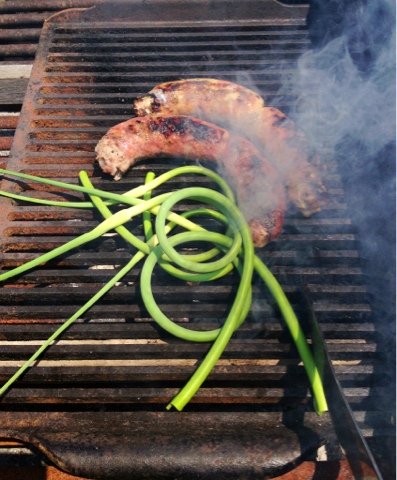
We planted tomatoes, peppers, and basil. No energy for the irrigation system today. Next visit. We ate sausages from Landi's in Brooklyn and freshly snapped scapes. It's hard to believe, but I'll be harvesting garlic here on my next visit. 


Beach Farm, How Long Has It Been?


A pretty long time. Since April 27th in fact. Around that time I received a letter stating that the community garden may be open, pending a soil test, sometime in May. I never received notice. When I arrived, a friend (and source of valuable information) was there. She told me the garden was open for business at the beginning of the month. Oh. So this year we missed the spring growing season, heading right into the hot weather stuff. I've got peppers and tomatoes and green beans to plant someday soon.


Although it was a steamy day in NYC, on the ocean it was pleasant with onshore breezes blowing. Now that the dunes are gone, you can see the ocean beyond and well hear the waves crashing on the shore. While the official language is one of closure, I'm told that the hip folks are already coming and the Park folks aren't doing much of anything to stop them. The number one thing we should be pursuing is dune building and planting and keeping those people off the dunes. If we don't do this, we're writing off the area. People who live on the shore won't like this, but I wish coastal geologists were responsible for setting shoreline building policy, not developers and real estate agents.


My first stop was the garlic I had planted after Thanksgiving. The plants looked all around healthy, with less of the yellowing of the farm in Amagansett, but I haven't been back to fertilize these plants and most are smaller than their garlic farm counterpart.


I was shocked to see that the Porcelain strain 'Music' was already well into scaping.


I began turning the soil in preparation for the new tomato bed. The soil is richer than I remember (staring at the garlic farm soil for too long maybe), product of all the composting I was doing on site last year. There are however no earthworms. After the inundation, many were visible, shriveled on top of the soil. Apparently the big topic among the gardeners is where to get what kind of worms. I've got some ideas... 

Update: I dreamed about harvesting earthworms last night.


Seems Allium can handle salt water pretty well. In fact, I've noticed in glancing around the larger garden that all the lilies survived the salt too. Allium species are lilies. My neighboring gardener Jimmy told me that he planted his garlic just before Sandy! And they are up and growing.


There's always something to amaze me at Tilden community garden. 


After the modest amount of work I headed over to the Park Service's new digs in the old Floyd Bennett Field tower building. It is a vast, echoing space where it appeared to me absolutely nothing was going on. When I inquired about my garden permit I was sent into the book store. A young woman texting on her phone could hardly look up when I came in. In fact, she was quite a slug, and had little notion of what to do to aid my request. Glad I don't need to go there often. I paid my fee and pestered her boss (?) about the ridiculous pipe they are building alongside the road. It seems crazy that they are building this pipe, easily a mile long, then shoving it into the drilled hole. Since the pipe is welded at what, 16 foot intervals, it isn't a completely straight pipe (it goes up and down along its length). I'm sure the pipe welders know what they are doing, but to someone ignorant of the process, it looks to me like it will crack as they move it away from the welding location and then move it under the water and through the ground. This project needs more explanation, especially since it is on our National Park land.


Weeder In Chief


If I didn't live in the city I'd probably see the garden in the earliest morning light more often, but then I wouldn't see this city garden, would I. The sun now rises at 5:27 am, and this scene is an hour later.


Despite the holiday there was very little traffic, maybe because of the rainy and cool weather the two days prior. We had made such good time I detoured to Agway in Riverhead to pick up another 10 bags of dolomitic lime (I need 65 bags). We drove through the Hampton villages before the Memorial parades began, but as men in uniform assembled, and were on farm by just after nine. Betsy came along, her first trip to the farm since we first visited after the land trust had accepted my proposal. That was April, 2012. This time she and I will be weeding. 

Garlic must be weeded. I've only had to do a little this spring, which has been quite a boon, but now the warm weather weeds: crabgrass, pigweed, lamb's quarters, and an unknown plant with basal rosette are really taking off. Our sharp hoes and, at close quarters, our fingers set the weeds back another two weeks. It's all one can really do, disturb them by disturbing the soil. Some will continue to grow, only slowed down by our actions, and new weed seeds will be exposed to light, heat, and moisture enough to sprout. All we are doing is buying time, enough time to allow the garlic to perform its best without the competition.


Around 3 in the afternoon, Betsy asked for coffee. I also filled the thermos of another farmer out on his field. Is it only in the Hamptons do farmers drink fair trade, organic coffee?


I didn't have time last visit to deal with the Colorado Potato Beetle. My two rows of potatoes are not a priority, but this time I took forty five minutes to pluck them off the tater leaves. Of course they're mating now and it's the young that can really do in the crop.


With the sun raking across the field, it wasn't too hard to spot the bright orange eggs. On the green leaves they jump out, but I also found them on nearby pieces of dead grass and the undersides of weed leaves. You can see the eggs through the leaves with the sun hitting this way -the dark spot on the semi-translucent leaf gives them away. I'm sure I missed many, but the less there are, the less damage to the young plants. Lady bugs and other predatory creatures will also hunt for the young beetle larvae. There are no organic pesticides worth trying (and very few conventional poisons as well).


Nearing sundown, the critters crawl into any nook or cranny they can find.  I cannot determine if this is creepy or cute. 


After 9 hours of weeding, two hours of liquid fertilizing and beetle picking, our next task was harvest. We harvested one row of pea greens, leaving the other for a neighbor farmer to sell at market. We also clipped spinach, arugula, pac choi, mizuna, and baby kale. Highly dependent on rainfall, and lacking organic matter, our greens crop quality is limited.  I pay for irrigation, but the system is unwieldy and not built around the needs of my operation. There are flea beetles in this field (they make little holes in the leaves of greens, peas excepted). All said, given that we missed spring planting at the beach farm, it is sweet to have these greens to eat and they are quite tasty if not perfectly tender and attractive.


I try take some time to look things over at the end of the day's work, to soak up the atmosphere, to see something unseen. It doesn't always work.


Betsy decided to pick some kale flowers. They've been pretty popular with the other farmers, each coming by to harvest for their markets.

We left near dark, the summer glow in the sky long after the sun had set. The traffic was moving along until we arrived near the intersection of Montauk Highway and the Southhampton Bypass. We decided to stop at the poor, but convenient Princess Diner for a late meal. By the time we left the diner, the traffic was moving along again. Nearing midnight, I stopped at the only highway pull-off on the LIE, just past the Sagtikos Parkway, for a few minutes rest. Ten or fifteen minutes with eyes closed will do to regain my focus on driving, but this time I didn't want to wake up and we stayed there until after one. I had to force myself up, which I did, and we sped on the nearly empty highway back to Brooklyn.


The Near Past


A quick set of pictures from last week, when the weather turned cooler than expected. I went out to the farm to apply the ingredients I purchased at the Hydroponic Garden Center in Queens. The day began with clouds.


Yet by afternoon the sun had shone. Then, late afternoon I could see the fog rolling in off the ocean. That's it there, the pale gray bank above the trees.


Another farmer mows our grass.


Fog is rolling in.


Amber Waves wheat field. See their wheat project here.


The moon shifted restlessly, concealed and exposed, as the fog drifted inland.


Steal This Fertilizer


I had been passing this store, just off the Long Island Expressway in Queens, for years, as long as I can remember, but I never stopped, never went in. Why? As a dirt gardener, a practitioner of geoponics, maybe I had figured that a store dedicated to the dark arts of indoor growing would not be all that useful. I may have imagined it as a pot-growing mini mart full of magic beans and crystals. I mean garden centers have hard enough time surviving, how is it a hydroponics store has survived? Hmm? 

There is very little online information about boron fertilizing, and in fact, the majority are on forums dedicated to hydroponic cannabis growing. After all, it is the hydroponicists that had to do their homework on nutrients. Although most nutrients are available in most soils, hydroponic growing uses no soil so that practitioners were forced to experiment with different nutrients and micro-nutrients in varying quantities and ratios until they figured out what works. I knew that if I was going to get my hands on a boron supplement quickly, I needed to head out to Flushing to that red and yellow sign off the highway. 

Soon after walking through the front door I was taken by the variety of garden items: Seeds of Change seeds, worm castings, guano, manure growing trays -so many of the things you rarely see in the average city garden center. I thought I'd have a look around, see what other things this store might have for farming or gardening. A young man in black t-shirt passed by and asked if he could help me with anything (you will not go long in this store without that happening). Of course, I said, I'm looking for a boron foliar.

"Um, that would be over here, although I don't really know which one of these has it, but one most likely does. Here, this chart shows you which product has boron." As I look over the chart (oh look, Miracle Grow has it) to figure my best shot at an adequate supplement (none are boron only products), the man asks why I think I need boron. Uh oh. 

Now here's the kind of customer I am in three words -leave me be. If I need help I'll ask, but I won't volunteer more than is necessary. In other words, do not second guess my decision to seek what I seek. In this case -show me what has boron and is a foliar. I'll even find it myself if you do not mind me reading every bottle on your racks. My experience has been that over eager store clerks can send you down the wrong path in a heart beat and you just may leave with something you weren't looking for or nothing at all.

But, okay, fine. I have had a soil test that shows zero boron and my plants are showing signs of boron deficiency. "What are these signs -are you sure boron will do the job?" says the clerk. Look, I've had Cornell take a look at my field and they agree this is a reasonable action based on the evidence." Oh, you know, let me get someone else to help you.

Oh. No.

Standing between two chrome racks of sparsely stocked mystery products I'm approached by an older man, but he's probably my age or only a little older, it's just that he looks this way because of the bald patch and the untucked Hawaiian shirt. "So, you say you're looking for boron. Why do you need boron?"

Well, my field is showing distinctive signs of boron deficiency and my soil test shows...

Those were probably the last words I got in edgewise. Even if I could remember the long-winded diatribes, the conspiracies, the hippie magic, the anti-corporate anti government waves of malcontent that were breaking over my simple needs, I wouldn't waste my blogging time with it. You can imagine, can't you? I had to continue to interrupt his speech to bring him back on track to my simple need - a foliar with boron, which he had well decided I did not need (remember what I said about over eager store clerks?). In each of several attempts to redirect this one way street toward my need I was redirected to different products, none of which were the proper substitute for understanding and properly preparing the soil mind you (should a clerk chastise you for not using compost, for getting soil tests, for communicating at all with Land Grant institutions?), with ridiculous names like Ecolizer (a terrible name for an agricultural soil supplement) or Magical. 

Not completely ignorant of the book from which he preached, I saw the potential of these two products, but I did not feel that they were targeted to my problem. Often these products appear like snake oil, especially when buttressed by a salesman pitching their absolute effectiveness for everything from insect control to productivity.  Their labels are too often reminiscent of a product called Superthrive, something I bought when I was young and ignorant. Maybe you did too? Do these work? I do not know

This is the line, isn't it? Does it work, does it do anything? I suspect there is so much gray area around the circumstances of their effectiveness that it may prove to never work unless your conditions are such that you never really needed it in the first place. Added compost would have been a good thing to do, or for that matter two years of cover cropping. But that simply doesn't matter at this point. I'm looking for a band aid now and I'm okay with that. 

After accepting his two suggestions he relaxed his missionary zeal just enough to show me the foliar section (there's a foliar section!), but none of these would he recommend for my particular problem (which he was very sure of despite knowing virtually nothing of it). Fully apprised of my role now, I pumped his ego by suggesting he is the only person to carry Fertrell products anywhere around here. It's because I'm old school, says he. Fertrell is a brand of organic fertilizers out of southern Pennsylvania, and the one I had eyed is a fish and kelp product in a gallon jug. I pick up the foggy brown container to scan the label. Boron. Yes. Only point zero two percent, but God damn, I'll take it. 

Only 10 minutes left before close, I asked if I could peruse the rest of his offerings (drip components, soil ammendments, greenhouse fans, grow lights, canning and beer making supplies, and books). He led me on a tour. At closing time, register about to be closed, I was allowed a peaceful exit, but not before I heard, wait, don't go! from the rear of the store. As I pushed open the door into the fresh air of the LIE service road, his outstretched, bare arm handed me an old, newsprint copy of Acres, USA subheading The Voice of Eco-Agriculture.