Machines In The Garden

It's early morning. I am somewhere in Ohio, maybe three hours from Youngstown, where I am to pick up our van from the price gouging repair station. I'll then drive back to Minnesota to get Betsy, our cat, and this 1989 GardenWay Troybilt Horse. Then we'll drive back to New York. It's crazy, I know, but Betsy needed more time with her ailing father and I repaired this tiller that can be put to good use on the farm. 


Maybe next time I'll grab this machine, which is not yet fully repaired. Cuts grass, and clover, and maybe even cover crops. 

The Pinch


If I were Rex, a jungle gym named after me would come as a great insult. Me, I can't stand being pinched. 

Our van is in Ohio, at an Aamco station receiving a used rear end from a Georgia junkyard. Today came the inevitable phone call from the mechanic, the one
where he states that they broke something additional (something hard to break, something they probably just cut to save time), and then offers to replace this part for 400% of the street cost but no labor charge because, after all, they had to come off anyhow to fix the original problem. I balk, I felt he was taking advantage of us. 

He demands that he needs to make money! Ha! I know what the cost of the used transaxle is! I know what you are making on that! I didn't go and break the shock absorber and how did that happen anyway? Now I view your whole operation with distrust. What? You were doing us a favor by taking our van in for repair? Seriously, you just said that? For two thousand dollars? And now you want to charge us one hundred and six dollars for twenty dollars worth of cheap, crap shock absorbers all the while you pretend to not charge us labor for the install? Maybe you should get back on your turnip truck. 

Look, I don't like to have adversity and confrontation with anyone, certainly not the person who has my vehicle on a lift 1000 miles away. But please, extend me this favor next time you want to take more of our money -make me an offer that respects my experience. Offer me two good shocks for 50% markup, not the worst available for 400% markup. I've never replaced the rear shocks and would have accepted that, might even have seen it as an opportunity. But I get it, your business is selling to ignorant technophobes, and you're in the habit of selling crap to locals to keep them coming back. We have to eat the transaxle job, but not your bullshit. 

He acquiesced and offered the cheap shocks for cost, but I still would have preferred higher quality. And he told me not to come back. No worries, just as he calculated before he made that call,
we're not coming back because we're not from around, just passing through. 

People, if you fear visiting a mechanic, get to know your vehicle. The Internet has made finding parts and prices simple and quick. The Aamco proprietor did not want me to take 5 minutes to "think" about it and he groaned when I said so. Get on the Internet and see what it is they're trying to sell you. Allow them a markup, but don't get pinched! Labor is labor and I never begrudge the mechanic on this, but ensure that they're using reliable, quality parts and that they're charging you fairly for them. 


Oxide Of Spring

The day after we arrived I hiked quickly through the woods. The mosquitoes are horrendous, because of so much rain, and that same rain has saturated the normally summer-dry depressions. I've seen the ground water flowing from under the tree before, a nearly mythic scene, a tree to the side of the tractor road that traverses the woods and blocks the flow of water. From its roots a spring. 

Now the water runs with a rusty slime and I became curious.

From Wikipedia:
"Iron bacteria colonize the transition zone where de-oxygenated water from ananaerobic environment flows into an aerobic environment. Groundwater containing dissolved organic material may be de-oxygenated by microorganisms feeding on that dissolved organic material. Where concentrations of organic material exceed the concentration of dissolved oxygen required for complete oxidation, microbial populations with specialized enzymes can reduce insoluble ferric oxide in aquifer soils to soluble ferrous hydroxide and use the oxygen released by that change to oxidize some of the remaining organic material:[2]
H2O + Fe2O3 → 2Fe(OH)2 + O2
(water) + (Iron[III] oxide) → (Iron[II] hydroxide) + (oxygen)
When the de-oxygenated water reaches a source of oxygen, iron bacteria use that oxygen to convert the soluble ferrous iron back into an insoluble reddish precipitate of ferric iron:[3]
2Fe(OH)2 + O2 → H2O + Fe2O3
(Iron[II] hydroxide) + (oxygen) → (water) + (Iron[III] oxide)"


The Garden Tractor


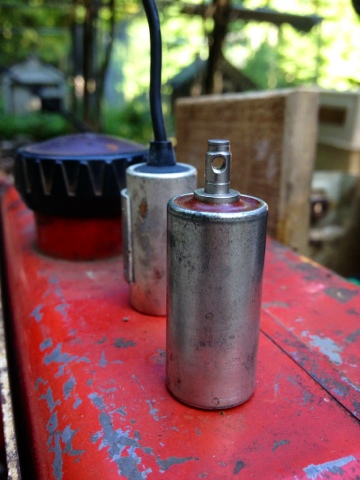
Can anyone find me this part? It's an electrical system condenser for a Briggs & Stratton 7hp vertical shaft motor on a Simplicity Broadmoor 728 circa 1972/4. 

I've been looking at used garden tractors for mowing at the farm, but I've steered clear because these old machines look like they'll be broke more than running. It's only because I've been eyeing them that I noticed and recognized this model of tractor in my father in law's garage. 

I don't know anything about small engines, but have come to realize how simple they are and that's a beautiful thing. I set to taking it apart; troubleshooting amongst the mosquitoes; each day stalled by some new complication, yet progress on each endeavor. The starter now turns, but no spark. 

I guess I've given myself this challenge to distract myself with learning. At the same time, the lawn here needs to be mowed, and there are five non working mowers in the garage, six if you count the Simplicity. I've been trying to sell these for parts on CL, but so far little to no biting. 

Meanwhile, our trusty van is in Ohio, waiting on a new, used rear end from a junk yard in Georgia. Poor thing gave out just east of the Pennsylvania Ohio line. We had to rent a car to continue on to Minnesota, while our credit gets torn into by the Youngstown Aamco. 

The expense aside, I'm befuddled because I was going to borrow my father in law's rototiller, carting it back to NY in the van. It's a large Troybilt, with forward and reverse, big tines, and plenty of power for the farm. I've considered shipping it, but so far in the hole already, and now I'm so focused on starting the lawn tractor that I may never get to it. 

We'll see what tomorrow brings in garden tractor repair. If I can get that machine started, I'll feel pretty good. 


A Scalding Sun


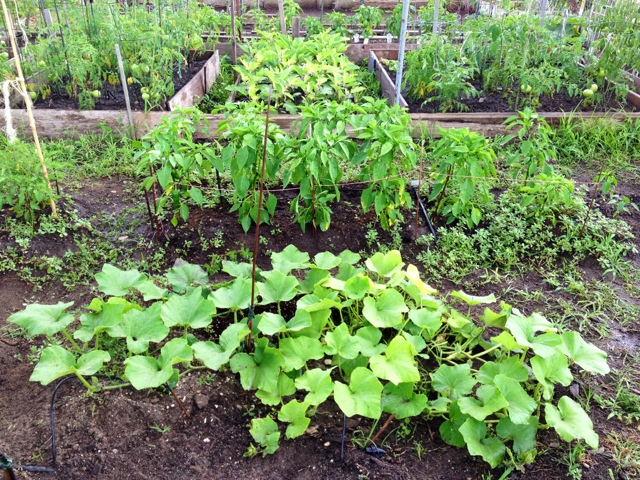
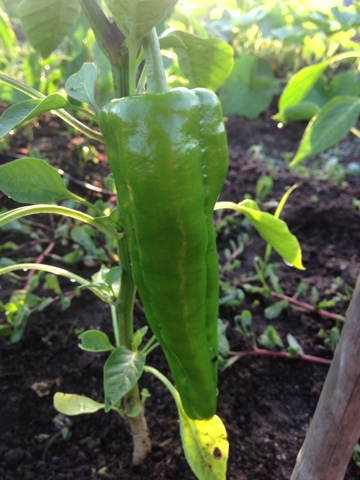
Who am I to say a pepper should be responsible for its own fruit? Shouldn't they be; couldn't they grow enough leaves to ease the peppers into this strongly lit world? I would think so, but alas my thinking is just wrong, my perfect peppers now defiled by the sun. Harrumph. 


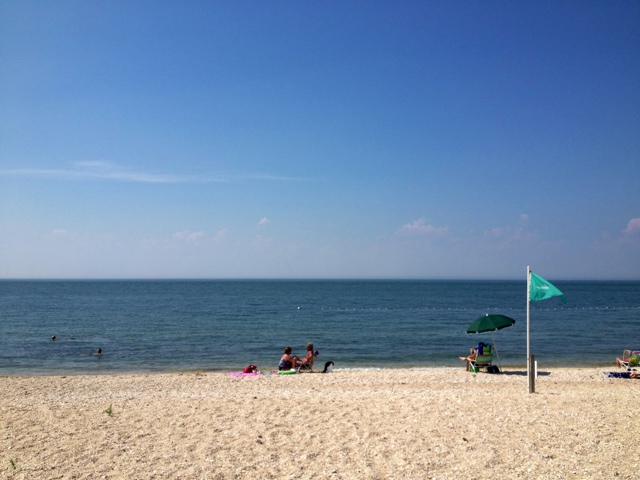
Volunteer squash? Ocean washed seed from someone's garden. 


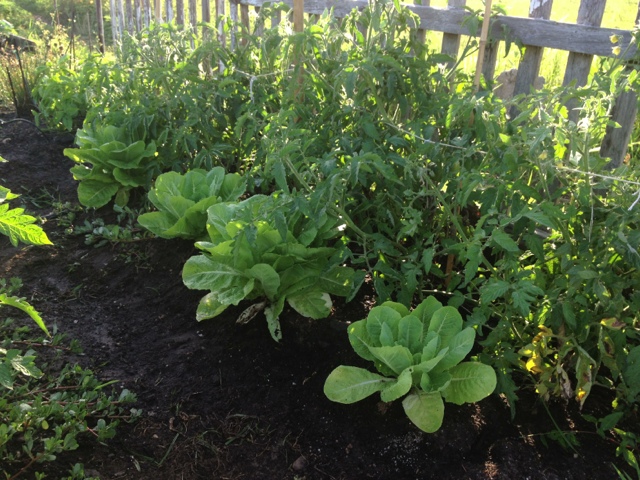
Tomatoes are short and stout this year. 


FIN


It was supposed to be last Thursday, but my instincts told me otherwise. Spend the time, spend the money, they'll be bigger in several more days. I didn't have several, however, but I could spare four. So Monday it was, the last day of harvest, and like so many days I've been out at the farm, it was cloudy and this was welcome. I also had a field meeting with a writer who scribbled so furiously as I spoke I began to understand how easily facts and words get twisted. I'm saying too much, I thought, but the questions kept coming. There'll be photographs, later, at the barn, during November planting, May weeding, and maybe harvest. Mostly, I just felt good that the hardest work was done, or almost, and as it turned out, the bulbs did get bigger, and I felt vindicated for spending the time and money. In a season with a lot of tough luck, this little bit felt like victory.


I've cleaned the field of everything, save two rows of potatoes and a bed of saffron crocus. All put in their place for the season, tucked away, out of the way, and it can be said -I like cleanup. I will pull the potatoes in two weeks and this entire field, save the crocus, will be turned under.


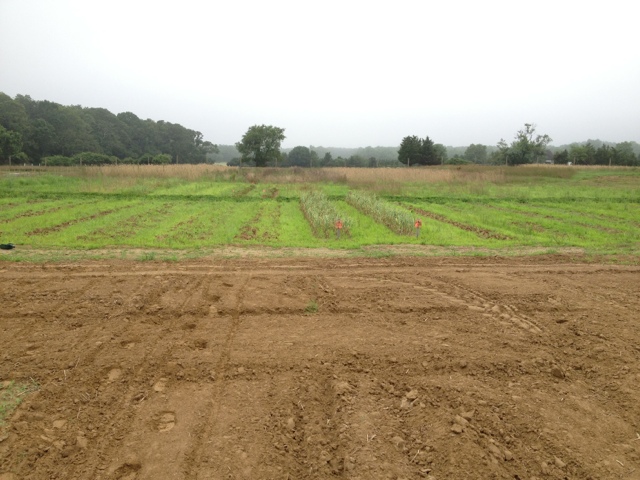
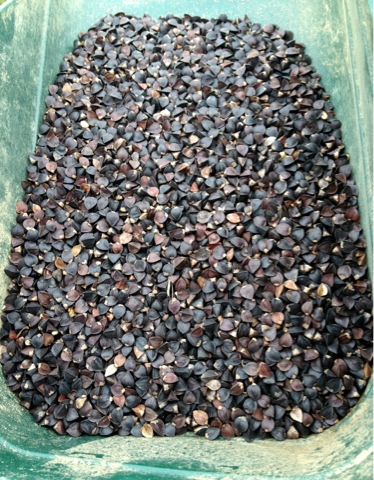
In my new field, the Autumn field, the buckwheat cover is sprouting. Hooray for moisture holding soils! It took me awhile to find the correct spreader setting, leaving some areas dense with sprouts.


This is more like it. In two weeks time I expect to see two foot tall plants if that isn't asking too much. I've never grown buckwheat, but I understand it is fast, loves heat and poor soil, creates flowers bees can't get enough of, crowds out weeds, and turns under easy as pie, decaying without leaving so much as a tough stem. 


Buckwheat sprouts.


I saved organizing and bundling for the barn, where I can stand comfortably at a table in the shade. The Nootka did not get as big as they can, but far better than last year and with hope they will acclimate and size up next season. 

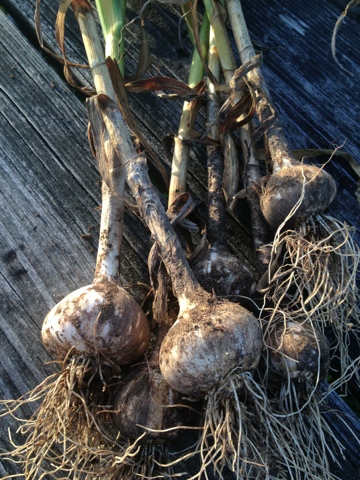
My last task was to collect a few of every strain to bring out to Minnesota for taste testing the differences among strains. This is when I discovered the mounting disaster of the Artichoke variety -they were soft, not good. Immediately I understood what was happening. These were harvested on the wettest days of the harvest -fogged in, mist, out and out rain. I pulled them a week or more early because the outer skins were rotting under all this moisture (remember we had nearly 9 inches of rain in June). So not only were they wet, they had many green leaves and bushy roots. The humidity has been quite high and they were hung in the center of all the other garlic. But what could I do, it was late.

Betsy and I decided to return to the barn the next day. We cut down a thousand bulbs, unbundled them, trimmed the roots, cut the leaves, sniff and squeeze tested all, bundled and then rehung. It took six hours (plus 6 hours of driving). It is not a sure way to stem the rot, but it's all one can do. This is a curing problem for the Artichoke strains only and my take is that it is a special problem born of their deeper domestication. Now I remember throwing away dozens of Artichoke bulbs last season for having stinkers (what I call a rotten clove). I chalked that up to poor seed, but now the information I have read but not absorbed, is coming to light. Artichoke strains are the California strains, the grocer garlic (that isn't Chinese garlic). I suspect that beside the drier conditions of the regions this garlic is normally grown, farmers have automated systems for harvesting and drying these bulbs quite rapidly. Growing these in a humid, wet, maritime environment without a dry curing arrangement is asking for trouble. So now that I have experience, whereas before I had only information, what I'll do beside hope for a dry June is cut the roots at harvest, bundle in smaller groups, hang them at the edge of the curing space, and if needed, cut the leaves after the first week. And if we have that dry June, I will harvest them later, allowing their leaves to dry above while the cloves mature further underground.


Artichoke haircut. Garlic takes up considerably less space once it's trimmed. We are sure to lose more than we culled yesterday, meaning that I will have even less of these otherwise grand garlic for sale this season.


We were wrapping things up just as these powerful storms rolled in from the west. It rained heavily and I was pleased that I had little to care about in the field. We washed the silt dust from our faces and arms with warm rain water, returned to our trusty van (nearly two hundred ten thousand miles!), the highway, and finally Brooklyn.

Now, I write in lieu of preparation for our hot weather trip to Minnesota. There will be work there, as expected, but maybe mushrooms too, in the woods. These trips are good, but they also take a lot out of us, especially now that Rex is in such poor health. He is without vigor and cannot do much before being completely wiped out. These visits are strained by talk of health care, his will, and our distance. Still, it's always hard to leave, and even more so now that he is ill.



The Trenches


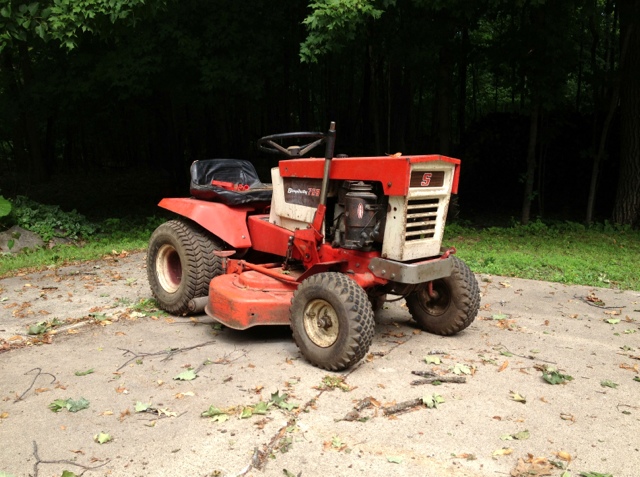
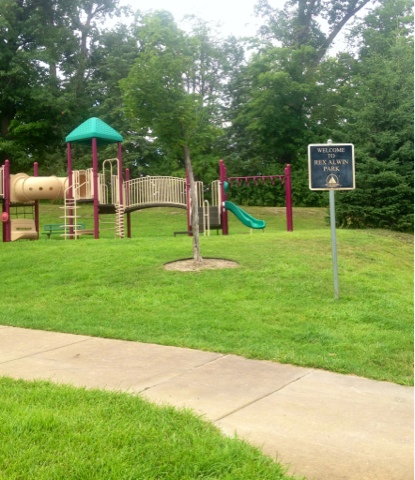
Sandy did something, a paradigm shift, a reorganization. Anyway you look at it, a land grab ensued. Trenches have been dug, fences raised. Blood mulch has been shed.


Tired of watching the weeds grow adjacent to our plot I decided to clear it. I sowed buckwheat seed for coverage, anticipating that I would grow some garlic there this winter. A man from another plot asked if I had gotten the newly cleared plot, to which I said no, and that he had tried to get it but it has been given to the school, which has become nearly a euphemism for the eager collector of plots that has claimed for the school both fenced-in plots pictured above as well as the plot opposite of the Beach Farm and, as it turns out, the plot I just cleared.

The day I was clearing the neighboring plot, the school was present with some of the kids, painting white all the accoutrements of the plastic-fenced, red mulched plot. How come there are no plants, a girl loudly pleaded. I offer the school some green bean seeds given how quick they'll grow, but the school turns them down because school ends the first week of August. Oh. How disappointing it must be for those kids painting signage and fence posts to participate in a gardening activity they never actually experience.

Now I see there's a run on plots. Go there now, I am told, ask for the one, get yer plots, gettem quick while the gettins good. So I walked around cataloguing all the plots unused for years or that had obviously been given up by Sandy's victims. There were two nearby our plot, across the path, one clear across the garden, another tucked between two newly turned plots. I head out to the airfield, into the renovated, well-cooled offices of the Fed. To make this long story (when is it not a long story at the government offices) short, the close plots had already been taken by none other than the school and another long-time, leather-skinned resident with three plots already to his name. One plot, at the other side of the garden, I signed for and became its proud caretaker. It is full of weeds, as they are without maintenance. I may till it under tomorrow and plant some buckwheat seeds (a repeat performance) in preparation for fall planting.

Agriculture begets territoriality, precipitates aggression and defensiveness. It is the foundation of our culture, it is who we are. So well-suited to the garden on the grounds of a Cold War military outpost.


The Early Tomato


It's those golden flecks that turn me off to the hothouse or row tunnel tomato. Fully field grown tomatoes have them, but somehow they appear more pronounced in the store tomato, the early tomato, the hydroponics tomato. I don't think it's an indication of a terrible tomato, just a sign to its origins. 

Well, I bought some anyway to go with our copious leaves of basil from the beach farm.


Hot Barn

It was so hot in the barn that we had to stop here on our way to the farm just to cool down. If we're lucky enough to harvest and bundle the last two beds real fast, we'll get some on the way back to the barn too. 

Nice Peppas


It's been said at the garden that I have the best peppers this year. This pleases me. You know, as I've said earlier this spring, this is the year I dedicated myself to growing better peppers. So far so good, but what's different? 

My neighbor grows everything very well (a little miracle goes a long way, wink wink), but this year his peppers are not taking off as usual. This may be the case around the garden. It was, as you remember, inundated with sea water for several hours during Sandy. 

One of the first things I added to my plot this spring was gypsum (calcium sulfate). Calcium is always needed in our sandy, acidic soils, but then gypsum also has the ability to mitigate the salt overload I had expected from sea water. I didn't add any where the garlic was already growing, however, and the peppers there are a fraction of the size (although seeded at the same time, I planted these in the garden two weeks later). Both have had a couple of doses of organic 3-4-3 fertilizer and the hydroponicist's cal-mag solution plus Fertrell 3 fish and seaweed.

Well, whatever the reason, so far it appears we will get some nice sweet reds and hot green New Mexico chile this year. Can't wait (and I hope we're not in Minnesota when they're ready)!


Tomatoes are also doing pretty well. I moved the bed and tried to avoid strains that last year all too easily succumbed to verticillium wilt, yet there is still some signs of it on lower leaves. We have a few green tomatoes and again I am hoping we'll be in town to eat them. 

I'm impressed with Johnny's 'Jericho' romaine -I seeded it late, most never got planted and croaked in the tray. These were tiny things when I planted them after June one. We'll be eating some tonight.

I picked up some runty, but low (ahem) cost cauliflower starts from Larry's. My burlap "grow bag" was a bust, so I used its remains as a weed barrier and mulch around the cauliflower. Today I seeded a small bed of last year's favorite French green beans (Nickel, Velour). All the remaining garlic has been pulled and sized up nicely without any skin rot to speak of (all thanks to that fine, sandy soil). Today I turned over a neighboring plot, full of weeds for years, and seeded it with buckwheat only to be told that it belonged to another "school." The schools hardly plant anything and when they do no one returns to care for it. But you know what, I may get some more real estate down there after all.


ALMOPOHA

Almost Post Harvest

Harvest could have been finished yesterday but I felt the silverskin 'Nootka' could use a few more days to size up. At least that is my hope for them. Instead of pulling those I weeded the saffron and potato beds (pulled some new potatoes!), cleaned up the field for discing, and removed signs from all the empty beds.


I used my drop spreader to distribute 30 pounds of buckwheat seed over my unused soil. With luck, my neighbor farmer will be able to get that seed turned in with his disc today (you know, before it sprouts!). 


I did harvest all the Marbled Purple Stripe 'Siberian' and packaged them for shipment to the barn. Rather frustrated then that the ladder I had been using to access the loft was missing. So I bundled the garlic and brought it back to Brooklyn. It now sits in the van, all 450 plants, waiting for a proper place to reside before my next trip to the barn on Thursday, a day expected to be quite hot. Several temperature and humidity changes over the course of the week isn't very good for the curing garlic and all I can do is hope that the stuff is hardier than expected. All thanks to a ladder. One cannot operate (especially from a distance) when crucial links to the work disappear. I would hate to head out to the barn to pick up a supply of garlic and not be able to access it. Solution: buy a ladder and haul it there and back as needed -aka nuisance work. 


Harvest is the hardest part of a year's work, but it's quite doable without the headaches of disorganization, traffic, and distance. I gather I well under appreciated how much this could tax my project. It's probably better not to think about the new season right now, although I don't have long to ruminate on the passed season before I must decide to move forward with another. The seasons don't start and end, but flow seamlessly into one another. 


Midnight Harvest


Summer has finally arrived at the Hamptons, turned on by the hoards or maybe the bang of Fourth fireworks, like some sort of intensity driven clap-on switch. The delis typically filled with workmen at noon are now cluttered with bikinied girls in flip flops and boys with upturned collars and canvas shoes. Seasoned drivers hazard the zigzag route, north of 27, through residential neighborhoods and occasional farm fields in order to avoid the maladious march toward Long Island's farthest beaches and towns. The area street signs are vertical, an effective way to confuse the northern route with difficult to read black on white vertical letters. Entering the Hamptons is a process that was old when I was 10 and a sore point now that work is waiting on the other side. But I digress because my point was that it had become sunny and hot. My prior harvest trip was humid, but cool, foggy, with occasional rain storms. Saturday's sun was exceptional, although the heat improved by a few degrees on Sunday.


On the second morning of this three day harvest trip, we spied the fox. I've seen one before, during planting season, traipsing across our farm fields. 


The hard work of harvest is bolstered when the yield is excellent. Unfortunately, due to the many conditions I've discussed in prior posts, the strains pulled on Saturday and Sunday were so unproductive as to be completely unmarketable. Purple Stripe 'Chesnok,' Creole 'Aglio Rosso' and 'Burgundy,' Porcelain 'German Hardy' and 'Georgian Crystal,' and Asiatic 'Asian Tempest' all performed so weakly that I cannot offer them to the public and do not think highly of them as seed stock.

There is a notion in the garlic seed business that garlic needs to "acclimate." There is another notion that to get high yields, one must start with large cloves from large bulbs. So, if the bulbs are yielding little, say less than an inch in diameter, and you consider the cause to be acclimation, then you must plant those little cloves in order to "acclimate" them. But, then you are growing small cloves from small bulbs. Is it a catch 22? I'm going to find out. I cannot afford to buy all new seed bulbs of poorly performing varieties and strains. I will need to plant these and see if I can size them up with improved cultural conditions in the next growing season. Those that aren't desirable for their flavor will be discarded.


Betsy and I worked long days. If it wasn't for my wife's steadfast help I wouldn't have come close to harvesting, bundling, labeling, and hanging the thousands of bulbs ready to pull. I recall, last week, having a moment where doubt set in from the overwhelming quantity of work before me. On this trip, and with good reason, Betsy had her moment on the second day. This work wasn't her choice, it was mine, and she wanted to know where all this work was leading. I didn't have any answers.

I think there is an idea out there that 'farm' is a couple's endeavor. I believe it is component to the wholesome image of the American farm family. My farming neighbor chastised me a week ago as I harvested alone, asking where Betsy was while I was "slaying the beast that I created." My answer to him was that she had better things to do than pull garlic out of the ground. This kind of labor is not ennobling and it doesn't pay bills. It is seriously fatiguing; sore back and legs, sun burn and bug bites. The folks "returning to the land" in this area are often people with means looking for a more meaningful lifestyle. That doesn't make the work any less hard, but it does buffer it when the returns you hoped for aren't there, as you clean up at a reasonable hour, shower and sleep in your own house so that you can get back at it the next day. My project is sharply delineated by limited resources and the generosity of others. It is promulgated by will, muscle, and a creative spirit. My wife has better things to do, but I am grateful for every ounce of energy she has put into my endeavor.


The field is almost clear now with the exception of the Marbled Purple Stripe 'Siberian' and Silverskin 'Nootka Rose' and 'Rose du Var.' The weeds, primarily heat-loving crab grass, have taken over. I will head out this Friday for three more days of harvest and other tasks to wrap up the 2012-13 growing season.


It was sundown by the time we made it to the South Ferry to Shelter Island and nearly dark by the time we made it to the barn in Southold. I was grateful that the person renting the farmhouse adjacent to the barn did not complain while we worked into the night and even more so for the lousy pizza place that was still open on a Monday in a town with very little to offer after nine pm.


This is the curing 'loft' when we arrived, the blue light of late evening contrasting with the yellow of a studio clamp light.


And this the loft at midnight. The crates are filled with Elephant Garlic which we had no time to bundle and tie, and no manner to hang them. We spaced them widely within the crates, alongside the crates, and even on top of the crates. I think I may place them on a rack over the shallots since they are so large. The 'loft' as it is barely has any room left for the incoming Siberian and Nootka. Each cord only a foot apart and bottoming out at about four feet gives little room for navigating the garlic.

This weekend will be the last days on the farm for a while as we head out to Minnesota to visit Betsy's family in mid July. The garlic will be hung and curing in the barn. If all goes well, garlic sales will open in early August online at Hudson Clove. In addition to online sales, Hudson Clove has been offered a table at New Amsterdam Market, although when they will have another market is still up in the air thanks to corporate-friendly planning by Mayor Bloomberg and Speaker Quinn. Should there be a market after August 1, I will let you know.


Garlic By Morning


Because I'm still asleep. But walking around. We harvested over 3000 bulbs over the last three days. Each individually dug with a shovel, hand-pulled, bundled by size, tied, tagged, crated and hung. Add to that insane amounts of Hamptons' traffic, roadside car repair, persistent allergies and the hottest days of the summer thus far. After finishing this last night (is 12 am the morning?) we headed west. Bleary eyed by the time we reached Riverhead, I decided to break with form and crash at a motel off Route 112 (thanks to neighbor Edith for feeding our home bound beasts), rising to suffer morning commuter traffic so that I could make it to work by noon. We are beat. Only one more harvest round to go, in three days and that will be that for the 2012-13 growing season.

Please check out Marie's post at Edible Brooklyn about Hudson Clove. Thanks Marie!


Missing The Beach Farm


When garlic harvest is done, Betsy and I will be able to pay some attention to the Beach Farm. I miss it. I stopped in on Monday for twenty minutes to pull the garlic grown there. I was pleased to see our tomatoes, lettuce, and even peppers were well on their way even though I've paid no attention. The drip system was never installed since Sandy took out the system. Incidentally, our Orbit automated timer survived saltwater inundation. I should write them a letter! 

 Tomatoes and lettuce in their new locale. You can see the mish mash of drip hose.

Peppers I swore to do well with this season. So far so good for not even trying.


The Fog of Harvest


Ten days ago harvest began. If you are at all like me, you want a controlled slide down this steeply descending slope. But there's no way because there's only me, there's distance, there's incessant rain, and there is the art of pulling the garlic at the right time for each individual variety -not over-mature, not under, and hopefully not rotten. A new field and a new environment have a lot to say.

The first to pull are the Turban and Asiatic strains. Skins more rotted than desirable thanks to the deluges we had mid-month. The silty soil here in Amagansett holds moisture quite well, easily 10 days from a good rain, and a considerable amount of rot had set in on the outer paper sheaths around each bulb. If anything I consider myself lucky that I was able to keep as many as I did. 

On average the Turban strains netted a 13% loss from the quantity planted. The Asiatic strains averaged a 17% loss. While that number is pretty high, I'd say it should be even higher if I consider that I will not market 95% of the 'Asian Tempest' and 70% of 'Japanese' because of poor size. After good early season performance, these strains suffered during the critical months of April and May due to imbalanced cultural conditions, cool and wet days, the consequent maggots (seed corn maggots, not onion, says Cornell), and then, finally two and a half months worth of rain in one week. I fully expect an almost total loss of marketable Creole and Purple Stripe strains as well when they are harvested later this week. 

But there are also tough strains that held up to the less than ideal conditions; Rocambole 'Italian Purple,' Marbled Purple Stripe 'Siberian,' and what appears to be an exceptional late season performance by the Silverskin strain 'Nootka Rose.' The Elephant garlic appears in good shape and is ready for harvest. The Artichoke strains, which I harvested last Friday and Saturday, were in that peculiar harvest space typical of the new location. I think they could have sized up a little more, but clearly the skins were going to rot so they required pulling. Fortunately, most of those bulbs are marketable, from 1.25 -2 inches in diameter. That was not the case with last year's Artichoke that were uniformly undersized for the strain. 

Artichoke 'Red Tochliavri' at harvest. The consistent tilth of this soil still amazes me.

The most peculiar performer is the Porcelain variety, having done so well until rather recently. These are usually the hardiest garlic plants, but the leaves have been dying down significantly faster for bulbs that should be harvested later than the Rocambole. A trip to the Beach Farm where I have twenty or so of the same strains of Porcelain growing showed a completely different story. Even though the Beach Farm is warmer on average, it appears that it is maturing its bulbs later than the garlic farm. The BF plants all looked healthy, showing significantly more green leaves at the same date. This is the opposite of what I would expect. Even the Purple Stripe "Chesnok Red' has done exceedingly well at the Beach Farm, whereas at the farm it is looking to be a total loss.

Purple Stripe 'Chesnok Red' at the Beach Farm.

A survey of the past month's weather data, from the nearest functioning weather stations shows that the Beach Farm received 8.93 inches of rain between June one and July two with an average monthly temperature of 70 degrees while the garlic farm received 7.6 (this station is Hampton Bays, but it is an indicative number) inches of rain with a monthly average temperature of 67 degrees at the nearby Amagansett station. The soil at the Beach Farm, despite an inch and a half more rain, is a considerably drier sandy loam. My guess is that the cooler temperatures and near constant moisture at the garlic farm has a negative effect on the more fussy garlic varieties. 

So far I have pulled 2134 heads of garlic with nearly 4500 left to go (although that number is likely higher than yield). I expect decent returns on Italian Purple, Siberian, and Nootka. It is a dour task to pull garlic that is sickly or undersized, but that appears to be part of the harvest this year for Chesnok, Burgundy and Rosso di Sulmona as it was for Asian Tempest. I will try these varietal strains one more time, although in limited quantities given the loss of potential seed garlic.


This is the bunch and label rig. If the sun is shining, the harvested garlic needs to be in the shade.


Impromptu shed (with air) built out of my neighboring farmer's leftover wooden pallets. The garlic can be stacked in here over night until it can be shipped to the barn on following days. If it rains, there is a tarp on the roof.


Off to the barn. We can only carry so much in the van.


Two ferry trips, one from Northaven to Shelter Island and another from Shelter Island to Greenport. From there we drive to Southold where the barn resides.


Hudson Clove is sharing this barn with Browder's Birds and Invincible Summer Farms.


The barn is old and dusty with a few holes in the roof, as you would expect, but it only took an hour or so to get it prepared for the incoming garlic.


I moved those stacks of crates, snow fencing and the big slider door on the floor out of the main space.


I am told that I cannot go over there. Apparently it's above the young chicks. I can use anything up to the barrels, but no doors can be opened for ventilation. In this area I racked up the French Gray shallots.


After the cleanup.


As it turns out, barns are full of useful things. For one thing, the stack of old vegetable crates came in handy. During cleanup, I placed into the barrel a pile of mysterious wooden implements that later came in handy for stringing up the garlic.


No matter how tight I pull the cord, the weight of the green garlic pulls it down far enough that the bundles slide to the middle. Those mysterious wooden implements happen to have a hole big enough to thread the cord at just the right height, so I used them to prop up the center of each 12 foot length of cord.


We will have to get creative when the bulk of the garlic comes in as there is only enough air space for 2/3 of all the garlic.

Well that is all for now. I am actually pretty tired from all the driving and physical work and will be satisfied when the harvest is over. It feels good to see empty rows framed so nicely by the crabgrass and clover. 


Long Island, Redux


The other morning while taking a brief rest from harvesting I felt overwhelmed. I was on farm to harvest the shallots and that was taking longer than expected and all the while the yield was unremarkable. Overwhelmed with the work in front of me and disappointed with the fruit of my labor, I made a post suggesting that the end of 'distance' farming is at hand. I meant what I said, but I pulled it offline before most of you could read it. I wasn't able to put the energy into writing the full story, and frankly it's really hard to blog and harvest, but I had at least some awareness that I could be misunderstood. 

So to clarify my feelings, some of what makes my farming more difficult is the 6 hours traveling to and from the farm. Just recently I have increased travel time because the barn space offered to me by the Peconic Land Trust is in Southold -on the north prong of the fork! I am extremely grateful for their help and without them I would be trucking my garlic back to Brooklyn, but the distance has added a new cost (two ferry trips each way) and even more time. My frustration is not with them but simply the untenable operability of small time farming on Long Island. 

Facing only so much time in a day, and nearly every day with impending rain recently, I felt a good dose of doubt for the first time. And it's about time! 

Seriously, all my farming neighbors live in the area, go home to hot showers and meals, and are available to accomplish the work over several days whereas I often sleep in my van (miserable in summer), eat whatever's available, get pretty gnarly, and have to have the project done by day's end or potentially lose the crop. I think my attitude has been quite extraordinary given the challenge before me! I would be nuts not to question this practice. 

So is harvest. It comes almost all at once, with very little warning and you must get it done or suffer from rot or mold. It's very wet in Amagansett, more than I ever imagined. Yesterday my hair was wringing moisture out of the constantly blowing air and puddles formed under trees. I am lucky in that I can take off days in summer from school, but with limits. I can't call in because the artichoke isn't fully harvested and its about to rain. 

There is no easy access to the upper barn, requiring climbing and hoisting everything up to the upper step of an 8 foot ladder. Last night I worked into dark building racks for the shallots, the interior of the barn black as night, with only my phone as a source of light. I feverishly laid garlic all over the barn floor because I didn't have time to tie it into bundles on farm. This allowed it to sit until I can return. They need to be labeled, they need to be tied in bundles of ten, the cord needs to be strung, and the bundles  hung on the cord. It is quite warm and humid (wish it wasn't so) in the upper barn so the sweat burns my eyes as I work. 

If I hadn't stopped to think about the work, from 7 am to 9 pm every farm day, even I would not recognize what I am putting into six thousand garlic bulbs and eight thousand shallots. This is not a lot by ordinary farm standards. In other words, I cannot accomplish what I set out to accomplish without a different paradigm. 

So when I talk about 'distance' farming being over, what I mean is that distance itself will probably need to be removed from the production (allowing the market to be at distance). At 14000 plants I am at my limit for what I can do from three hours distance. Any increase will require me to be proximate, to have a barn close, to find help more easily. 

So I'm not done, not even burnt out (my mind has already been on the next planting), but looking at ways I can improve operability given the realities of farm work. 


Field Hands


The farm is at the beginning of full summer swing. All around tomatoes and peppers and eggplant are being planted, tractors are buzzing, and I well believe that there is an implement that vacuums up Colorado Potato Beetles. It has been running nonstop. We have been knocking ours into a cup.


The farm isn't much to look at these days. My white clover has become a central strip of billowing mounds of green. Crabgrass is the predominate weed, particularly at the base of each garlic plant. Meanwhile, Smartweed, Lambsquarters, Dogbane, Sorrel, and a variety of unknown grasses grow an inch an hour.


The peas are high, tasty, abundant. We eat what we can.


I was able to finagle a tractor to disc the cut rye and field pea cover crop. It must be done again, but I was happy to get this project moving. This is the field that will be planted in November and I am determined to have it in better shape than the current field. I picked up an additional twenty bags of lime (for a total of sixty 40lb bags) which I hope to get spread this week. Finally, I also picked up my order of 50 pounds Buckwheat seed, which I also hope to get in this week. The Buckwheat will be turned in August.


Betsy has not been to the farm and probably for good reason. When she does come by there will be much weeding to do. I did the general clearing and soil loosening with our small, sharp hoe and she followed with hands and knees. It takes two people about one hour to clear each forty by three foot row. The work is tedious, yet I cannot be too sure at what point you can let the weeds go. If the garlic will be harvested within 10 days and the weeds are below six inches, I leave them, otherwise they must be pulled. Visiting one day a week from mid May through June is hardly enough to keep a field this size weeded. There will need to be a new weeding paradigm next season.


 My farming neighbor brought a flame weeder. While it didn't seem all that productive for row crops, it did make some sense for the rapidly filling Saffron bed. The Crocus are dormant, so I could flame the weeds without harming (I hope) the corms under the ground. The weeds were do moist from all the rain we had been having that torching the row took longer than I thought. Not only that, it appears to me the grasses will be right back in a week or so. Ultimately, flame weeding does not appear to be a productive weeding practice.


Ocean side gin and tonics in classy plastic cups after a long days work completely justified.

Now that the weeding is done we move onto harvesting over the next three weeks. We've already harvested the Turban and Asiatic varieties. The shallots are completely ready and have been for at least a week (I was waiting for them to lodge -it never happened). They will be harvested this coming Thursday or Friday.  After those will be the Artichoke strains.