flowers

The Gardner


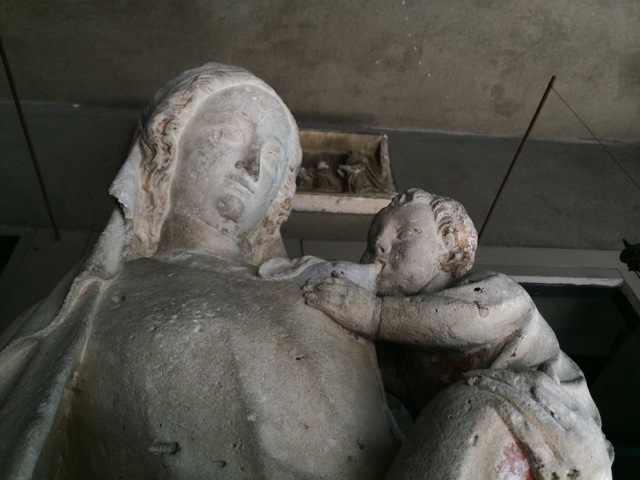
My friend, Steve, took me to The Gardner -a Boston mansion of yore festooned with incredible artifacts, whose rooms invite photography yet rules regard it with suspicion due to an embarrassing theft of grand proportions 25 years ago. 

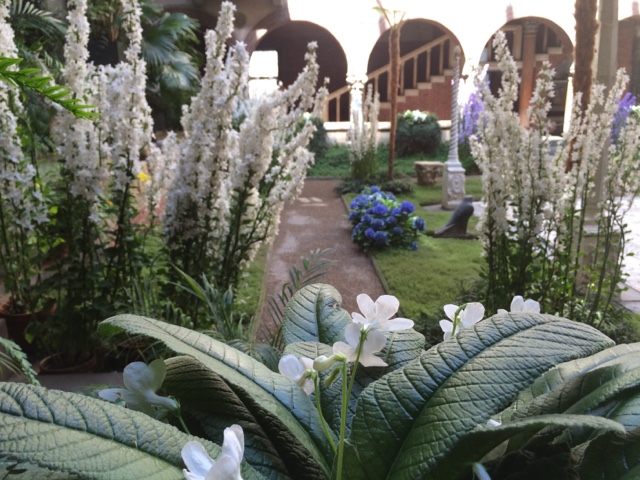
One may use a camera on the first floor, from which these images are taken. The court yard is truly divine. Those tall purple and white flowers belong to the plant Campanula pyramidalis


May Flowers


It is the season of the oak gall wasp, bungeeing caterpillars, and relentless paper wasps. At night its June bugs bouncing off screens and, tonight, the first lightning bugs. We have been miraculously without mosquitoes -no one's complaining.


In the woods Red Columbine, Aquilegia canadensis, bloom.


It's a bit regal


In its dusty crown.


The first sight of the Woods Geranium, Geranium maculatum, is always a surprise in the shadowy under-canopy.


Geranium grows throughout the woods, but only one here, two there. In the area I call the council circle (laughably and yet to be introduced here) the geranium grow profusely.


Virginia Wetleaf, Hydrophyllum virginianum, has been in flower for over two weeks now.


It's pale purple mass of flowers create glowing, floating dollops wherever it grows (and that is nearly everywhere).


Spring Ephemera


Too much woods and too little time.


I am excited to find ordinary ramps, Allium tricoccum, the kind that grows in dense matts, has larger leaves, and reddened stems in a far corner of the woods, just below the road, next to an ash tree, Virginia Wetleaf and Wood Anemone. I've looked in all corners by this time, and this appears to be the only patch making the common ramp the rarer of the two in our woods!


In other ramp news, this patch of A. burdickii appears to have been chomped by deer with good taste.


At the edge of the north slope, Large-flowered Bellwort, Uvularia grandiflora. Could its wilted appearance be a defense against browsing deer?


According to Illinois Wildflowers: "The presence of this plant in a deciduous woodlands is an indication that much of the original ground flora is still intact." That's good news, but it's not the whole story in our woods. I do think this bellwort is another worth trying to cultivate.


The quantity of Viola species makes identifying them a hassle, at least for busy guys like me. They grow everywhere -in the lawn, in the gardens, in the woods, on the old farm roads and paths. They are lovely. This one might be Northern Bog Violet, Viola nephrophylla.


We have blue, white, lavender, purple and yellow violets growing all around. Above, Downy Yellow Violet, Viola pubescens.


Jack In The pulpit, Arisaema triphyllum, are coming up throughout the woods.


Jack can change to Jackie from year to year, depending on reproductive success in the prior year. According to Minnesota Wildflowers: "Males tend to be smaller than females and have a small hole at the bottom of the spathe which allows pollinators to escape (with their pollen) more easily. Female plants lack the hole and pollinators are more likely to become trapped, better ensuring successful pollination." Pollination leads to the multicolored fruit seen here.


Wood Anemone, Anemone quinquefolia, growing in the drier, upslope woods near the old tractor road. 


In another, forgotten location, a pink variety of Wood Anemone.


I spotted this from across the bridge. Lousy phone photo, but maybe you can help ID it. The leaves are reminiscent of Red Elderberry. It is a pretty weak specimen, looks to be damaged by limb-fall, and is growing under a canopy of cottonwoods.


Walking the old tractor road, pulling buckthorn, I leaned in to pull this one until my vision kicked in to halt me.


A nest of baby spiders, no idea what kind, but possibly an orb weaver type. An ephemeral of another kind -off into the world younglings, and do your good work.


__________________

The greatest, visible threat to the woods and its ephemerals is the invasion of the biennial herb Garlic Mustard, Alliaria petiolata, and the shrub or small tree known as Common Buckthorn, Rhamnus cathartica.


In this fine looking scene it is easy to forget that it is greened with an army of mustard only a week away from blooming. I've begun pulling it out as I walk through the woods, but this process eats time quickly and there is always more mustard to be found! I may have to wholesale cut them back with a weedeater or sickle just to stem the tide. As is so often the case with strong weeds, these break at the root only to regrow. Any gardener knows what happens then -it simply grows back even faster, setting flower and seed on a smaller, harder to pull plant. Garlic Mustard has a 5-7 year seed bank, but it should get a little easier each year.


Garlic Mustard is bad, but nothing in our woods is as challenging as Buckthorn. Every fallen tree is another opportunity for this plant. While this corner has been a Buckthorn stronghold for many years, it really took off after a great White Oak toppled in a bad thunderstorm four years ago. It now grows on the trail as much as to the north and south of the trail.


Buckthorn can become an impenetrable thicket above and below ground. A tangle of fibrous, tough roots chokes out plants below the soil and a dense cover of leaves smothers ephemerals and low growing shrubs from above. Although many young saplings die back in winter, each sprouts new leaves from the lower stem and ground each spring. I hand pull up to 1/4-inch diameter twigs in advancing areas, but in established "groves" larger shrubs and twigs must be dug out, doing further harm to the plants that may have coexisted thus far.

Within the great wetland, large Buckthorn grow on the slightly higher ground occupied by the beautiful Red Osier Dogwood and Pussy Willow. Its seed is dropped by perched birds, which then sprout and overtake the dogwoods and willows. I haven't seen it to go head to head with cattails or get a sure foothold in the ephemeral pond of the back swale. In fact, after last year's flooding, I see many small upstarts didn't sprout this spring. Can we flood them out? If not water, then I love the idea of burning them out, although this would be hard to do safely.

Forestry experts, ecologists, park managers, and many others often discuss the advancing Buckthorn and Garlic Mustard as an ecological issue, a problem of "native" forest habitat. Surely it is, but for me this is a gardening problem. Intellectually, I agree with the experts, but my motivations are less than pure. I simply don't like the look of a Buckthorn monoculture and prefer to be able to see through the woods. I like surprises, yet Buckthorn and Garlic Mustard offer none other than the ability to show up in a previously unheard of location. It may be that ecological problems are more easily taken on when we believe we act for our own interest.


Bloodroot and Other Ephemera


The march of spring ephemerals is on. One of the first is Bloodroot, Sanguinaria canadensis. I spotted this one near the driveway and waited for it to open.


Morning to evening, I always missed open hours.


Another day, I found a group on the north slope, just off the old tractor road.


Brilliant. Bloodroot (above), sedge, ramps (not blooming, but edible), and Cutleaf Toothwort are up and doing their ephemeral thing. The last one, Cardamine concatenata, is new to me. It has finely cut foliage and delicate four petal flowers. It is a lovely plant. Should its leaves hold on as the season progresses, it may be a good candidate for a garden bed.


The Minnesota Wildflowers site helped me identify this one -first reported a couple of weeks ago. It's name is Virginia Wetleaf, Hydrophyllum virginianum, and native to the eastern woodlands of which we are on the very western edge.


It is so much easier to identify plants with their flowers and, as is so often the case, guides use bloom time to categorize species. Not knowing when this plant was going to bloom added to the challenge. So, I simply clicked on every spring blooming wild flower link until I found a leaf that roughly matched. The match had leaf markings that my original image did not show. I went out and looked at them again. The telltale markings, the source of the common name, were now apparent. With flower pictures to complement the ID, I also recalled seeing these flowers around the woods in June. Wonderful.


Of course, new things are popping up all the time.


All the while the leaves on the trees are a ticking clock that soon strikes shade.


Our Bubble


It's cold, people been saying it, making hay about it, FB feeds are full of it, especially the city New Yorkers. The native Minnesotan doesn't make too much of the cold, but I'm willing to point out that, here, it's cold all the time, so much so that when it is over 15 degrees F, we say it's warming. A few days ago, at a restaurant, the server said it was freezing out, and I laughed because, you know, it was 33 degrees below  freezing. Freezing (32 degrees F) is warm, here. To put our coldness problem another way (cue the northern gardener eye roll), the frost free date is solidly mid-late May. That's right, May 15 or 22.  


So how wonderful that I should discover a conservatory in our neighboring city, St. Paul, open to all citizens for free, or donation. It is not grand by world-class glasshouse standards, nor festooned with cutting edge design, but it is warm and humid. Wow. Such a simple pleasure. The indulgence was smile inducing. 


A stream with moss-covered stone and fern.


And palms.


Some tropical flowers.


Then, an extremely formal garden wing with standard forced bulbs and yet, amazing. 


The light, the humidity, the warmth just what we need.


It reminds us that spring, too, happens here by conjuring its sensation.


That artifice is in our nature.


And it thrills us.


At a cost.


But do not dwell on that.


Enjoy the glass bubble.


The fish tank.


And the overpopulating Koi.


Brightly colored birds.


And Orchids.


And be out the door by four.


The UnBecoming (of a) Garden


When I announced to my landlord that we would be leaving, he could barely contain his joy. It was not so much in regard to our departure as it was the opportunity to share the news with the landlady. The rent shall be raised! Hallelujah! Praise be to God! And that garden, enough! Her disdain for the garden means that this garden plot will be no more, as he wasted no breath to tell me that as soon as we depart, the garden will be filled with concrete.

So the plants you see here, and so many others, will not make it without me, unless someone comes to rescue them this week. Transplant is usually no big deal around here at this time of the year, but the weather is about to turn significantly colder at night, freezing these out and making it harder to identify what is what. That said, the ground is unlikely to freeze and most should be just fine.


Russian sage is a a tricky transplant, although I succeeded well enough last year. It's fuzzy calyx never loses color, the wispy leaves, pungent odor, drought tolerance and also a bee's delight, are plenty of reasons to plant it.


Gaura, still blooming, is also drought tolerant (I have a lot of those). A great plant.


An aside, the petunias started flowering again this October. 


They are unlikely to survive the coming freeze.


Asters, so many asters. Why do without them in autumn? This one doesn't self seed,  is easy to keep in check and is loved by flying insects.


The climbing hydrangea will be coming with me, eventually. 


I cut it back hard a few mornings back and will suffer the cold this week to prune its roots. Along with the climber rose 'New Dawn' and my grandmother's tea, it will rest in a trench covered with wood chips at a friend's in Williamsburg until I can take them to Minnesota.


Plants I have available:

Dwarf spirea (pink flowers, chartreuse foliage)
Everblooming shrub rose (magenta flower)
New England and NY Asters, (blue-purple flowers)
Yarrow (yellow flowers)
Tradescantia (blue-purple flowers)
Snakeroot (white flowers)
Daylily (orange, orange-burgundy)
Geranium (the real one, pink and blue flowers)
Phlox (pink and white flowers)
Sedum (different kinds, large, small, pink flowers)
Primrose (yellow flowers)
Coneflower (pink, maybe white)
Heuchera (copper and mahogany leaves, white flowers)
Dicentra Eximia (pink flowers, lacy blue green leaves)
Goldenrod (non-spreading variety, yellow flowers)
Chrysanthemum (Korean type, apricot flowers)
Sage (deep blue-purple flowers)
Culinary sage (pale purple flowers)
Hosta
Liriope (Purple flowers, blue berries)
and many others.

If you are interested, email me: nycgarden@gmail.com. You may have to do this on your own, but I will tag the ones I plan to keep if I cannot be present to help out.


Have Garden, Will Travel


What is one to do with a garden full of plants when moving in the dead of winter? Certain plants can be given away, but one gets attached to others. My large-ish Hydrangea petiolaris, Grandma's tea rose, the iris, Dicentra eximia? I can dig out almost any plant in my garden at almost any time for transplant here, but they need to travel. Far. To a frozen earth zone. It will already be below freezing in a week's time there, it may never freeze here.

Some cuttings will fly in Betsy's suitcase on this Tuesday's trip, although it may well be too late for them. Mulch will be applied. Others will need to be nurseried until they can be collected, driven, and replanted. This may very well be in the heat of summer. Not ideal, but I've been lucky before.

It would seem, at the moment, that moving plants should be of the least concern for anyone leaving their position of ten years, moving twelve hundred miles away from friends, family, a network of colleagues, packing an apartment and two art studios, and going about shutting down one's life infrastructure (bank accounts, utility accounts, mail, and all else). The plants, then? Really?

Yes. Consider it a way to carry forward a piece of myself, something familiar, all component to an identity built over a decade in one place. I will not see the neighbors from the garden as they pass, but the plants will remind me of them. I will not be able to smell the sea or listen to the cacophony of the fall migration, but the plants will suggest it. The plants become a memory bank, or rather a trigger to it. They help establish myself in a new place. This is nothing new to me. I have perennial sunflowers from my garden in New Mexico, and fifty year old iris and roses from my Grandmother's house, and asters and primrose from a field in Maine. If this summer's herbicide spraying didn't kill them, I will move Mayapple saves, transplanted from Van Cortlandt Park, and Seaside Goldenrod from a pier in Red Hook.

When we move there are always things we are eager to leave behind. These things go without saying, all the better to help the forgetting. Carrying forward and leaving behind is inventive, recombinative action. We aim to change, so we change something.


Chrysanthemum (your choice, could be Dendranthemum) 'Sheffield Pink' is the jazz hands of the autumn garden. A few stolons of these will travel, but might not survive Zone 4b.


I have many asters, I cannot even recall which is which any more. Rooted cuttings will travel. New York Asters are good within Zone 4-8.


'Alma Potschke' will travel, although it has not done well for me here (NE Asters suffer disease), Zone 4-8.


Gaura blooms long, is graceful, but I have a hard time believing it will travel well. Maybe. Unlikely to survive zone 4b.


Clever aphids, so well-matching the colors of the lily stem, won't travel. The lilies will, however, be shipping out with Betsy on Tuesday.


The autumn red leaves of primrose will travel. Zone 4-8.


Heuchera, or Coral Bells as above, will travel. Zone 3-9.


Well, no, not these. Although we can bag up the begonia for winter storage.


Hmm. The 'New Dawn' climber is a beast. It's blooming again and can tolerate some shade, in this case, underneath the Zelkova. It will get pruned hard, and will travel, but when? May need to be nurseried until warmer weather returns.


The shrub rose? Sure, it blooms forever, but I've never gotten attached to it, so it won't travel.

Today I will head out to inventory the garden. Some plants will be missed, it is mid autumn after all. And soon, very soon, a plant giveaway will be necessary. Interested? Email me: nycgarden@gmail.com


The Cosmos


It took me over a week to pull the Democrat primary fliers off of the borage. This is my confession. Had I made time for maintenance, I would have noticed that the cosmos seeds had finally grown into their own and that the borage has come down. The dayflower may not have taken over quite as much as the chartreuse potato vine, and the pots, yes the potted plants would be just a little less, shall we say, tan. Of course there is little I could have done with the advance of shade on the front yard and the plants there are keen on a solution, and even less I could have done about the spraying of herbicide under the yew tree, terminating my mayapples, lilies, monkshood, phlox, and yes, poke and smartweed. If I were a more attentive gardener, the lord may have not concocted such a browning scheme. Shall I say a few hail Marys now?


And the Solidago has fallen over, making it less appealing to me, as to the bumble bees that fly right on by.


The Russian Sage has bloomed for months; a proud, successful transplant of a well-dug-in, tap-rooted perennial. White Gaura is its friendly neighbor.


Appealing about this sage is its pubescent, lavender-colored calyces that outlast the pale blue flowers, extending the appearance of bloom far longer than the flowers alone.


The bumble bees also find it quite appealing.


But not, to these bees, as appealing as the large Heuchera, with it's small, white flowers nodding behind the autumn marooning Primrose leaves.


 Around it, a swarm of bumbles.


Prospect Of Shade


Shade, we love it. It is cooling and pleasant to stand beneath the transpirating canopy, but it also completely changes the world beneath it. The Russian Zelkova trees planted by the city four years ago (has it been that long?) are fast growing and have forced the plants formerly in full sun to be on the move or die trying. Some, like the Phlox seem to relocate their young each year to the east, toward the gap in the trees. Others offer a slow decline, like the yarrow and some asters, where others reach, reach, reeaach as the lily, and some simply disappear like our perennial ageratum. We've moved what we can, having only so much sunny space in the side yard.


Not long ago this area baked under full sun in all four seasons.


New Dawn is known to tolerate some shade, but even our hardy specimen has less leaves than in previous years. It has bloomed, although less vigorously, but will need to be moved to a sunnier district in the Autumn. That will be a tough move for a plant with a thorny trunk the size of my arm.


Underneath the New Dawn, the Spirea. It too will need to move on.


Tickseed, Coreopsis, likes the sun and gets some, a couple of hours worth, as it resides in the shrinking gap between two Zelkovas.


As does my grandmother's tea, which has bloomed more than ever before, a feat for a plant in declining sun and over fifty years old.


And we couldn't live without its scent, which is bested only by the iris and maybe our lilies. But we've no place to relocate it for the next season and may just have to relocate ourselves so it may live on.


The Long Season


It's been a long and slow June flowering season. Many of the flowers that by now would be fried have held on so that many, much like the flowering trees of spring, are sharing space that don't usually find occasion to do so. Our side yard took a couple of hits this winter, primarily the loss of the corner Chrysanthemum and the weakening of the blue flax to just a couple of stems. It's a challenge to keep the sedum from being smothered by taller plants, yet the dayflower and smartweed continue to sprout in the most unlikely locations. I've lost the New York Ironweed, but the solidago and asters hold on. Only a handful of elephant garlic have made it to flower and those were placed in the sunniest locations. The lilies are shooting up, but will flower later, yet if the temperatures remain below 85 there promises to be a pretty spectacular collection of early, mid, and late June flowers all at once.


Finding Time For The Garden

Now that the spring semester is over, we've been able to make some time for the garden -pulling weed sprouts, moving some volunteers to bare spots, and soaking up the good weather. The front garden has changed fast with the growth of the Zelkova trees. Our garden was a full sun planting but now it is ninety five percent shade. The lilies, the phlox, almost everything is stretching for what little sun passes between the trees. Since we are unsure of our future here it is hard to make the decision to replant. It is also interesting to watch plants on the move. The phlox have moved eighteen inches to the east, doing a number on the asters which I wouldn't have previously thought possible (the asters are pretty tough). The climbing 'New Dawn' can tolerate some shade, but it also will need to move by next season. 


The carpenter bees are spring active, and deliriously hug the bleeding hearts, poking holes in the tops to extract something sweet. Below the telltale marking of the male between the eyes.


These geraniums are in the new shady zone, and will need a new home by next season.


Johnson's Blue geranium is on the corner, in a spot that gets the most sun, maybe four to five hours at this time of the year.


The iris, too, gets some sun under the yew tree at the back of the side yard.


The mayapple, Podophyllum peltatum, with bloom under it's green umbrella, below the yew tree, surviving and moving ever so slowly to the corner's minute of sunlight.


Tradescantia, or spiderwort, blooms in the front yard's pocket of sun, but also made its way to the side yard, growing confidently between the paving slate.


And this hitchhiker, the star of Bethlehem, Ornithogalum umbellatum, finding a pocket of sun between the ever enlarging Dicentra eximia and another geranium in the side yard.


Never Trust A Weed


I've planted some pansies; I can't say I've ever done this before in my gardens. What is happening? These here in pots that were empty.


The lilies are up, no surprise as the garlic is also up -including the elephant garlic I've planted around the garden.


Never trust a weed. Never.


Smothering Potentilla indica, everyhere. A garden swan song.


Always trust Dicentra eximia, anywhere, everywhere. It died two years ago, under some heavy foot traffic, but reseeded itself. Here, at the edge of the poor man's patio, it seeded itself once again. It is one of my favorite plants, all time.


Nursery Thymes


Larry has been putting out more and more each day. Today was the first for perennial flowers, space previously occupied only by the cool weather pansies, forced spring bulbs, and herbs. I can only imagine distributors of perennials itching to get these out to retail outlets. Anyways, I wouldn't buy them but they are sweet to see when I wrap the corner.

In other Larry news, he has installed large roll-up gates around the nursery. The idea is to open up the plant yard to the public instead of barricading them behind 12 foot chain link. I think it is a good idea and given the cold winter, with luck his nursery may operate in the black this season. As I pass the plants, in the dark of night, I often think of what business or residence could replace this corner nursery. To me, there is very little that ever could.


Delicacy


I've nowhere well-lit, particularly on these darker, cloudy mornings to place a vase of flowers for a photograph. The kitchen stove always fares best as a table, and even then on top of a cast iron dutch oven. The light streams in from the window beside, a faint rectangle on the vase.


The leaves of the crimson Salvia elegans blacken at the freezer's edge, so I cut it. But the chrysanthemums, or what are they called these days (when I purchased one it was Chrysanthemum "Sheffield Pink"), are hardly not hardy. They will droop with the sop (that which makes it sopping, no? I will use it anyway), but afterward perk up. I've seen them through several snows. 


The irises, however, are delicate in cold and rain. I went out late last night to cut for the vase and now they glow and perfume our indelicate place.


Next Year's Flowers


I had asked Marie if she knew of anyone who might want my remaining Crocus sativus, which were aggressively growing flower stems. They needed homes, or soils anyway, as I can't stand to throw away living things. She hooked me up with an energetic woman gardening a site in Greenwood or Windsor Terrace; a site that I long ago had noticed, but until the drop hadn't returned to see in many years.  

The gardener was about to plant several hundred bulbs, but still she was willing to look at my garlic stash in the back of the van. She wanted to plant garlic for its flowers. No you don't, I thought, then said what you want is elephant garlic! What? Yes, elephant garlic, Allium ampeloprasum. The notion took me by surprise, as I had been trying to sell them as food, yet was never fully convinced of their palatability. Suddenly I realized that I had it all wrong.

Out in the farm field everyone commented on the statuesque, otherworldly stem and spathe of the elephant. In the vase the elephant held up for weeks (without much if any scent) in our hot apartment. As food, if you were to cut the scape, that would be elephant's most delicious offering. Fat, juicy, tender, mildly garlic-flavored stems are as good as a garlic scape can be. I'm sure the cloves have some virtue, but I never really had the time to explore.  

So this morning, just before the wind whipped the leaves into a frenzy, I planted at least 20 large cloves around the garden. I put some in the back, as well as the front, as insurance against the pullers and cutters. I am really looking forward to experiencing these in the garden.


I have about 50 of these bulbs left which, when cloved, will become about 250 plants. If you or someone you know is interested, send me an email: nycgarden@gmail.com and I will sell these to you at a discounted price (plus shipping if needed). And if you need encouragement, check out the images below. When fully opened, they will look like a fireworks display of white or purple.