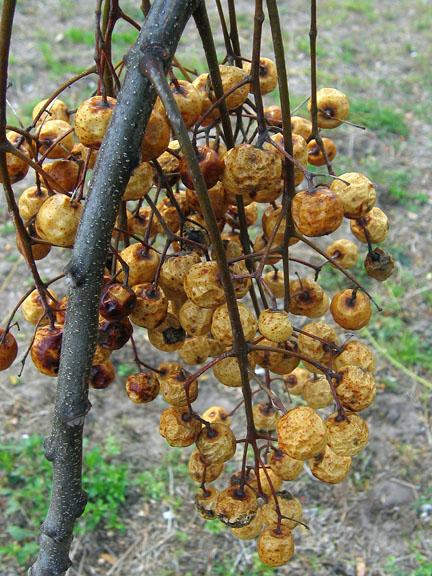
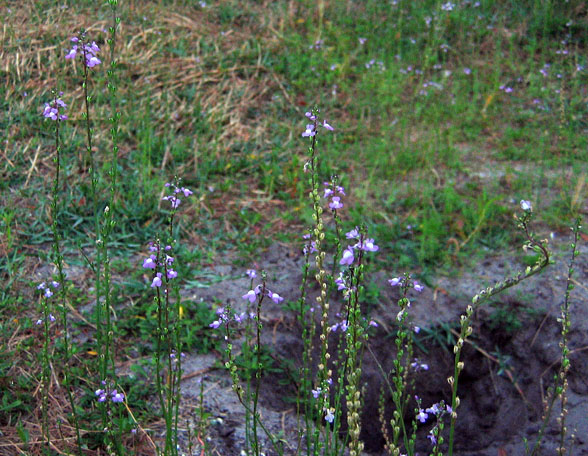
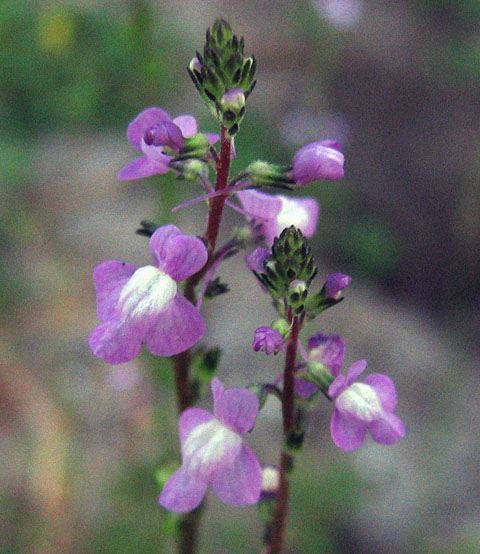
I will, one day, get to planting these. Just another day of siding, and another day of painting the siding, and then one more for the door, save at least another five for the deck, and just one or maybe two for the steps. Maybe then I'll get to planting these. But only after I dig around the outbuilding and install the groundhog barrier, and dig a trench for the drainage tile, lay the tile, and machine the fill until it slopes nicely, and once done I can excavate the gravel so it can be reapplied in layers, each compacted, so the concrete floor that also needs to be poured won't crack, which would be a shame because we cut two inch foam and placed it all around, or at least we will in August, but not before the exhibit is hung. I ought to make more work for that show, and I did say I would take my photos to the printer for printing, and there's framing, then, but after that I can plant these milkweed. Although it won't be in July, because the show, you know, but also the class I teach, in Vermont, and the lecture to give, and the prep for each. September is a good time to plant these, the fall -yes, but only after the electricity and heating is put into the outbuilding, because it wouldn't be sensible to frame for insulation in September if there is no heat to insulate, but after that I can get to planting these milkweed, well before it freezes. Could it wait just a bit more, because the brick walkway needs to be laid, especially before that freeze. Is it time to blow the leaves? Well that mustn't wait, and after all, with the cleared leaves there will be a clearing in which to plant these milkweed, so that will be a good time to get to these. Will there be a freeze? Oh, well I should get the garlic in, and wrap up the last of house painting, and who wants to work stiff-fingered in the cold? It'll best be done, as soon as can be, but first I need to put up the walls and install the lights, because what is a shop and studio without walls or lights? After that I can probably get to planting these milkweed. You know, it's been warmer, later, more often than not, so I'll get to these on a nice fall day, a warm afternoon, but only if there's nothing left to do that needed to be done, more so, anyway, than planting the milkweed.
plants
Ephemeral Woods
The first wave of ephemeral flowers is waning, including the last of the Bloodroot, above, now replaced by a single, giant leaf for capturing the diminished sunlight of the greening woods.
Now, Wood Anemone, Anemone quinquefolia, can be seen in clusters, although not always in flower.
Here, a pink-hued Wood Anemone flower next to the inflorescence of Pennsylvania Sedge.
And here, in white.
I am most excited to find large patches of Cutleaf Toothwort, Cardamine concatenata, on the northeast facing slopes, under the dying oaks and growing sugar maples.
I've become critically aware of the value of dying trees and fallen timber to the continuity of all life within the woods.
A tree growing for over a century dies (I've counted rings). The loss of leaves allows sunlight and additional moisture.
Maybe the tree is blown down in a violent summer storm or felled by constant gusts behind a strong winter cold front. As it falls, its massive, dense wood contorts and dismembers younger trees on its way down, creating an even bigger hole in the canopy.
Seeds that have moved via wind, runoff, or even more so by insects and small animals may be well placed, lying in wait for this opportunity to sprout. But you didn't notice because all that concerned you was the giant that came crashing down. A couple of years or more later, the presence of the fallen giant less prominent, there in the clearing is something new.
Findings
On the bark of a giant that had fallen last summer, I place garlic mustard just pulled. I keep it off the soil so that it properly desiccates, a lesson learned a year ago. Now committed to the project of eradicating the weed, I think of it as gardening, a task with its own time, that I can accomplish while out photographing the woods, searching for mushrooms or ramps, or completing some other woodland project. Away from fallen logs or large stones, I make piles so the mustard remains obvious to me later, as I check on its desiccation or dispose of it. Officially known as Garlic Mustard, Alliaria petiolata, I've pulled enough acreage of it now to refer to it as "skunk mustard," because its garlic-onion odor reminds me more of that mammal's funk. Click here for a concise and useful journal article on all things problematic with garlic mustard in North America.
This upland spot was (still is?) an oak and sedge stronghold for quite some time. Now cleared of its main shade oak, what may grow in these changed conditions? Its slopes are partially covered with Pennsylvania Sedge, Carex pensylvanica, and some Virginia Waterleaf, Hydrophyllum virginianum. I found these native strawberries, Fragaria virginiana growing in patches, too. A straight line trail runs through this location, with plenty of soil disturbance from quadrupedal hooves and nosing through leaves and soil for food. Maybe I could intervene beyond pulling weeds by giving some complementary plant a foothold. We tend to avoid plants consumed by deer and in this way we consume them by exclusion.
While pulling skunk mustard I stumbled upon this snake, a common Eastern Garter, Thamnophis sirtalis. Its reaction to my sudden presence was no reaction at all.
As I continued to hover, pushing my fingers into the dried leaves to pinch-grab below the prostrate brassica stems, concern took over. I let it be, moving on around a tree to grab more mustard.
Then I spotted two more, one with coloration slightly dull compared to the other, sunning themselves near their burrow. My leaf rustling was too much antagonism and the one to the right took off. Minnesota isn't known for its snakes, although I am happy to see them here in our woods. Along with our frogs and salamanders, they are an important indicator of the land's well-being.
It's been very dry so far this spring (and despite constant snow cover, the winter was short on snow). In our new climate reality, we anticipate extended dry periods along with excessive rains from thunderstorms. Because of the lack of runoff from non existant spring rains, I was able to navigate the entire small wetland, plodding across acres of dried, sun-bleached naples yellow grasses. I witnessed the garlic mustard making inroads into the wetland as well as an arm or two of Creeping Charlie, Glechoma hederacea. I also spotted considerable patches of Stinging Nettle, Urtica dioica growing among the garlic mustard, but also several feet farther into the wetland. There is a tree, likely an ash, rooted at the edge of the wetland but fallen into it that has continued to send up branches along its trunk. Under the tree's crown there is a muddy circle where only the plants, above, are growing. At first glance I thought "Marsh Marigold?" Maybe not. Thoughts?
I did make a soggy-footed attempt into the great wetland on the south side. I wanted to see the willows -the first pale greening of spring, up close, but I didn't make it far enough in to be truly rewarded. Underneath those grasses were channels and ponds of water still draining from a much larger supply of slopes than the little wetland to the north. I did see evidence of Swamp Milkweed, Asclepias incarnata, about twenty five feet from the wood's edge. The exploration of the wetlands, our sunny places, compels me to engineer a boardwalk (literally -cut logs, debarked and placed longitudinally, with boards run lengthwise between them). Future projects.
Closer to the house, on the dry slopes bloom Bloodroot, Sanguinaria canadensis. Maybe these can be planted in the clearing among the wild strawberries?
There have been many sightings of hawks, vultures, eagles, sandhill cranes, turkeys of course, and others to make seeing the more common birds seem, well, common. Yet the first robin of spring was worth pausing for, as well as bluejays and cardinals hanging together.
And while squirrels aren't on anyone's favorites list, they have yet to cause us any trouble, likely because their habitat is still largely intact. They do not come toward the house and didn't mess with last year's garden. This bounding fellow has a red head, feet, and tail. I wonder if it this one, from last fall, or a relative.
Travelers
The Gardner
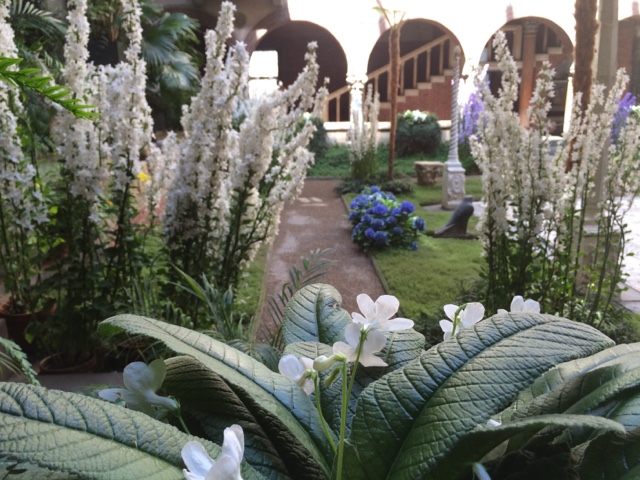
My friend, Steve, took me to The Gardner -a Boston mansion of yore festooned with incredible artifacts, whose rooms invite photography yet rules regard it with suspicion due to an embarrassing theft of grand proportions 25 years ago.
One may use a camera on the first floor, from which these images are taken. The court yard is truly divine. Those tall purple and white flowers belong to the plant Campanula pyramidalis.


What's Your Poison?
When we started clearing the woods of garlic mustard this May, it didn't take long before I began to spot small shrubs that looked like poison ivy, but may or may not have been. I have long been aware of the morphological nature of poison ivy, Toxicodendron radicans. In the blazing sunshine of New York beach dunes it shows as a glorious shining-leaf shrub thicket or in the dry woods of Long Island it appears as a vining, often shiny but not always, plant growing up trees or just as often a three-leafed low shrub colony at the edges of woods and fields. In the deep, wet woods of Maine it often took the appearance of fresh, pale greenery growing low to the ground.
Rex always said poison ivy was not growing on the property, but I knew it grew across the road in the sunshine, in front of and under the Alders. Because my possible sightings took place in dappled sunlight or on slopes recently made sunny by fallen oaks along with what I consider a cohabitant, wild grapes, I began mentally bookmarking each specimen as a potential rash. I posted on FB and the results were nearly fifty fifty split between poison and not poison, yet no one could provide a possible alternative to poison ivy.
Leaves of three, let in be -so the saying goes.
But what of this? Sometimes PI looks just like trees.
Another clue is the short branches on side leaves, long on front leaf.
Surely that is poison ivy. Alternate veining on the leaves.
You say, no way -not this one? But see here.
Mitten-shaped leaves, leaves of three, alternate veining?
Reddened stems, alternate veins, short side stems, three leaflets, perfect habitat?
If this isn't poison ivy, then what is it?
Turns out that's not poison ivy growing about our dappled clearings. This one clue deciphered it: opposite branching on our plants. Poison ivy has alternate branching. How did I figure it out?
While Betsy and I were clearing the area around the mailbox at the road, I saw a small tree, but definitely a tree, that had leaves just like our little specimens around the yard. I googled tree that looks like poison ivy (why didn't I think of that first?). It's an Ash Maple, Acer negundo, also known as Boxelder. After two weeks of surveying, each had grown enough to reveal their true identity. Then I found this definitive guide that goes beyond all the hooey about leaves of three you'll find on the Internet. Keep the pdf on your phone when your hiking and all your identification problems will be solved.
Spring Ephemera
Too much woods and too little time.
I am excited to find ordinary ramps, Allium tricoccum, the kind that grows in dense matts, has larger leaves, and reddened stems in a far corner of the woods, just below the road, next to an ash tree, Virginia Wetleaf and Wood Anemone. I've looked in all corners by this time, and this appears to be the only patch making the common ramp the rarer of the two in our woods!
At the edge of the north slope, Large-flowered Bellwort, Uvularia grandiflora. Could its wilted appearance be a defense against browsing deer?
According to Illinois Wildflowers: "The presence of this plant in a deciduous woodlands is an indication that much of the original ground flora is still intact." That's good news, but it's not the whole story in our woods. I do think this bellwort is another worth trying to cultivate.
The quantity of Viola species makes identifying them a hassle, at least for busy guys like me. They grow everywhere -in the lawn, in the gardens, in the woods, on the old farm roads and paths. They are lovely. This one might be Northern Bog Violet, Viola nephrophylla.
We have blue, white, lavender, purple and yellow violets growing all around. Above, Downy Yellow Violet, Viola pubescens.
Jack In The pulpit, Arisaema triphyllum, are coming up throughout the woods.
Jack can change to Jackie from year to year, depending on reproductive success in the prior year. According to Minnesota Wildflowers: "Males tend to be smaller than females and have a small hole at the bottom of the spathe which allows pollinators to escape (with their pollen) more easily. Female plants lack the hole and pollinators are more likely to become trapped, better ensuring successful pollination." Pollination leads to the multicolored fruit seen here.
In another, forgotten location, a pink variety of Wood Anemone.
Walking the old tractor road, pulling buckthorn, I leaned in to pull this one until my vision kicked in to halt me.
A nest of baby spiders, no idea what kind, but possibly an orb weaver type. An ephemeral of another kind -off into the world younglings, and do your good work.
__________________
The greatest, visible threat to the woods and its ephemerals is the invasion of the biennial herb Garlic Mustard, Alliaria petiolata, and the shrub or small tree known as Common Buckthorn, Rhamnus cathartica.
In this fine looking scene it is easy to forget that it is greened with an army of mustard only a week away from blooming. I've begun pulling it out as I walk through the woods, but this process eats time quickly and there is always more mustard to be found! I may have to wholesale cut them back with a weedeater or sickle just to stem the tide. As is so often the case with strong weeds, these break at the root only to regrow. Any gardener knows what happens then -it simply grows back even faster, setting flower and seed on a smaller, harder to pull plant. Garlic Mustard has a 5-7 year seed bank, but it should get a little easier each year.
Garlic Mustard is bad, but nothing in our woods is as challenging as Buckthorn. Every fallen tree is another opportunity for this plant. While this corner has been a Buckthorn stronghold for many years, it really took off after a great White Oak toppled in a bad thunderstorm four years ago. It now grows on the trail as much as to the north and south of the trail.
Buckthorn can become an impenetrable thicket above and below ground. A tangle of fibrous, tough roots chokes out plants below the soil and a dense cover of leaves smothers ephemerals and low growing shrubs from above. Although many young saplings die back in winter, each sprouts new leaves from the lower stem and ground each spring. I hand pull up to 1/4-inch diameter twigs in advancing areas, but in established "groves" larger shrubs and twigs must be dug out, doing further harm to the plants that may have coexisted thus far.
Within the great wetland, large Buckthorn grow on the slightly higher ground occupied by the beautiful Red Osier Dogwood and Pussy Willow. Its seed is dropped by perched birds, which then sprout and overtake the dogwoods and willows. I haven't seen it to go head to head with cattails or get a sure foothold in the ephemeral pond of the back swale. In fact, after last year's flooding, I see many small upstarts didn't sprout this spring. Can we flood them out? If not water, then I love the idea of burning them out, although this would be hard to do safely.
Forestry experts, ecologists, park managers, and many others often discuss the advancing Buckthorn and Garlic Mustard as an ecological issue, a problem of "native" forest habitat. Surely it is, but for me this is a gardening problem. Intellectually, I agree with the experts, but my motivations are less than pure. I simply don't like the look of a Buckthorn monoculture and prefer to be able to see through the woods. I like surprises, yet Buckthorn and Garlic Mustard offer none other than the ability to show up in a previously unheard of location. It may be that ecological problems are more easily taken on when we believe we act for our own interest.
The UnBecoming (of a) Garden
So the plants you see here, and so many others, will not make it without me, unless someone comes to rescue them this week. Transplant is usually no big deal around here at this time of the year, but the weather is about to turn significantly colder at night, freezing these out and making it harder to identify what is what. That said, the ground is unlikely to freeze and most should be just fine.
Russian sage is a a tricky transplant, although I succeeded well enough last year. It's fuzzy calyx never loses color, the wispy leaves, pungent odor, drought tolerance and also a bee's delight, are plenty of reasons to plant it.
Gaura, still blooming, is also drought tolerant (I have a lot of those). A great plant.
An aside, the petunias started flowering again this October.
They are unlikely to survive the coming freeze.
Asters, so many asters. Why do without them in autumn? This one doesn't self seed, is easy to keep in check and is loved by flying insects.
The climbing hydrangea will be coming with me, eventually.
I cut it back hard a few mornings back and will suffer the cold this week to prune its roots. Along with the climber rose 'New Dawn' and my grandmother's tea, it will rest in a trench covered with wood chips at a friend's in Williamsburg until I can take them to Minnesota.
Plants I have available:
Dwarf spirea (pink flowers, chartreuse foliage)
Everblooming shrub rose (magenta flower)
New England and NY Asters, (blue-purple flowers)
Yarrow (yellow flowers)
Tradescantia (blue-purple flowers)
Snakeroot (white flowers)
Daylily (orange, orange-burgundy)
Geranium (the real one, pink and blue flowers)
Phlox (pink and white flowers)
Sedum (different kinds, large, small, pink flowers)
Primrose (yellow flowers)
Coneflower (pink, maybe white)
Heuchera (copper and mahogany leaves, white flowers)
Dicentra Eximia (pink flowers, lacy blue green leaves)
Goldenrod (non-spreading variety, yellow flowers)
Chrysanthemum (Korean type, apricot flowers)
Sage (deep blue-purple flowers)
Culinary sage (pale purple flowers)
Hosta
Liriope (Purple flowers, blue berries)
and many others.
If you are interested, email me: nycgarden@gmail.com. You may have to do this on your own, but I will tag the ones I plan to keep if I cannot be present to help out.
Have Garden, Will Travel
What is one to do with a garden full of plants when moving in the dead of winter? Certain plants can be given away, but one gets attached to others. My large-ish Hydrangea petiolaris, Grandma's tea rose, the iris, Dicentra eximia? I can dig out almost any plant in my garden at almost any time for transplant here, but they need to travel. Far. To a frozen earth zone. It will already be below freezing in a week's time there, it may never freeze here.
Some cuttings will fly in Betsy's suitcase on this Tuesday's trip, although it may well be too late for them. Mulch will be applied. Others will need to be nurseried until they can be collected, driven, and replanted. This may very well be in the heat of summer. Not ideal, but I've been lucky before.
It would seem, at the moment, that moving plants should be of the least concern for anyone leaving their position of ten years, moving twelve hundred miles away from friends, family, a network of colleagues, packing an apartment and two art studios, and going about shutting down one's life infrastructure (bank accounts, utility accounts, mail, and all else). The plants, then? Really?
Yes. Consider it a way to carry forward a piece of myself, something familiar, all component to an identity built over a decade in one place. I will not see the neighbors from the garden as they pass, but the plants will remind me of them. I will not be able to smell the sea or listen to the cacophony of the fall migration, but the plants will suggest it. The plants become a memory bank, or rather a trigger to it. They help establish myself in a new place. This is nothing new to me. I have perennial sunflowers from my garden in New Mexico, and fifty year old iris and roses from my Grandmother's house, and asters and primrose from a field in Maine. If this summer's herbicide spraying didn't kill them, I will move Mayapple saves, transplanted from Van Cortlandt Park, and Seaside Goldenrod from a pier in Red Hook.
When we move there are always things we are eager to leave behind. These things go without saying, all the better to help the forgetting. Carrying forward and leaving behind is inventive, recombinative action. We aim to change, so we change something.
Chrysanthemum (your choice, could be Dendranthemum) 'Sheffield Pink' is the jazz hands of the autumn garden. A few stolons of these will travel, but might not survive Zone 4b.
I have many asters, I cannot even recall which is which any more. Rooted cuttings will travel. New York Asters are good within Zone 4-8.
'Alma Potschke' will travel, although it has not done well for me here (NE Asters suffer disease), Zone 4-8.
Gaura blooms long, is graceful, but I have a hard time believing it will travel well. Maybe. Unlikely to survive zone 4b.
Clever aphids, so well-matching the colors of the lily stem, won't travel. The lilies will, however, be shipping out with Betsy on Tuesday.
The autumn red leaves of primrose will travel. Zone 4-8.
Heuchera, or Coral Bells as above, will travel. Zone 3-9.
Well, no, not these. Although we can bag up the begonia for winter storage.
The shrub rose? Sure, it blooms forever, but I've never gotten attached to it, so it won't travel.
Today I will head out to inventory the garden. Some plants will be missed, it is mid autumn after all. And soon, very soon, a plant giveaway will be necessary. Interested? Email me: nycgarden@gmail.com
Sandy Beaches
Virginia Creeper, Parthenocissus quinquefolia, growing across the dune.
Solidago sempervirens, the hardiest of Goldenrod, tolerating salt and wind, drought and flood, poor soil and nearly zero nutrients.
It is hardly considered a garden plant, but its structure, succulent leaves, yellow autumn flowers, and downy late autumn seeds are perfect for the garden.
And insects love it.
In fact, ecologists recognize Seaside Goldenrod for attracting native bees and predatory insects.
The dunes, prior to Sandy, were easily 8 feet above the concrete walkway.
These are now beginning to rebuild with the help of snow fencing and simply keeping off.
Cakile edentula, (American) Sea Rocket.
Kali turgida, I think, creating its own dune.
When we leave Brooklyn for another place, one likely known for draining water, not containing it, I know I will miss the beach and tidal marshes, even the scent of muck, the most. Appreciate, respect, and protect it.
Nursery Thymes
Larry has been putting out more and more each day. Today was the first for perennial flowers, space previously occupied only by the cool weather pansies, forced spring bulbs, and herbs. I can only imagine distributors of perennials itching to get these out to retail outlets. Anyways, I wouldn't buy them but they are sweet to see when I wrap the corner.
In other Larry news, he has installed large roll-up gates around the nursery. The idea is to open up the plant yard to the public instead of barricading them behind 12 foot chain link. I think it is a good idea and given the cold winter, with luck his nursery may operate in the black this season. As I pass the plants, in the dark of night, I often think of what business or residence could replace this corner nursery. To me, there is very little that ever could.
Take Me
NYC Metro Region Plant Hardiness Zone Map
Berried
Green Scent
Florida Common
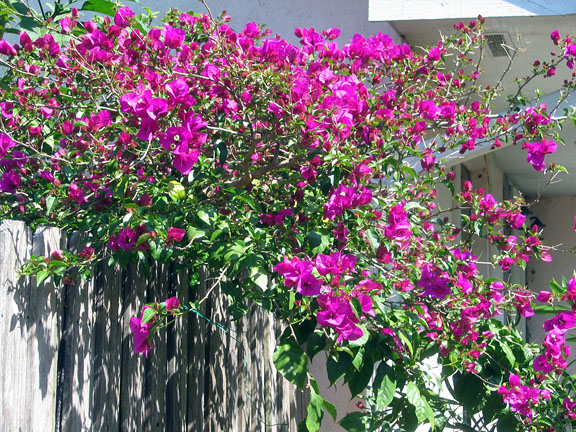
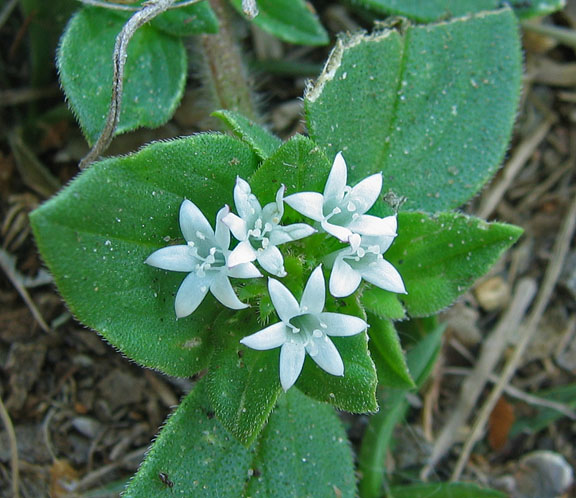
When you think of Florida flowers, you think of the neighbor's bougainvillea.
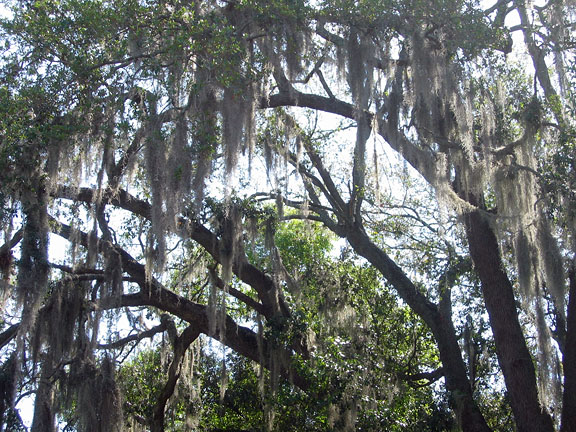
Or the Spanish moss (epiphyte) on another neighbor's oak.
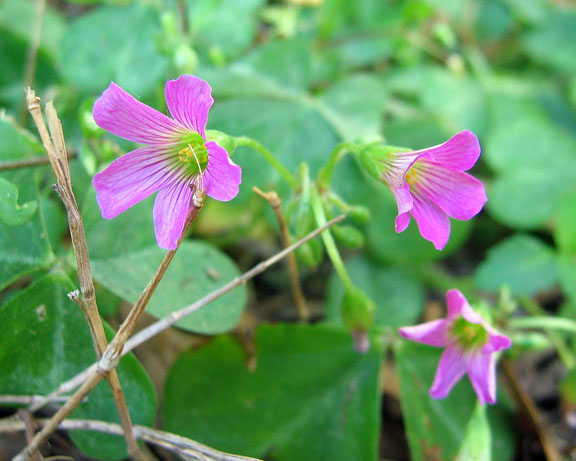
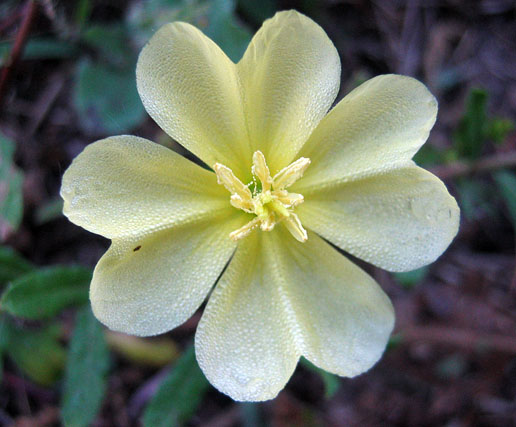
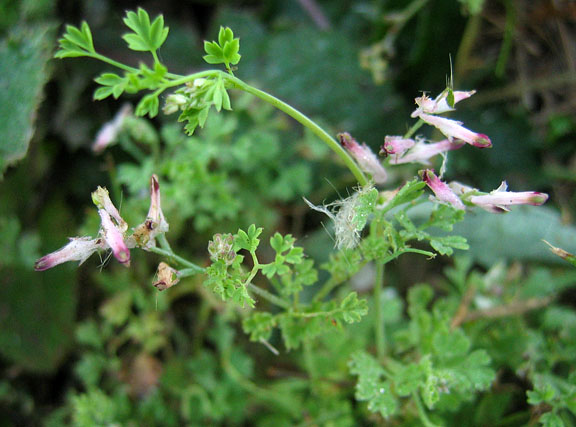
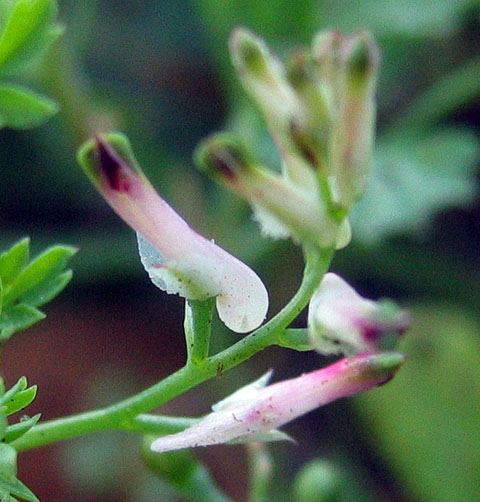
But my eye was fixed on the minor blooms of the 'lawn', which I have little gumption for identifying, though always worth cataloguing.
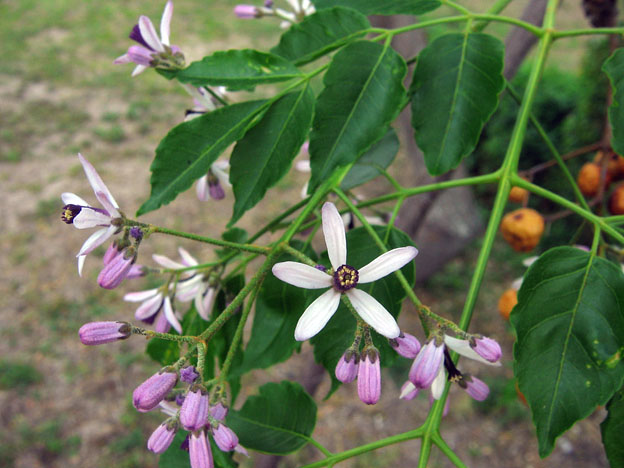
This flowering tree was responsible for a heady scent as you drive the highways at night.
These are its fruit.
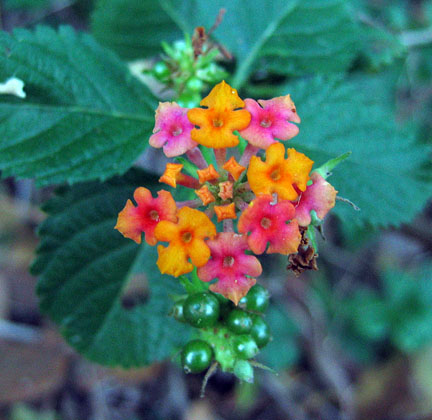
The lantana in the shrubs.
A closeup.
Down at the edge of the pond.
A closeup.
If You Do, Make It Look Like An Accident
Two weeks ago I wrapped the corner and I startled a woman caught in the act of snipping flowers off my neighbor's plants. The grin was one of shame, but she couldn't break herself away from the act. She finished picking that last one before moving on. Desire.
Rain Memory
Beach Farm Allergy
There are a few plants that could be mistaken for the allergy causing plant. I photographed some in our community garden at Ft. Tilden, where they all grow in masses along plots and fence lines.
It also does not cause hayfever. I have been hounded by allergies every time I go to harvest at the beach farm. The breezes of the ocean blow Common Ragweed's pollen, which is everywhere around us, right up the nose. I suffer for a day after, then diminishes. Ragweed is one of those barely noticeable green things that has for so long gone unidentifiable by most people. I hope this helps.
Early Autumn Cleanup
I dumped the potting soil all about, giving the neighborhood cats the perfect sh*tting pot. I saw the flies this morning. On the poor man's patio are four black plastic pots that I threw some broccoli seed into -just for giggles (thanks Marie, it's that seed). I will re-use the brandywine planter for the sage, which gets heat stroke every summer residing in its current terra cotta (root-bound for sure). I have no idea what to do with the green bean planters. Taking them apart sucks. It felt really good to get rid of those ugly yuckling tomatoes, and I like the room to breathe, imagining perennials in that space.
In my brief stint at the corner nursery, one of the questions most fielded was "How big of a pot do I need for this tomato?" Most of the time the person had already selected a small pot, often a very small pot. Well, here is a picture of our cherry tomato's roots having gone through the hole in the bottom of the planter into the mulch below. The planter is about 14 inches deep.
Mushrooms growing around the new street trees in the mulch put down after planting.
The Threadleaf Ironweed, Vernonia lettermanii, and Bluestem Goldenrod, Solidago caesia, both of which I purchased at the New England Wildflower Society's Garden in the Woods in Massachusetts. These will be moved later.
Zinnia.
Grandma's Tea.