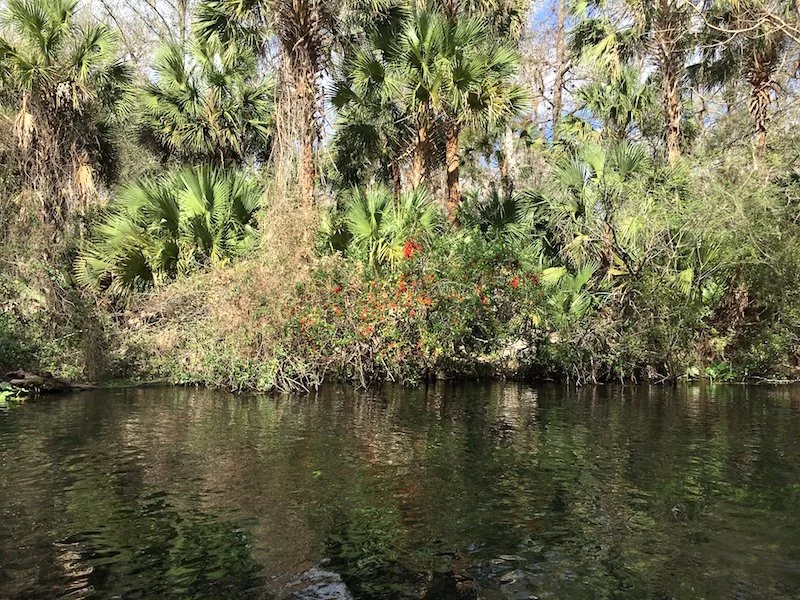
wetlands

Damsel

In distress? I hope not. We love our dragonflies, a larger relative of the damselfly. They fly around eating all kinds of insects, sometimes landing on our shoulder, and sun themselves in the morning on the side of the house. Since damselflies are diminutive compared to their larger cousins they can easily go unnoticed. Because they are particularly fond of the arching leaves of our garlic, I see them quite readily. Today I took a close look and found that they came in three colors.


Blue


Green 


 And pink.

There are roughly 5000 species in the insect order Odonata of which Damselflies and Dragonflies belong. A good way to tell the difference between the two, other than size is the way they rest. Dragonflies rest with their wings spread while damselflies rest with wings together and parallel to their body. Each has incredible visual acuity -80% of their brain is used for visual analysis (the giant eyes). They are also incredible fliers able to fly quickly forward, backward, and hover. Few insects that can make you feel like you live in a magical environment, but these do (butterflies being another), especially when they arrive by the hundreds.

Having plenty of Odonata species means that your wetland habitat is relatively unpolluted. This year we have had an unusually late start to the mosquito season, not having seen any until about two weeks ago. The control agent who tests our wetland found no mosquito larva in middle May -again, highly unusual. What this means is less pesticide spraying in the area that undoubtedly kills Dragons and Damsels as well as mosquitoes and what else. I do not know if the Bt drops, made by helicopter, kill Odonata species as well as mosquitoes in the larval stages. Quick searches suggest no, but maybe inconclusively.


Woodland Orange


For three days I've been spotting an unusual orange deep into the middle slough woods, but it was early, rainy, and the mosquitos had finally blossomed. On the fourth day I traveled down the Alwin trail looking to take some photos and confirmed what I tried to dismiss -Laetiporous sulphureus.


Not only is this appearance unusually early, it is also in an unlikely location. The log has been down for years, is partially decomposed, covered in moss, and completely surrounded by water. Because I didn't act quickly, the mushroom received a couple of rain soakings, but it was completely bug free -a benefit of its island location?

Our two woodland sloughs have been steadily filling with more and more water, often independent of rainfall. It is an unusual occurrence that we feel may be connected to the partial filling of the gravel pit adjacent to the west side of the property. Rex was concerned that this change would raise the water table, and his concern appears to have been legitimate. In the back slough, nearly every tree has died -there is one old, large ash surviving the inundation. All the shrubs that were green in prior years are grey. The trail that was always accessible along the western edge is now completely submerged and invisible so that a new path will need to be cut much closer to the property line.

We do not want the trees in the middle slough to die off from inundation or fall in a storm because of soggy soil. The increased sunlight will advance an army of buckthorn well positioned on the south slope and already making headway in the middle slough. If it does not begin to drain we are likely to dig a drainage, or rather enhance the drainage that already exists. Any action of this magnitude will have consequences, but we cannot consider our woodlands as anything but altered or unalterable -it is a place completely transformed.


Findings


I'd like to tell you what kind of Oak this impressive bark belongs to, but in age, among oaks, it is a challenge without leaves. No matter, this old, large oak is anchored near a clearing made by wind of storms and pressure of fungus and disease.


On the bark of a giant that had fallen last summer, I place garlic mustard just pulled. I keep it off the soil so that it properly desiccates, a lesson learned a year ago. Now committed to the project of eradicating the weed, I think of it as gardening, a task with its own time, that I can accomplish while out photographing the woods, searching for mushrooms or ramps, or completing some other woodland project. Away from fallen logs or large stones, I make piles so the mustard remains obvious to me later, as I check on its desiccation or dispose of it. Officially known as Garlic Mustard, Alliaria petiolata, I've pulled enough acreage of it now to refer to it as "skunk mustard," because its garlic-onion odor reminds me more of that mammal's funk. Click here for a concise and useful journal article on all things problematic with garlic mustard in North America.


This upland spot was (still is?) an oak and sedge stronghold for quite some time. Now cleared of its main shade oak, what may grow in these changed conditions? Its slopes are partially covered with Pennsylvania Sedge, Carex pensylvanica, and some Virginia Waterleaf, Hydrophyllum virginianum. I found these native strawberries, Fragaria virginiana growing in patches, too. A straight line trail runs through this location, with plenty of soil disturbance from quadrupedal hooves and nosing through leaves and soil for food. Maybe I could intervene beyond pulling weeds by giving some complementary plant a foothold. We tend to avoid plants consumed by deer and in this way we consume them by exclusion.


While pulling skunk mustard I stumbled upon this snake, a common Eastern GarterThamnophis sirtalis. Its reaction to my sudden presence was no reaction at all.


As I continued to hover, pushing my fingers into the dried leaves to pinch-grab below the prostrate brassica stems, concern took over. I let it be, moving on around a tree to grab more mustard.


Then I spotted two more, one with coloration slightly dull compared to the other, sunning themselves near their burrow. My leaf rustling was too much antagonism and the one to the right took off. Minnesota isn't known for its snakes, although I am happy to see them here in our woods. Along with our frogs and salamanders, they are an important indicator of the land's well-being.


It's been very dry so far this spring (and despite constant snow cover, the winter was short on snow). In our new climate reality, we anticipate extended dry periods along with excessive rains from thunderstorms. Because of the lack of runoff from non existant spring rains, I was able to navigate the entire small wetland, plodding across acres of dried, sun-bleached naples yellow grasses. I witnessed the garlic mustard making inroads into the wetland as well as an arm or two of Creeping Charlie, Glechoma hederacea. I also spotted considerable patches of Stinging Nettle, Urtica dioica growing among the garlic mustard, but also several feet farther into the wetland. There is a tree, likely an ash, rooted at the edge of the wetland but fallen into it that has continued to send up branches along its trunk. Under the tree's crown there is a muddy circle where only the plants, above, are growing. At first glance I thought "Marsh Marigold?" Maybe not. Thoughts?

I did make a soggy-footed attempt into the great wetland on the south side. I wanted to see the willows -the first pale greening of spring, up close, but I didn't make it far enough in to be truly rewarded. Underneath those grasses were channels and ponds of water still draining from a much larger supply of slopes than the little wetland to the north. I did see evidence of Swamp Milkweed, Asclepias incarnata, about twenty five feet from the wood's edge. The exploration of the wetlands, our sunny places, compels me to engineer a boardwalk (literally -cut logs, debarked and placed longitudinally, with boards run lengthwise between them). Future projects.


Closer to the house, on the dry slopes bloom Bloodroot, Sanguinaria canadensis. Maybe these can be planted in the clearing among the wild strawberries?


There have been many sightings of hawks, vultures, eagles, sandhill cranes, turkeys of course, and others to make seeing the more common birds seem, well, common. Yet the first robin of spring was worth pausing for, as well as bluejays and cardinals hanging together.


And while squirrels aren't on anyone's favorites list, they have yet to cause us any trouble, likely because their habitat is still largely intact. They do not come toward the house and didn't mess with last year's garden. This bounding fellow has a red head, feet, and tail. I wonder if it this one, from last fall, or a relative.


The Woods Today

Back in NYC I might take a walk from time to time, but more often than not it was for the purpose of getting somewhere that I might find myself on a walk. Today, after gaining some ground on research for my (other, new) summer course Shipwreck of the Minotaur at the Mayapple Center for the Arts and Humanities, I chose to take a walk through the woods with some purpose in mind, but mostly to get out of doors for an hour. I did need to check on the sap buckets, as cooler weather has extended our sap season, and also to check on my Easter day's garlic mustard eradication project around the back slough.


I've kept my eye on the Tradescantia spp. that I transplanted from Brooklyn last year in a new garden where the old lilac used to dwell. It looks to have survived. The same garden is now home to the old Brooklyn 'New Dawn' climber rose (a rose that has seen four different yards over its years), a sedum I found growing here in the woods, Dicentra eximia from Brooklyn too, and whatever else was growing there that we've decided to allow (and hopefully not that horseradish I did my best to dig out).


In the front yard, all varieties of garlic are now soaking up the sun. Incidentally, these are not German Hardy, but an artichoke variety, possibly with 'giant' in the name, that were shipped gratis, likely because of poor size thanks to drought and fire in the garlic seed producing region. There are as many commas in that sentence as garlic in this row, but my point is that the sign is a stand in.


I headed into the woods, although the wind made for a biting chill and a hazardous walk through the ready-to-fall. So much dead wood squeaking and creaking like a brig on the open seas, I hesitated to pause for the earliest of ephemerals like Virginia Waterleaf, Hydrophyllum virginianum or the mystery plant, below, that caught my eye as I hiked off path to navigate a significant enlargement of the water line in the back slough.


I was motivated to get back to the slopes of the slough to check on the garlic mustard that I chose to spray with a low percentage mix of glyphosate and water last Sunday. Spring is the time to deal with garlic mustard, particularly March and the earliest of April. Virginia Waterleaf, ramps, some rosa species, a few asters, and other early, less pernicious weeds are coming up and I have no desire to affect those in the act of ridding the woods of garlic mustard. In these zones hundreds, probably thousands, of garlic mustard seedlings are sprouting from the seed bank. It was not an easy decision to spray, especially within a yard of the slough's water line. And I am frustrated to report that after six days the results were not significant. Most leaves were mottled, but the plants were not in the state of distress I would have expected. I've considered that I may need to apply a second course, although I am not happy about that. It was necessary to do so, even with a much higher percentage of glyphosate, on the buckthorn "hedge" growing alongside the garage pad. What I have to consider is the compression of the wet soil in spring. It appears to me the less foot steps, the better, especially after the frost heave has done such a nice job of loosening, aerating, and draining the soil surface.


In the past I thought garlic mustard didn't do well in flooded soil, and maybe it won't if the slough remains flooded. However, what I've seen is that in early spring the ice melts and freezes and this heave extracts the garlic mustard from the mucky soil. It then floats, roots and all, in the spring melt water, preserved in a cool water bath until conditions improve. At the water's edge the leaves and stems of garlic mustard are bluish gray to the deepest purple and often hard to spot against the dark water. The garlic mustard a foot or two away, on drier land, have some purple to the stems, but the leaves are quite green. So green, in fact, that it is a little painful to pull or spray at this time where you find yourself longing for the green of spring.

So what happens to this water's edge garlic mustard? Does it die? I don't think so. Many of the plants, some of which I simply scooped out of the water and some which were easily pulled from the muck, had the biggest roots. Garlic mustard is a biennial, so last year the seedlings emerged and grew strong, despite the waterlogged soil, and this year they are ready to grow and set seed. I'm not willing to wait for the sake of observation, yet I am sure many will escape my vision or reach, and I will be a witness to their success.

As I make my way around the slough, eyes to the ground, I think much about what good the garlic mustard could be doing. What species make use of it for cover or for food? Does it stabilize the soil on the wooded slopes? Is balance achievable? Is garlic mustard simply symptomatic of a woods so degraded by other culprits (err, humans, for instance)? In other words, how necessary is the work I've begun, and am I causing more harm than good? And, you know, I like questions.

If you would like to see more photographs of the woods, follow me on Instagram @frankmeuschke where I post regularly under the hashtag #thewoodstoday.


The Boy's Winter


I was wakened by the subtle flash and rumble that, not more than a minute later, became the brilliant glare and shattering crash of this year's first post midnight, pre dawn thunderstorm. The rains came, soaking what would normally be earth frozen forty inches, give or take. The birds had been arriving for over a week, vees of geese are seen and heard, while the prehistoric calls of sand hill cranes are heard, all traveling northerly. Comb-playing chorus frogs have made their seasonal debut and chipmunks have ascended from their dens. The grays and pale orange-reds predominating the woods are often punctuated by intense, moisture-activated greens. Most lakes have lost their ice and those that haven't remain only a stormy-green skim coat of icy slush. Most of all, even by last year's early spring standard, the trees have been budding strong and flowering early. The silver maples of the middle slough have been fully in flower for over a week. This is El Nino in the Midwestern north.

It should still be winter by calendar, averages, and tradition and this post should be timely. It is not, however, by fact and experience. Winter is over before its time and this is its eulogy.


Strong winds raked snow and desiccated grasses across the large wetland, leaving easy access for bipeds like myself.


This winter's fluctuating temperatures created a nearly constant stream of runoff from the little wetland which pooled at the northern end of the large wetland. It was a popular watering hole for all the Big Woods' animals.


Freezing and thawing of the pool made for unique ice crystals.


The dead trees of the large wetland, killed by higher water or blight.


Orange lichens on the south side of the trunks.


Wet feet is not a problem for Red Osier Dogwood, Cornus sericea.


Its branches a brilliant red in the sunny open of the wetland.


A protective structure for warm season nesting.


An unknown plant, possible weed, growing in the center of the wetland.


A rare view of the house from the wetland.


The earliest sign of approaching spring -emerging buds of shrub willows.


Off Season Woods

Summer is the off season in the woods. This is because the field and home require attention while the weather is right, but also because mosquitos own the woods at this time of year. There is, however, one draw and that is mushrooms. 


There had been an explosion of Jelly fungus on cut logs downslope near the north wetland. It has, by now, yellowed with age, but still a fascinating fungal mass. Mosquitos be darned, in the woods with the camera I took a stroll to see what else was going on.


 A mysterious white fungus or mycelium between two logs.


An incredibly striking red slime mold on upright cut log faces. Anything this red within the green understory grabs your attention.


The channel connecting the north wetland to the southern, great wetland runs with rain water. We cleared this area of most garlic mustard two months back and the Jewelweed is beginning to take off. Now, let me get out there and clear those branches.


Recent storms haven't been terribly windy. Still this large limb, about two feet in diameter at the base of the break came down. It's Basswood, Tilia americana, not the strongest of trees, and prone to hollowing of the stem at height. One nearly came down on me as I walked the woods in March. Just pop and drop! Lucky for me I was distracted by the sound of running water which altered my path. A minute later I watched the large, single stem tree break about 12 feet up and fall over onto the path I was about to walk.


In the back woods I find another Basswood down (that's three this year alone). Those that have fallen are the oldest of the Basswood in our woods and two have been large, multi-trunked trees. Basswood can be easily identified by its multi-stem growth habit -its the sure fire way to ID the tree in winter, when young, or with similarly barked trees. We're not big fans of Basswood trees, largely because of their weak wood and propensity to fall without notice (a local woman died under this tree species recently). Incidentally, the tree reminds me of my former position in an architecture lab where basswood was the model building wood of choice. I'll take oaks, ash and maples over bass any day.


The back swale hasn't had time to drain down with all the recent heavy rains. It appears this area will be wet year in and year out and I should rethink my attitude towards it. Several years of heavy rains have kept the soil water logged and the trees standing in water that aren't already dead are only hanging on by a thread. When cold weather comes we may have to tackle some of the larger standing trees, leaving woodpecker stumps that won't fall immediately, but when they do they shouldn't take anyone out.


Brave New Habitat

I could hardly believe the words coming out of my mouth -mosquito h a b i t a t. Yet that's what I said to the young lady in hot pink sweat jacket (ahem, hoodie) that loped out of the north (formerly little) wetland after I announced myself with a stern good morning.


The Metropolitan Mosquito Control District makes regular, unannounced visits to our wetlands. I have yet to be unsurprised by their presence or put in other words: they do not knock, call, or in any way let you know they are there (unless you see their truck; in this case it was parked on the road). I asked her to let us know that they would be present by simply knocking on the door, that the woods are dangerous (I hope that didn't sound like a threat :-\) and the mosquito surveyors need to be careful of falling trees, and by all means -please use the trails instead of trouncing the understory. 

This was the second time this spring that I've asked them not to spray because things need to eat and they eat mosquitoes, and even more so -the spray kills indiscriminately. When I ask why they are spraying, this is mosquito habitat (there it is) after all, they toss up the usual suspect -West Nile Virus. To which I've got a handful of retorts, and they then see that I am less than hospitable to this "public service." 

What we have here is a major home to countless frogs and toads, dragonflies that we love, bats, birds, and so much more. Mosquitoes bother the humans, don't get me wrong -I am thoroughly annoyed by them, but there is maybe 20 humans around these wetlands. West Nile Virus is not deeply concerning to me (maybe you, I can't say) but it is to me a "worrying tactic" used to nudge people into being agreeable to spraying. The truth is, or rather my truth is, that I believe they are spraying because mosquitoes are a nuisance and people just wish they were gone. 

Great. Now I am a proponent of mosquito habitat. I probably just broke the Fox News whacko meter. 

The helicopters fly just over the tree line in order to dump BTI, Bacillus thuringiensis subspecies israelensis, into the wetlands. I accept this practice as a compromise measure between myself and the mosquito-agitated public, although it seems an exorbitant use of funds for such spotty coverage. I can't say I've noticed a difference between post-BTI spread periods and untreated periods (but then, I'm biased -science please!).

The spraying of adult pesticides is done via backpack by day and likely by truck fogger at night (you may have seen this in NYC). I've continually asked surveyors to report back to their managers that we do not accept spraying on this land, even if our neighbors do. Apparently we need to get onto some sort of "do not spray" list. I have yet to find out how to do that, but I will, eventually.


O wonder!
How many godly creatures are there here!
How beauteous mankind is! O brave new world,
That has such people in't.

 —William Shakespeare, The Tempest

____________________________________

I've begun posting on Facebook, at MOUND, and if you click the link at the upper left it will take you to my new page. Consider following me there, too, because I have begun using it for all the short form pictures and posts that never make it into this journal.


The Little Wetland


I have many favorite spots at our place, but this one is high on the list. It is hard to fathom that we are stewards of such a place. The lower photo reveals a deer trail entering the wetland. I am considering a plank walk so that we can experience the wetland from within outside of winter.


The Peat Land


The squatting tree, a landmark on the way to the western flank of the great wetland, is flowing once more. I don't think I need to explain why it has been given this name. It appears to drain the ephemeral waters of the back swale into the great wetland. 


I spot the fluffy white tail of a deer, although nothing more. Probably taken down by coyotes, or scavenged by them, this disembodiment leaves me to reflect on the intimacy of the woods, its sheltering of life and death.


About to cross the once sound, but now quite risky, sawed log, timber beam and pallet bridge. It will need be the first of several woodland structures to be upgraded if we (or any interlopers, coyote included) want to keep crossing with dry feet.


On the other side, more remains.


And nettle, stinging nettle. The western flank of the great wetland is over run with nettle.


It is also a hummocky, low lying peat land of a couple of acres.


I have a general understanding of how peat is formed, but here it is a bit of a mystery. My guess is that it formed when the great wetland was even wetter, covering this flatland at the edge of the slope with water and limiting decomposition of organic matter. As the wetland filled with sediment and organic matter and the water table lowered somewhat, the peat became exposed and the trees and shrubs began taking hold.


No Respect


No one respects squirrels, except for the oaks, maybe, if that's possible. Certainly the hawk does not. The sound of a thousand paper shufflers dominate the woods through the golden hours. So much work before quitting time for the poor, lowly squirrel, but no one respects paper shufflers. Like a boss, the hawk swoops in below the treetops, gliding above the wetland, and issues its battle screech. Every busy body freezes into a terrific silence. No intention of coming in for the kill, it then climbs out of the basin, heading for preferred hunting grounds, snickering likely.


Feeling Out Boundary


For years I have been looking across the wetland, visually leaping from this side to that. I hardly noticed it was a farming plot, hardly recall seeing corn or soy. When visitors see it from the upper floor in the snowy winter, they say how nice it is that we have a view of a lake, which is of course, an illusion. For quite some time I wanted to follow the edge of the wetland, crossing the wide drainage that marks southwestern boundary of our land, and I knew well enough this had to happen in winter. It turns out March is a good time, the soil is deeply frozen, and the air might be fifty degrees.


At the beginning of this great March melt, snow becomes puddles, ground frost begins to let go.


Water is beginning to move. A warmish day, sunshine, and then an attraction to any hint of burbling, the sound of moving water, is the first symptom of spring fever.


Crossing the wide drainage at the southwest corner of our lot where electrical infrastructure meets the woods, marsh grass and cattails meet the scoured land of the gravel mine. This is a boundary I've often met, but never crossed.


Along the western edge of the wetland we find the most Eastern Cottonwood, Populus deltoides. It likes wet feet, and can be found on wetlands, along streams and rivers, on lake edges, and occasionally upland. Large trees with trunks often bending and soft wood, they are prone to break. This is the source of its common name, I think, not the downy white fluff it distributes in late spring.


The wooded hillside slopes sharply, then levels out in a zone that accommodates occasional flooding. I have found that the four-legged and the two-legged creatures like to share paths whether made by us or by them. Here, we walk along a well-trodden deer path, one well-scoped by bow hunters.


As we gain on the farm field, the land rises up just enough to take it out of the soggy soil well-defined by the Cattails, Typha latifolia. Here I see a close resemblance to an oak savanna, a wonderful little spot containing grasses, annual and perennial plants, a large Bur Oak, Quercus macrocarpa (I think) and several smaller ones.


Growing too are large buckthorns with their countless berries. The oaks probably pre-date the buckthorn. New oaks are unlikely to be seeded, sprouted, and survive the shading without the regular fires that give oaks an edge.


Lichens (maybe orange Xanthomendoza weberi and grey-green Physcia aipolia) grow on even the lower oak branches. Rampant buckthorn growth will shade out the lichen too. I have to start seeing the positives of buckthorn, what were they again?


The farm road, which bisects the wetland and forces the drainage through a culvert.


The immaculate, stone free, black earth of the farmed hill to our south. I wonder why cover-cropping is not practiced in this region and have yet to do the research. I suspect that there might not be enough growing season to get soy or corn and sprout a cover before a freeze sets in, but then I am guessing. According to the MCWD, an agency that monitors our watershed, our sub watershed is draining phosphate-laden water to Dutch Lake. This field is near the head of the shed and yet another guess is that it's providing a good part of that input. Residential septic systems and lawn fertilizers are providing the rest. 

My knee-jerk response is to worry that it soon will have homes on it. The owner leases it to a local farmer, and from what I can find, its owner does not live on the property which totals 68 acres of woods, wetlands, and farm fields (other than this farm field, which is isolated by topography, woods, and wetlands). A quick search shows the owner as Stone Arch Development, but a google search for that shows only a corporation named Stone Arch Organizational Development. Adding more complexity to property ownership, the notion that our own "development" is acceptable, but any future development should be off limits, or at least out of sight. 


At the culvert, water flows in from the big marsh.


And flows out toward the south, draining another few miles of wooded hillsides, residential yards, and horse fields until it reaches Dutch Lake, and ultimately into Minnetonka, overtops into Minnehaha Creek, sent over the falls, then into the Mississippi, and off to a stint in the Gulf of Mexico. 


Turning back to the north we get the only wide open view of the woods within which we live, apart from satellite views. The cropped view highlights the house, toward which I drew an arrow. Witnessing the open, bright marsh and dark woods together was an eye opening experience.


The Backwoods


At the western edge of the land, just before it rises up toward the old gravel pit slash horse farm, there is a topographical depression, what I will call the swale. Although its origin may be artificial, it is one of the more interesting features of the land.


I walked out to the swale to investigate bark-stripping that, as far as I can tell, is only happening here.


Stripped clean from the base well up the tree, with no broken branches, so it isn't deer rubbing or eating the bark.


Several feet away I spotted this mess and a hodgepodge of prints.


Above it, more stripped bark. An animal that climbs, or flies. Hmm, I'm going with climbs as birds at the base of a tree seems to put them at risk of predators. Probably a rodent, maybe a squirrel.


I see hanging material, which at a distance I took for lichen, on many of the upright twigs. On closer inspection I recognize it as the dried remains of duckweed. Ah, an excellent indicator of the depth of the past summer's vernal pool, which looks to have been nearly two feet in places.


Trees fall easily here, succumbing to the wind and saturated soil, a soil made visible by the exposed root mound of a fallen tree. I wonder how it is that it holds much water at all, as it feels crumbly and porous. This, and the spring which emerges from the base of a tree about two hundred feet from here, reveal a complex hydrology that I've yet to fully understand.


Toward the back and upslope lay an assortment of aggregations; what looks to be concrete, dumped by the gravel mining operation that long ago operated just over the property line.


The aggregations have weathered, moss clings to it now, and one day I may make aesthetic use of this waste. 


An old, plastic six-pack in the swale.


Beyond the swale, up and quickly down again to the edge of the large wetland, a sign painted and hung by Rex. It read "American Trash Museum."


This neck of the woods, at the bottom land of a ravine just beyond our property, is full of cast-off appliances. Some go back fifty or more years. The dump exists at an intersection of what farmers would consider three "wastes" -a ravine, a wetland, and a woods. Well, the woods held some value as a woodlot, and the cows could roam them for munching on all kinds of under-growth (which probably helped the buckthorn get a foothold), but the other two were rarely looked upon kindly by farmers and country men. 


Looking southeast you see the wetland. Where there is little to no grasses there's visible snow, revealing where water is most likely to stand in wetter periods. Here the ravine drains its steep-sided slopes.


Up the ravine, littered mostly with old washing machines, but also empty fifty-five gallon drums and five gallon pails of mostly unknown chemicals. If you live in a second-growth forest that once was part of a farm, on or near a farm, you can probably find this kind of dump, or what remains of it. 


At the top of the ravine, a two hundred feet or so off our land, looking toward the adjacent horse farm and the steep incline of the old gravel pit. 


Trash comes in many forms.


And offers its warnings.


Heading back, one of Rex's many brush piles, consisting mostly of fallen branches. There are ten or twelve of these around the woods, and more could be made, should one choose to.


First Walk


The weather has been odd, on again off again raining, sometimes cool, sometimes almost tropically moist. We arrived in the evening after three days of travel, two nights of camping, one stop at Allerton State Park in Illinois (post later). First thing, after morning coffee, was to hit the woods to get reacquainted.

Betsy investigating the vernal pond for tadpole activity.

 
Garlic Mustard, as prevalent here as anywhere east.

One thing we had noticed was the cottonwood seeds. While driving, literally, like a snowing.

Rex's humor litters the woods, and betrays his awareness that several neighbors travel his trails.

It refers partially to this.

Jewelweed grows in some locations near the wetlands woods boundary.

Any idea what this plant is, growing in shady woods, growing about 18 inches tall?

These are the leaves.

And, any ideas on the name of this fern, the predominant fern of these deciduous woods?

The small wetland has standing water, which I have never seen at this time of the year.

It has been a very snowy winter, and wet spring, as many of you know from the reports from Mississippi River towns, and now Missouri River towns. Here, at our place in the Big Woods, the excess rain results in constant sump pumping and a brook-like flow in drainages that are normally dry by now.  The drainage burbles. Or is it babbles?