We left town on Friday for a quick escape from NYC. We went to Providence, RI, then up to Maine to visit the art program where we used to work. Somewhere between Providence and East Madison, Maine, I lost my camera.
I didn't know it until I visited a friend's new vegetable garden. While I was munching on the green beans (hers are way better than ours), I noticed a large-leafed polygonum, or
smartweed, growing in the middle of her bush beans. On said smartweed a blasphemously large pile of
Japanese beetles. Japanese beetles love to eat foliage of tender plants like green beans, yet there they were munching on this one smartweed. Genius I thought! Allow some smartweed as a trap for these beetles. I ran for my camera. Hey, where's my camera? Missing. Vanished. Gone. Must've left it in Providence?
Insert picture of Japanese beetles eating smartweed here.
On Sunday, after a most blissful post-cold front night in Maine on a lake with good old friends, a dinner raid on the reach-in (the large glass-doored fridge), and a few G&Ts, we headed to Mt. Desert Isle for a night of camping and a hike. On our way we passed
a man on Route 2 tapping an 8 foot diameter earth down the highway.
Insert photo of oddball thing here.
At 5 pm we arrived
Seawall campground, where we expected to stay, but it was filled. As it sounds, Seawall is right on the ocean and in August, very popular. Fortunately, we found another park campground (that shall remain unnamed) that was not far, one spot available and nearly perfect. We ate non-lobster for dinner at a lousy lobster pound on Rte. 3 and headed back to the camp for an early sleep. At first the stars were visible, then in the early hours of Monday it drizzled some and poured some. Cool breezes blew into our van while we slept, half-naked, without chill. Only Maine could make rain and clouds seductive, desirable.
Insert picture of campground here.
On Monday morning, we returned to the Isle and decided to grab
a map from the ranger station at the head of the island. The extra helpful ranger confidently suggested two hiking routes to fill the
2 hours we said we had. We selected the shortest hike, ate breakfast in Southwest Harbor at the place the ranger suggested (Sips) and headed out. Four hours later, climbing the up up up of the northern face of St. Sauveur Mtn., I realized that the ranger did not get a good look at me, or she wanted to teach us a lesson about hiking in Acadia. What she should have said was two hours in, two hours out!
Insert photo of Valley Cove, Somes Sound, and boats, fog and sun.
We made it to the top, foraged for blueberries, bumped into a friendly couple we had met previously on the trail. They gave us the last of their water -how generous. We thinking a two hour hike on a foggy day, no need for water bottles. Silly us. Sun came out, hiking vertical.
Insert photo of me guzzling two liters of liquids at local convenience store.
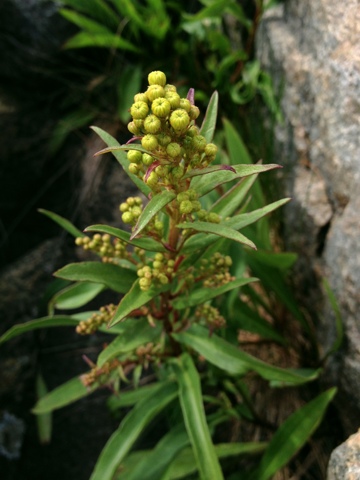
I also saw quite a few plants that were quite interesting to me. One had dicentra eximia type leaves and a pink oxalis-type flower. Have to find out what that was.
Insert photo of plant I thought was great that you might too.
We left Mt. Desert Isle at 5pm, hours after we had planned. On the way we listened to a radio station calling itself Frank FM. We arrived in Providence at midnight. Our friend, graciously accepting us so much later than expected, offered us watermelon -just the right thing. She said she had never seen my camera.
Insert picture of me miming blogging without images.
On our return to NYC, we decided to hit the beach farm to see how things were going and for the swim because we really weren't ready to return home. When we arrived at the farm, things generally looked good, although I noticed some wilting plants and that the flood ditches were powder-dry. Despite
my box, someone had turned off the water again. What can I say? You don't want to hear it.
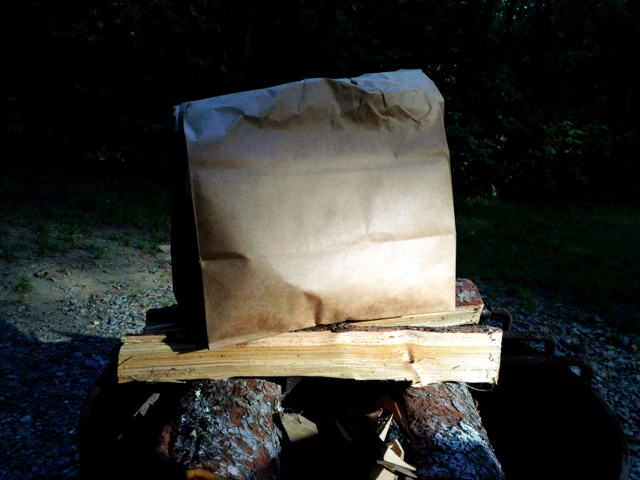
Insert photo of wooden box with writing on it.
All that I could do at that moment was to write on the box with a delible pen that the valve should remain open, that the irrigation is controlled by the timer, that the timer is the controlling valve, when it is open and for how long, and please, please, do not close this valve -your water pressure will not be affected! Afterward, we sprayed the garden with the hose to wet down the soil and it caused the writing to bleed like some gothic mascaraed overture -now with a sense of drama that my architectural drafting hand attempted to dismount. Hello hasp and lock.
When we arrived home we were happy to find a dead mouse on the floor. Yes, I said that right. The night before we left, our cat had been scouting a mouse. Now, we've always had mice in the ceiling, but never before have we found evidence of any mice in the apartment -giving our one mousing cat credit for that. For some reason (I'm going with upstairs bachelor neighbor's new flooring and new live-in girlfriend) the mice have decided to migrate into our territory. I had been finding our mouser staring at the kitchen counter for several nights. On this night, the night before we left town, I finally saw a mouse. Well, good mouser that she is (she was trained on Maine mice), she caught and carried it happily to the living room where she decided it was best to let it free so that she could have some fun with it. Well, in the ensuing WTF, the mouse made it inside the couch. We tried and tried to get it out. The next morning we headed out the door leaving that trouble behind, hoping that in our absence our animals will find a resolution.
Insert dead mouse/proud kitty photo here.
I was unhappy to find that some folks thought it was okay to pull flowers from our garden while we were gone. When they pulled the zinnias from the side yard, they simply yanked the whole plant out. What we found was a dried up zilch hanging from the fence. In the front yard garden someone has broken and removed the blooming lily stem so that they could bring it home to enjoy all the remaining lilies.
Insert broken lily stem picture here.
Well, now that I am sans camera, I wonder in what ways my blogging will suffer. It is the images that drive the structure of my posts. I have been looking into cameras to replace my aged Canon A80 (purchased 2004) for two years now, never finding the camera that does everything that I want it to. All the while my Canon had been holding up, doing its duty, suffering only through the pesky E18 error (dirt in lens -can't extend lens). A week ago, I left it on the roof of the van and drove to the studio -it was still right where I put it when I got out in Sunset Park! I guess I've been unconsciously trying to lose it.
Well, now it's time to start touching cameras. Hello B&H. I cannot buy, however, I am totally broke -not even the can't touch my savings broke -no savings. We poured everything we have into the Previa minivan and new studios. Hmm. I need to find a way to make some extra cash.
I thought maybe the cat could do photo shoots and TV commercials. We all think this, right?