camera

Camera Thief!


A week and a half back, my camera -an Olympus XZ2 point and shoot was stolen while I was working in the garden. Betsy was there too, just at the other end. It was a Monday morning, around nine, and the street was dead quiet. That's when it happened. We saw nothing, no one. When working in the garden, which for all my years gardening here has included taking pictures, I hang the small camera case on the short spikes of the iron rail, facing inwards. You would hardly notice it unless you were watching.

The pain of it has subsided, but what frustrated me the most, at the moment, was that I consider myself an observant person, a defensive sort, and yet I had a total blind spot -I saw no one, felt no presence in the 3 minutes I looked away. What nags me now is that I shopped relentlessly for a camera that would do all that I needed, and waited until the price dropped to a great deal (under three hundred). Now, needing to buy another, the deal is lost and knowing the camera's few shortcomings, I wonder about buying more than a point and shoot. For now, I'll go back to my phone camera. The pictures here are some of the last downloaded before that morning.


 We had honey bees, well one, on our Russian Sage.


 The afternoon sun, potted annuals, and the iron rail.


 The lily.


 Raspberries at the farmers' market.


Afternoon sun and the day lilies. 

Tomorrow I am off to Boston, then off to Vermont to teach my course Landscape and Meaning, a project which has occupied most of the last few weeks with reading and research. I don't think I'll have an opportunity to blog while there, but one never knows, and if so there is always the mobile blogger experience. The next two days promise to be great weather -enjoy!


What The Camera Makes Blogger Takes


Last January I uploaded a picture, the one below, taken with our new Canon G1X. It happened to be the first Photoshop-edited image uploaded to the blog in the new year. The Canon makes pictures of a quality and tonal range I hadn't been accustomed to since my shift to a phone camera three years prior. What appealed to me in this image was the level of detail in the burnt orange leaves clinging to the oaks in contrast to the blue-grey shadows raking across the snow. I was excited to show off the new image, but after viewing the upload I couldn't help but to see a pronounced deadening of the tonal range in the shadows and a summary of detail in the leaves. The image may as well been taken with my IPhone.


In late February I noticed Blogger's inability to render the icy snow in shadow without changing it's blue color toward red (making it lavender). This time the camera was my new Olympus XZ2. These two events were new to my Blogger experience, so it must have been something new. Or were my prior poor source images concealing what Blogger had been doing all along?


Recently I have been applying to several opportunities, many of which require links over the old-fashioned CD portfolio submission. I created a temporary Blogspot address and began uploading large, thousand-pixel wide jpegs. For some older paintings, like the one below, I had only IPhone images because these paintings were finished during my camera-less period. Phone images of large paintings tend to be pixelated, with choppy tonal gradients, and poor color accuracy. This image, below, shows those tendencies, particularly noticeable in the sky (too blue with stepped tonality) and the mountains (too red and blue). Nevertheless, it uploaded to Blogger looking much as it did in Photoshop and considered serviceable.


I used the Canon G1X to make new images a week ago because IPhone images simply will not do when there is a better option available. After taking these I processed them in Photoshop as I normally would, saved as a maximum jpeg and then uploaded to Blogger. The result, below, has somehow been processed by Blogger, pushing heavy on the red and yellow (probably to balance the blue). Now, despite an excellent source image from the new camera, the Blogger variation shows much worse color than the previous IPhone upload! Since this discovery, I've uploaded all my images to a Dropbox folder and am using that as my portfolio link. There, all images show accurate color -see the image


So, Blogger, what gives? Google searches show people with variations on this problem. The apparent solution is to make a Google + profile to attach to my Blogger account, at which point I will be given access to a control panel that has a couple of radio boxes that I must uncheck to disable the photo processing Google is doing by default. But I have no interest in Google + or its various demands. Consequently, I will give uploading png files a try, which apparently are not affected by the Blogger processing. On the web, some people said png solved the problem, but others not, either way the png is a larger file and less desirable. Below is the png upload -far better than the two above.


And, since Google also removed the ability to pay for website domains through Blogger, I will probably allow my art site to lapse when the domain goes unpaid tomorrow (I cannot access the account, which is somehow connected to the domain, yadda yadda, before it was easy, now it is hard). I will use the Dropbox folder for image viewing until a real site can be developed. In the meantime, I will get back to painting, where all the work should really be.


Peaking Olympus


Well, I've finally gone and done it. I bought a camera, and I did so with electronics shopping skill, waiting, watching, nabbing a good camera for a good price (and it's still available). Buying this way, of course, means that a newer model is about to succeed the current one, but I do not foresee too much in the way of improvements in this camera segment. 

Competitors include the G16 and S120 Canons, the P7800 Nikon, and the Panny Lx7. I went for the Olympus XZ-2, a risk (I'm familiar with Canons) that I was willing to take at this price point. The thing about these cameras, maybe all cameras, is that they all seem to exclude some feature I really want or need, include features I can do without, or have some nagging performance glitch. I begin to wish I can build a camera like we do cars, adding options for a custom build. Not yet (this guy is talking about it), so buying a camera is always a purchase with some compromise.

After using my phone for over two years, it takes getting used to sharing photos via download to computer, resize and retouch, and upload. The truth is, however, that mobile blogging has yet to meet its promise, and I can always use my phone for FB stuff. I will have the camera with me when the camera matters.

Here's what I like:

An articulating screen. The Olympus has one, albeit not the fully articulating screen of the P7800 (or Betsy's G1x). Anyone who takes pictures of plants wants to be able to get underneath them without laying on the dirt. A fully articulating screens allow you to do this in portrait as well as landscape, and that is awfully useful for plant shots. The Olympus screen compromises the portrait articulation, and this appears increasingly common on articulating screen cameras.

A bright lens. This is becoming more common on the newer high end, smaller sensor cameras. The Olympus is bright at F1.8-2.5, which I believe is only bested by the Panasonic. Better background blurring and better low light photography is the result.

Macro. The Olympus may have the closest macro of it's competitors. It's super macro mode can focus near one centimeter from the lens and that's great for someone photographing plants. The competition is also pretty good, and the Nikon glass might even show lower chromatic aberration. It's hard to go wrong with macro in this class of camera, and it is the macro functionality that drove me to fix on the small sensor segment as opposed to a large sensor Sony, for instance. I had a hard time wrapping my wallet around lens purchases (or $750 for a Sony RX100 II).

Customizability. The Olympus has it in droves. I can change parameters for nearly every function, including capping ISO in auto mode.

Fit and finish. The Olympus is an all metal camera, and everything feels tight and right. The zoom ring feels solid and secure (the ring on the Sony RX 100 always felt too loose and flimsy for a $750 camera).

Touch screen. For this one thing -tapping on a focus point.

Manual focus. I used to use that a lot on my last camera, the Canon A80. With that tiny 1.5 inch screen and button controls -what a chore. Now I can use the lens ring to manually focus as I would with an ICL camera. The lens ring doubles as a control dial with the flick of a switch.

Informative playback. The level of image information provided upon playback is amazing and customizable. To boot, there is an option for one second image review after each shot. Most bottom out at two seconds which I think is too long.

Good color and white balance. I don't go for the oversaturated colors of many point and shoots. Color is a function of algorithms now, and I like Olympus' take on the problem.

Fast Focus. Doesn't hunt for focus, even in lower light, and again, the touch screen focus point.


What I don't like:

Too small, too big. I think the Nikon P7700 (the earlier model, no viewfinder) would have been the ideal camera size or the Canon S120 for it's best-in-class pocket-ability (but no articulating screen). The hot-shoe is unnecessary (although I get it, really I do, however I would never mount a flash on a small camera like this, but thank you for providing a cover for it). The back right of the Olympus is a little cramped, especially with the screen articulated, the control dial is small and it's aggressive crenulations are wearing on the finger.

Zoom range. The Olympus has a range of 28-112 (35mm eq). I shouldn't complain about this because I understand size and sensor limitations. That said, I could have used the 24 wide (landscape) of the Panasonic and the 200 telephoto (birds) of the Nikon. My old A80 had a range of 38 to 114, so again, I shouldn't complain!

Panorama. The complaint is simple -it is not a Sony. Sony has the best implementation of panorama modes and no one can touch them. I use panorama, but I will use it less if its clunky.

Function 1. This function button has only limited functions that I can assign to it, while the front function 2 button has most functions assignable. Why?

Charging. Wish I could charge the battery outside the camera.

Sensor size. What? This camera segment generally uses the 1/1.7 CMOS Backside Illuminated type sensor. What's a 1/1.7 size anyhow? Well, it's a little more than a half-inch on the diagonal. The Sony RX, at more than double the cost, almost had me with its nearly 1-inch sensor and perfect panorama mode (but that dam flimsy zoom ring and high cost!). I would like to see Olympus make a compact, zoom lens camera with a 4/3 (1.33-inch) sensor. What a great camera that will be! Until then, 1/1.7 is the sensor size of the high end compact that isn't a Sony RX100, which I've stated again and again -costs too much (because it's the only game in town at that combination of camera compactness and sensor size).

I often read that Olympus charges way too much for its cameras in the same segment as its competitors. The XZ-2 listed for $600 when announced. Compare that to the P7700 and G16 at $500, the S120 at $450. Consider that the Olympus at just under half its MSRP right now, and it looks like a very good deal. 

I'm setting up my customizations now and looking forward to getting out to the beach farm and the garden soon.


Camera Futura


I sit in the studio contemplating what makes an image a photograph and an image a painting. When may a photograph, an image, cross over and become material for painting? When should the photograph stay put, be printed, or be celebrated as a photograph?

I stare at images much the same way I stare at places. Seeking something to grab on to, something worth repeating. I've always loved photography, since before my first 110 camera (if you don't know what that is, I'm sorry). I remember my first picture - a seagull passing in front of the evening summer sun, to the west northwest of Hither Hills State Park near Montauk. I think I was 6, but maybe I was 10, so at least somewhere between those ages.

Capturing an image is a magical thing, although maybe we give it less consideration in this age of digital recording. Film was precious, you waited, you were discerning. Sometimes, oftentimes, you simply got lucky.

Painting is something else all together. As a young man I was feverishly impressed with abstraction, with composition, with layering of translucent color. Getting older, seeking challenges and a way to undermine repetitiveness, I began looking less toward abstraction and more at the world around me. That was not yet twenty years ago.

Beginning around 2005 I began using my photographs as source material for paintings. Even though this is common practice amongst most artists I come into contact with, there is still a pestilent sentiment that this is somehow misguided, lazy, and lacking true artistry. Of course, this idea is lazy and misguided and is often the view of those who do not make art themselves but like to show you how much they know.

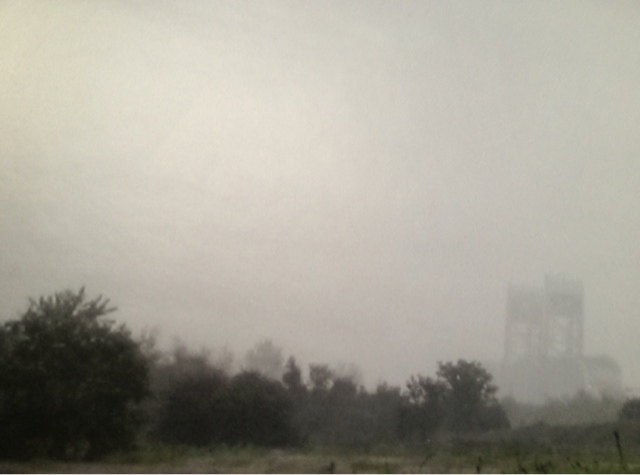
I have a beautiful photo of the bridge to the Rockaways on my wall. It's been there for some time, and was intended to become a painting, but I wasn't feeling it, for lack of a better explanation. The original was a rather small file, taken on my old, dead Canon a80. To print it large, I needed to upsample it in photoshop. Unlike many small photos printed this large (26 x 48 inches, image below only a portion), the artifacts of the process did not undermine its printed quality. I quite like it, it's enlargement fuzziness makes the photo, and that makes it suspect as a subject for painting. And then I ask: why not put photographs out there?


This semester I am managing my regular day job running an architectural model facility for architecture students. I've also agreed to take on teaching two courses. I'm on a tear to pay off my undergraduate debt before the twenty year mark this May. Of course, there is that pesky graduate school loan, but despite that I do think this spring I will look down to see a new camera in my hands thanks to the extra pay from the extra course load. There are quite a few excellent cameras out there, from pocketable to professional, so choosing will be tough. But it is time, especially as I admonish my new students for using their phone cameras for their projects. Of course, photos don't need to be great for making paintings, but should a shot be print worthy, it's nice to have started with a great camera.


Peak Produce


I had managed to get my camera to work this one day by banging the lens on a table. You will notice on every picture a blurry streak, center left, and a general sense of focus on the wrong objects. To get the images off the card, I needed to unscrew all the tiny screws from the case and yank on the plastic. Somehow, this made the camera stay on for download. It's getting bad folks. What's a blogger without photos?

Morning view towards the green beans, carrots, and bolting cilantro. Green beans are full tilt.

Glow worm (or Black Swallowtail caterpillar) on the carrots.

The haul. Somehow the picture makes it look like less. 

Still getting a good amount of blossom end rot on the paste tomatoes. Although we did just harvest the original flower sets which seemed unaffected by the b.e.r. There are quite a few tomatoes on these plants. One plant has maybe 40 tomatoes on it, all green, and with hope, will overcome the b.e.r.

The recent super rain forced many of our tomatoes to crack and burst. Their skin is the only defense against tomato raiders. Many insects find the flesh delectable, including little ants. I placed this in the sun, then hosed it out, appearing to rid it of buggers. This is one of the last two black russians, and there was no way I was going to lose it to ants. I cut out the crack and will eat it tonight. Delicious.

By the way, I consider ants a clean insect. If ants brought food to my table, I would thank them and eat.


Many Happy Returns


Today will be our last full day in Minnesota. We are watching a growing Chicken of the Woods, one of the kind we found last year, with hopes to eat it tonight. It will not travel. My camera has died, or more specifically, it has finally been put down due to the E18 error -simply, dirt in the lens mechanism. Who should expect dirt in the lens mechanism? A blogging gardener.

Our trip is never long enough, so full of house repair, car repair, it is never all done. I drove the Ford 8N for the first time. Wow, me on a tractor. I get ideas. I'd like to go canoeing on one of the lakes before tomorrow, but that is seeming less and less likely -I should be doing that, not internetting at the coffee shop.  Tomorrow, am, we head out towards Iowa. Taking the scenic route, passing Laura Ingalls Wilder place, destination Seed Savers Exchange headquarters and farm. Camping on the Volga River, then a visit to the University where I will have an exhibit next winter. After that, we rocket home in our trusty minivan, which will turn 170,000 this return trip. Here's to reliability.

What will the gardens hold in store for us upon our return? Will do my best to find out before my return to work. Happy Fourth, but then, happy first too.


Talking The Walk


We left town on Friday for a quick escape from NYC. We went to Providence, RI, then up to Maine to visit the art program where we used to work. Somewhere between Providence and East Madison, Maine, I lost my camera.

I didn't know it until I visited a friend's new vegetable garden. While I was munching on the green beans (hers are way better than ours), I noticed a large-leafed polygonum, or smartweed, growing in the middle of her bush beans. On said smartweed a blasphemously large pile of Japanese beetles. Japanese beetles love to eat foliage of tender plants like green beans, yet there they were munching on this one smartweed. Genius I thought! Allow some smartweed as a trap for these beetles. I ran for my camera. Hey, where's my camera? Missing. Vanished. Gone. Must've left it in Providence?

Insert picture of Japanese beetles eating smartweed here.

On Sunday, after a most blissful post-cold front night in Maine on a lake with good old friends, a dinner raid on the reach-in (the large glass-doored fridge), and a few G&Ts, we headed to Mt. Desert Isle for a night of camping and a hike. On our way we passed a man on Route 2 tapping an 8 foot diameter earth down the highway.

Insert photo of oddball thing here.

At 5 pm we arrived Seawall campground, where we expected to stay, but it was filled. As it sounds, Seawall is right on the ocean and in August, very popular. Fortunately, we found another park campground (that shall remain unnamed) that was not far, one spot available and nearly perfect. We ate non-lobster for dinner at a lousy lobster pound on Rte. 3 and headed back to the camp for an early sleep. At first the stars were visible, then in the early hours of Monday it drizzled some and poured some. Cool breezes blew into our van while we slept, half-naked, without chill. Only Maine could make rain and clouds seductive, desirable.

Insert picture of campground here.

On Monday morning, we returned to the Isle and decided to grab a map from the ranger station at the head of the island. The extra helpful ranger confidently suggested two hiking routes to fill the 2 hours we said we had. We selected the shortest hike, ate breakfast in Southwest Harbor at the place the ranger suggested (Sips) and headed out. Four hours later, climbing the up up up of the northern face of St. Sauveur Mtn., I realized that the ranger did not get a good look at me, or she wanted to teach us a lesson about hiking in Acadia. What she should have said was two hours in, two hours out!

Insert photo of Valley Cove, Somes Sound, and boats, fog and sun.

We made it to the top, foraged for blueberries, bumped into a friendly couple we had met previously on the trail. They gave us the last of their water -how generous. We thinking a two hour hike on a foggy day, no need for water bottles. Silly us. Sun came out, hiking vertical.

Insert photo of me guzzling two liters of liquids at local convenience store.

I also saw quite a few plants that were quite interesting to me. One had dicentra eximia type leaves and a pink oxalis-type flower. Have to find out what that was.

Insert photo of plant I thought was great that you might too.

We left Mt. Desert Isle at 5pm, hours after we had planned. On the way we listened to a radio station calling itself Frank FM. We arrived in Providence at midnight. Our friend, graciously accepting us so much later than expected, offered us watermelon -just the right thing. She said she had never seen my camera.

Insert picture of me miming blogging without images.

On our return to NYC, we decided to hit the beach farm to see how things were going and for the swim because we really weren't ready to return home. When we arrived at the farm, things generally looked good, although I noticed some wilting plants and that the flood ditches were powder-dry. Despite my box, someone had turned off the water again. What can I say? You don't want to hear it.

Insert photo of wooden box with writing on it.

All that I could do at that moment was to write on the box with a delible pen that the valve should remain open, that the irrigation is controlled by the timer, that the timer is the controlling valve, when it is open and for how long, and please, please, do not close this valve -your water pressure will not be affected! Afterward, we sprayed the garden with the hose to wet down the soil and it caused the writing to bleed like some gothic mascaraed overture -now with a sense of drama that my architectural drafting hand attempted to dismount. Hello hasp and lock.

When we arrived home we were happy to find a dead mouse on the floor. Yes, I said that right. The night before we left, our cat had been scouting a mouse. Now, we've always had mice in the ceiling, but never before have we found evidence of any mice in the apartment -giving our one mousing cat credit for that. For some reason (I'm going with upstairs bachelor neighbor's new flooring and new live-in girlfriend) the mice have decided to migrate into our territory. I had been finding our mouser staring at the kitchen counter for several nights. On this night, the night before we left town, I finally saw a mouse. Well, good mouser that she is (she was trained on Maine mice), she caught and carried it happily to the living room where she decided it was best to let it free so that she could have some fun with it. Well, in the ensuing WTF, the mouse made it inside the couch. We tried and tried to get it out. The next morning we headed out the door leaving that trouble behind, hoping that in our absence our animals will find a resolution.

Insert dead mouse/proud kitty photo here.

I was unhappy to find that some folks thought it was okay to pull flowers from our garden while we were gone. When they pulled the zinnias from the side yard, they simply yanked the whole plant out. What we found was a dried up zilch hanging from the fence. In the front yard garden someone has broken and removed the blooming lily stem so that they could bring it home to enjoy all the remaining lilies.

Insert broken lily stem picture here.

Well, now that I am sans camera, I wonder in what ways my blogging will suffer. It is the images that drive the structure of my posts. I have been looking into cameras to replace my aged Canon A80 (purchased 2004) for two years now, never finding the camera that does everything that I want it to. All the while my Canon had been holding up, doing its duty, suffering only through the pesky E18 error (dirt in lens -can't extend lens). A week ago, I left it on the roof of the van and drove to the studio -it was still right where I put it when I got out in Sunset Park! I guess I've been unconsciously trying to lose it.

Well, now it's time to start touching cameras. Hello B&H. I cannot buy, however, I am totally broke -not even the can't touch my savings broke -no savings. We poured everything we have into the Previa minivan and new studios. Hmm. I need to find a way to make some extra cash.

I thought maybe the cat could do photo shoots and TV commercials. We all think this, right?


Rose, Spider, and Camera


An unaltered photo of Grandma's tea after an accidental flash exposure.


The glowing magic spider after the same.


How it was meant to look -seductive in its own right. I'm hoping that my next camera can process the hot pinks/magentas better than my current Canon A80.


And here the spider I found today when I went to cut some parsley. I noticed a fat thread connected to the climbing hydrangea, which led my eye to the web. I've never seen a large spider like this in this garden. I expect to see these in the woods, under an eave, near the night light. I must remember it is there, tomorrow, when I go to cut some sage.


First Snow and the Camera Returns


Its not unusual, but always noted, and inspired me to pick up a Christmas tree on my way home from work. We don't always do it, and we're leaving in a few days for Minnesota, but how could I resist with the snow on the branches.


The garden is taking it well and so is my Canon A80 -back from the rehabilitation center. I'll remember this customer service, Canon, when it is time to invest in a new and better camera.

Casual Camera Casualty

What's casual in a casualty -I suppose that its a matter of chance. My casual camera, the Canon Powershot A80, was suffering psychedelic visuals. By casual chance I noticed that the company was offering rehab for cameras that were suffering symptoms just like my camera's. My camera being a casualty of not so good engineering over at Canon, I sent it off this week for rehab. They say they can help.

By chance I located, hidden in a drawer, a really cheap digital video camera that also takes stills. A brand name I certainly do not recognize. Its images are quirky at best. Poor contrast control and blurred edges. Difficulty focusing. Not very dynamic. You'll see this in all my recent photos.

My Canon will be missed. Please return safely, and soon.

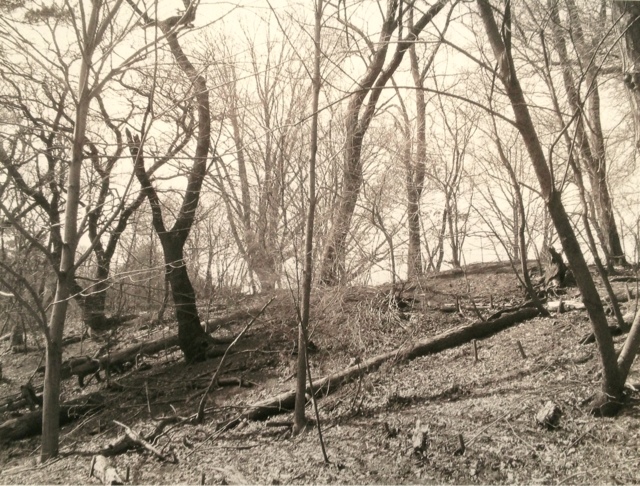
Sometimes a camera works so poorly that it does magical things. I have a compact 35 mm film camera, a Ricoh AF40 with 38mm lens, that's like this. Actually, the Ricoh is a decent camera giving excellent results in certain situations. This digicam, however, is just bad, yet it still took these photos that I find to be fantastic. In the spirit of all cameras' quirks, I offer these dreamy photos taken by my nameless digicam.


These shots make sense now, a dreamy warmth out of step with that bluster outside.