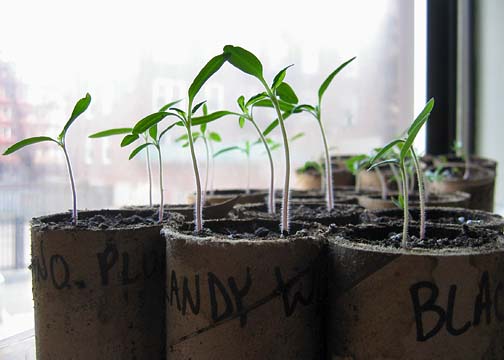
seed starting

Garden Architecture


After 15 years, this greenhouse of redwood and polycarbonate, has finally come out from under tarp and mouse droppings. It was purchased for my project at Socrates Sculpture Park in Long Island City, Queens, in 2001, assembled amidst the acrid haze of September 11, and the structure became a refuge during a very dark time. The company, Gardenhouse, generously donated their profit by giving the structure to my project at their cost.

Our site, formerly Rex's dog pen, was excavated last fall and filled with Class 5 gravel (a mixture of 1 inch or less rock, sand and some clay), hand compacted by me this spring, and laid with the cheapest concrete pavers from a preferred regional box store. Redwood is great for this kind of structure because it really doesn't warp and is one of the best rot-resistant woods. The polycarbonate held up well, but I hosed down the panels last fall and the hard water left spots inside the double walls. Oh well, still have a greenhouse! 


Because thunderstorm winds are a concern, Betsy made L-shaped pins from two-foot long, 1/2 inch rebar which holds down anchoring straps at seven points along the perimeter. As they rust, the pins will bind to the soil which provides extra grip. Also around the perimeter, I laid landscape fabric and 2 inch granite gravel dug from nearby "landscaping" in anticipation of high speed rain runoff from the 45-degree pitched roof, weeds, and the little boost of rock's heat retention. The brick edging is an unfortunate compromise.

I am renovating a portion of our front porch deck so that I could use the old, long cedar planks as framing for our raised herb bed. After ensuring the rusty screws and nails were out, I ripped the boards on the table saw to cut out the rotted sides. The heart of these boards are perfect, so if you are looking for free raised bed material I would look for a deck carpenter in your area. Our boards haven't been treated in at least sixteen years, if ever, and each had a nice coating of algae and lichen. Still, I placed the up-side out and the underside toward the planting. You could do the same if you are concerned or unsure about the treated nature of free, old deck boards.


After building the first raised bed I rather liked the structure over the hastily made front yard vegetable beds of last year. I had potatoes to plant and thought a raised bed would be easiest for "soiling up" mid season. I tilled, built the two side walls out of 14 foot old cedar deck boards, added humus from the base of a giant old oak tree that spits out a fine, peaty substance from a portal 5 feet up its trunk, then added the rotting straw that covered the garlic beds, and finally several cubic feet of compost. I left the 40-inch end boards off so I could run the tiller through to mix these ingredients in. 


I dug a trench and planted the potatoes at about 12 inch spacing, covered the potatoes, then dug the center trench and so on. In a raised bed with rich soil I am anticipating that I can tighten my spacing. Don't take my word for it, however, see Rodale's 7 Ways to Grow Potatoes.


The greenhouse, nearly completed (still rocks for the back and side, one vent operator to install and some window cleaning). We moved our New Mexican Opuntia and Agave inside the greenhouse, mostly to avoid the cold rains, but also to get them more sun than the house could provide. The front of the greenhouse will be tilled and seeded for grass, then stepping stones or maybe brick walkway from the garage pad to the door. 


Inside the greenhouse, on a quick-built table made of cedar taken off the house last fall, are starter trays and cold-stratified milkweed seeds of seven varieties. I am generally two weeks behind on most projects, so these got started a little late, but milkweed enjoys warm soil sprouting (you'll notice even well-established plants are some of the latest to come up). The milkweed seedlings are sprouting and now share the table with summer vegetable seedlings and strong-looking starts purchased last week at one of our area's better unique and heirloom variety vegetable nurseries -Shady Acres.

If you are thinking of a free-standing greenhouse like this, I'd like to offer some considerations. Make sure you have a solid base to build on that is level as these greenhouses won't piece together well if they are bent out of form by off-level pads. Make sure you place it in a sunny location! Don't laugh, if you build in fall or early spring it could be quite sunny, but not from May through October. Do consider wind and overhanging branches. Gardenhouse says it can withstand a wind load of 85 mph. Why chance it? Make sure to anchor it in some fashion, put it in an area that provides a windbreak yet doesn't allow a large limb to come down on it (note that home insurance usually doesn't cover structures like these). Finally, if you have lots of paper wasps, they will love to explore your new greenhouse as a fine place for their nests of stinging motherf$#ers. I was stung four times last year, mostly because I put my hands near a nest I could not see. Paper wasps are very observant and will watch you as you get close. They will leave you be if you do not get too close, but if you do, in a flash one or more will drop on you and leave its painful stinger. In short, you may have to spray a long term pesticide on the rafters, as difficult as that decision is. Wear a mask, cover your skin and eyes, because it's hard to avoid getting doused when spraying up into a pitched roof. Don't forget places like under a table. The long term stuff should last all season, meanwhile you can use clear sealant to close up gaps that allow creatures in, and with some luck, the next year you will not have to spray.



Stratify This


This winter I've proposed a landscape project for Franconia Sculpture Park's program. Materially, the artwork will be made of milkweed, Asclepias species, sourced from the northern tier. I don't want to say too much more about the form this planting will take as the jury is still out. I do, however want to share with you the process for stratifying milkweed seeds. It's an easy and fun thing to do should you want to get a jump on milkweed for your yard. You may, of course, plant seeds in fall and the damp, cold climate will do all the work for you, but what fun is that?


It's important to source your milkweed seeds regionally because they will be best adapted to your climate extremes. My project's seeds were purchased from Prairie Moon Nursery, a Minnesota based native seed company. Like many perennials (plants that come back each year), Milkweed requires a period of cold and damp to break dormancy of its seed. This process is known as stratification. 


First you will need sand. It's possible that any sand will do, but I bought this very fine, washed sand at the big box. The fifty pound paper sack (which leaks all over, keep it outside) was under five dollars and I used only a fraction of it.


You must dampen the sand and the first thing you will notice is how the water percolates through it just as it does at the beach. If you'd rather go to the beach than the box store, I recommend bringing a coffee can with you for your seed stratification needs. 


You'll also need some kind of sealable bag, ziplock type or even a baggie. There shouldn't be any free water in the bag after dropping in the sand. Add the seeds and label. I wrote the start date, how long they should be stratified, and the quantity of seeds. And since it is easy to forget about them, I put an alert on my phone to remind me to check in 28 and 30 days.


Here they are -seven varieties of milkweed ready for the refrigerator. If all goes according to plan, I will be potting these seeds in deep cell trays come late March. Afterward, the trays will go into the greenhouse, ahem, the as yet unbuilt greenhouse leaning against an oak tree in the back yard. All in good time. By May they should be ready to plant in our Monarch Park over the drain field and quite possibly at the sculpture park forty five minutes to our north and east.


Pepper and Daffodil

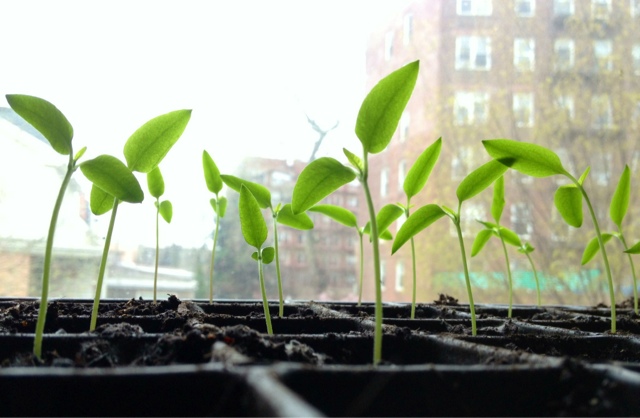
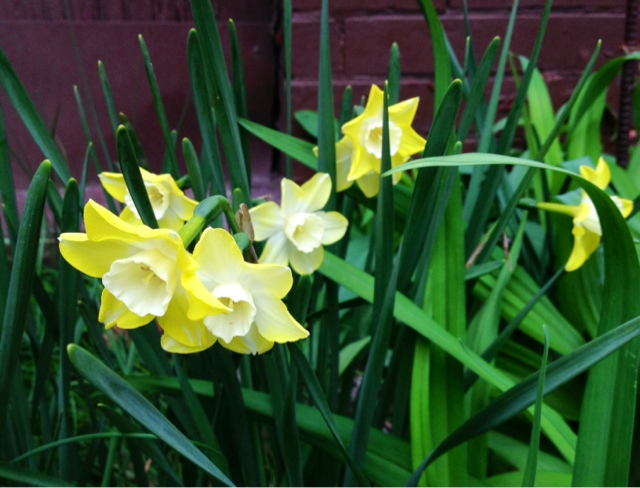
In recent years these two have not shared time. I've started all late this year and the consistent coolness has kept the flowers. Soon the peppers will need to go out so the tomatoes can take their place on the starting shelf.


Seedings

I am told via internet birdie that a 9 pound package is on my doorstep. I hope not! In fact, I hope Mr. UPS rang the bell of a neighbor, and dropped it inside. These are seed potatoes, my first. Betsy has grown potatoes before, in gardens and sculptures, so I will defer to her experience.

Tomorrow I go back to the patio work, with more hopes of wrapping that up. Then, on Monday I must get out to the farm -I am thinking about it night and day. So much happens between winter and summer, also known as the last three weeks. I seed tomatoes this Sunday. The peppers I seeded last week are up! And just as they did a friend contacted me from New Mexico with a stash of green chile seed to offer. So, I will seed peppers again. And the onions, so many have croaked, but just as many have made it and the warm sun of the last days really perked them up. I reseeded the empty cells, knowing that it is probably too late for large bulbs (day-length sensitive, these onions, and need to size up the plant before they size up the bulb at solstice).
Painting With Peppers

I seeded peppers today. This is the year, I've already said that I will grow a proper pepper. Forty nine cells of four different pepper strains. Forty nine? One, two, three, four, fi...but there's 50 cells in that tray! Right. Well, there was just one onion seedling still hanging on in that tray and I just couldn't do it in after showing such tenacity. Forty nine.

Tomatoes will be seeded in a week or so. Late is the order of the season. Nothing will be put in too early. Lettuce? Yes. Soon. Monday?


I went to see the Catherine Murphy showing downtown today, before work. I headed down Crosby Street, where twenty years prior I worked for a gallerist in a part-time, not at all paid position. Such a different place back then, and I was reminded viscerally of those times as I stepped into Peter Freeman's new(!) gallery on Grand Street. It was the scent of old SoHo galleries, their rotting plaster and floors. I do not recall odors within any of Chelsea's galleries, but if there were it'd be polished concrete and a refinished built-in. Floors don't give under your weight in Chelsea, they push back.

Maybe it's the throwback to my formative years, or maybe it's simply the work. Murphy has a way with the thingness of things, and a full appreciation for the abstract in the representation, a mastery of 20th century composition, a compassion for banal coloration, and knows how to load the unloaded.


And no fear of green, either.

Out Like A Lion


A dandy lion.

The cold and blustery days of March, complete with three snowfalls, put my onion attempt to shame. A shame made all the more goading by the boisterous growth of the dandelions. Hoop-house dreams I guess.

Now, let's put melancholy March to bed.


Migrations


I rose before 6 am so that I could pick up the eleven flats of onion seedlings languishing in the studio. I did not want to haul each down the 4 flights of stairs on Saturday; I wanted the elevator and its operator, Carlos, and that meant getting there early so I could still get to work on time. Carlos knows all about my ajo and cebollas, and his wife is a big fan.


The plan was to leave them in the van until tomorrow, sitting on top of 300 pounds of alfalfa meal, but I had a few spare moments to do today what needn't wait until tomorrow.


A couple went here, around the roses, the only spot new growth isn't seriously pushing up.


Most went in the side yard, a location that leaves me wary because it's the spot most often trashed by unknown (but sometimes known) feet. The weather is enough of a challenge, but the people, the wild cats, even a squirrel could do my trays in. Please, leave my cebollas alone!


Although my heart was in the right place, I ended up using some peat-based potting mix when I ran out of vermiculite. I will do better next year. Now, sun must do its part to make these guys stand up. I will feed with kelp and fish soon enough and plan to transplant by the end of March.

Other Migrations:

Three weeks ago, Betsy and I received notice that all artist tenants in our studio building will be, effectively, kicked out. Our leases are up in August, but they are forcing out those on the fifth floor by this April one. We were given until June, to which I replied that wasn't going to happen because of the harvest. Apparently the landlords are feeling pretty confident about our dismissal, despite the fact that most of us have new leases. They have offered to move us to another building, but at that building's new rate which is nearly double what we are now paying. Funny, I didn't see this coming because I thought they were satisfied with the 45 percent rate increase they demanded last year. If you want to know how this feels, read last year's complaint. I can't even give it any emotional energy. Simply put, it's over.

I do not know what we will do, or where we will go, or how this will change our art practices. I would like to mention an absurdity: I can rent an acre in The Hamptons, near the ocean, for 350 dollars a year or I can rent 140 square feet (1/300th of an acre) in Gowanus, near the canal, for 6300 dollars a year.

Update: less than 24 hours something already messed with my onion flats. Either cats were laying on them or a squirrel was digging in them, or more likely both. Bollocks.


The Onion Seedling


From a distance an onion seedling comes up looking like a dicotyledon. But an onion is a monocotyledon; a single embryonic leaf emerging from its seed.

A day or two later, the illusion of a dicot gives way to the monocot as the tip emerges from the soil, a pronounced fold in its embryonic leaf. Other features of a monocot: roots are adventitious, flower parts come in threes, and veins are parallel. Lilies, bananas, ginger and grasses are monocots. 


Vermiculite Sandwich with Extra Onions


I have extra, unused rows in my garlic field. At first I thought I would fill them with tomatoes, potatoes, green beans and the like. Now I'm thinking that's just too much effort at this time. So, what to fill those empty rows with then? Onions. From seed.

I purchased these 5-inch deep, 2 by 2-inch wide cell trays, eschewing positive cost to cell-count ratios for longer roots, longer tray times, or what is often referred to as leeway. 

Large holes at the bottoms and ribbing on the side which purports to fight off root binding.

The team. After last summer's trip to Maine where I saw peat bogs first hand, I decided to try a different approach to a peat-based starter mix. After some hand wringing, I made an on the fly decision at the Agway to go with a decent compost (no sludge) and a generous dose of vermiculite.

The resulting mix was light, held moisture, yet appeared to drain well enough. It wasn't spongy the way peat-based mixes are, but in fact was somewhat grainy so that it was tough to poke holes for seeds to drop into.

Three onion types. Three trays. Each tray of 10 x 20 inches holds fifty cells, but to spare soil, space and effort, I planted two seeds in each, on the bias, roughly one inch apart so that each tray holds one hundred.

I ran out of my soil mix by the 550th cell, and had to short my goal of 1200 onion starts. Each 1/16th ounce seed packet held about 500 seeds, so that I could have planted more, but then I thought this is enough. Of course, I'm planting onions because they fit the overall business of my little acre. Garlic, shallots, and why not onions? They're on the same schedule, roughly, and require a similar care. Now sprout you little boogers!


The Forgotten Season


No matter if you are a home gardener or small time farmer, at this time of year we all begin to feel as if we have forgotten something. Maybe you have forgotten that today is the day of valentine? Uh-uh, no, it's not that, it's a nagging that builds and fades until the last tomato is planted in May. Or is it June?

Have you gotten all your seeds? What will you plant them in? Have you waited too long to start? Is it too late? Maybe too early, so relax. But is it? When should these be planted out? Two weeks before frost, two weeks after? Ack, when will the last frost be in this crazy zone anyway? Maybe I should just start outside. Maybe there'll be just the right moisture, the ideal germination temps. Or not. I better order those cell trays. 

This morning that's exactly what I did, choosing expense and glory over affordable and chancy. Five-inch deep 2x2-inch cells, fifty per, and reusable with cleaning. I ordered fifteen of those along with trays known to the trade as the '1020,' and as it's name suggests -roughly ten by twenty inches. Skip the domes, use cling wrap, and heed the seed.

My Fedco order arrived three days ago: three sixteenths of an ounce of onion seed, or put another way, 750 to 1200 onions to be (or not to be?). I bought seed not because they are tiny, fussy, or difficult, but because they do not harbor disease the way sets and starts do. Seed, then, was the only way to keep with the allium program in my unsown rows, even though seed must be started early, maybe now, or possibly later, soil temperature of 60 degrees, consistent moisture, but not soggy, watched and waited on, until perfect transplanting sometime in March or April, but who can be sure. 

I'm excited for onions, more so than for the cilantro and parsley, carrots and Sungold that came with this shipment. Onions are the second most consumed vegetable beside the tomato; roughly 17 pounds per person in these United States. Each year American farmers plant a crop worth four billion dollars, although my crop will be worth less than five hundred. Borrettana Cipollini, Rossa Lunga di Tropea, Rossa di Milano. Storage yellow, seasonal red, storage red. 


On Your Mark, Get Set, Tomato


I rose too late on Tuesday to get out for the biweekly meeting of volunteers cleaning the wasted woods of Prospect Park. I actually miss it. Mostly because of the social aspects of a great group of people in an unsavory cleanup environment, which can lead to some clever humor. Well, I had an hour to kill before work, and behind on my tomato seeding, I chose to knock it out that morning.

I had no pots and little in the way of paper tubes, but many cereal boxes.  I am a little distrustful of recycled chipboard, a mystery concoction from far away lands, but went for it anyway. Each was large enough for three or four seedlings. I particularly enjoy the barilla box with the single mezzi rigatoni on its end, wide and deep with the little window on its side for viewing root developments (wink).

Outside, on their bake sheet, I filled each box with the planter mix -a mix of composted wood, peat, and perlite. There may be a more earth-friendly alternative, but I haven't found it locally. All in all, about 50 tomato seedlings to be. I can only plant about twelve, so I will be handing out the rest to friends and gardeners. I do have a few interesting new varieties this year -Velvet Leaf, which is more about the foliage than the 2-inch red tomato, and another called Indigo Rose which is really leaning toward a black-green tomato. Hillbilly and Pineapple are both intended to replace my beloved German Striped which I have difficulty locating. Black Krim is, I'm assuming, much like the Black Russian that I also seeded. Speckled Roman is a long roma-type with yellow-orange striations. A Yellow pear type as well, along with several others I grew last year. I think it will be a good year for tomatoes.


As The World Grows


These have been unproductive days. If I should ever be able to marshall the powers which control my attitude towards work and productivity (I suppose we call that discipline), I will be a huge success. Until then...

A brief visit to the beach farm, tomatoes yet to be seeded. A visit to the offices at the studio to discuss upcoming changes, where nothing's changed, and finally, some hours in the studio where little was accomplished. Ball dropped, I went to the grocery to pick up some pork shoulder for tacos. In the oven now, I simply wait, while considering how enjoyable watching old episodes of Twin Peaks might be. 

For tonight's tacos, which I am sure to enjoy, I must thank Marie of 66squarefeet. No one person in recent years has influenced the way I think about food as much as Marie has through her blogging. I cannot say that I am a better cook (in fact, I might be slipping for lack of time), but what has happened is an awareness that has invigorated food itself -the process, the presentation, the representation. I think that's remarkable. 


Broccoli rabe or cima di rapa, however you like it, growing fast now. But still too tender for the beach -its awfully windy there. Roots are beneath the wooden box now. Next week I will plant it out. It is a delicious green at this stage.

Fennel, the Greater. Fennel, the bulbous. Slow grower, but competent -no fuss, so far.

The other fennel for seeds -Fennel, the Lesser. Here, a seed capsule slowly casting off. I suspect this plant will become a weed and I will be responsible for creating a new foragable species in the Rockaways. Worse -I hear chefs want the pollen, not the seeds. Either is good rubbed all over pork. I use it liberally in Italian dishes.

The lettuce. Both new to me, well, at least since my last attempt, at the unaccomplished age of 25, in a wet and sluggy garden during my brief stay in Portland, Oregon. Butter and romaine here, to be transplanted into the tomato beds at the beach.


Germinate This


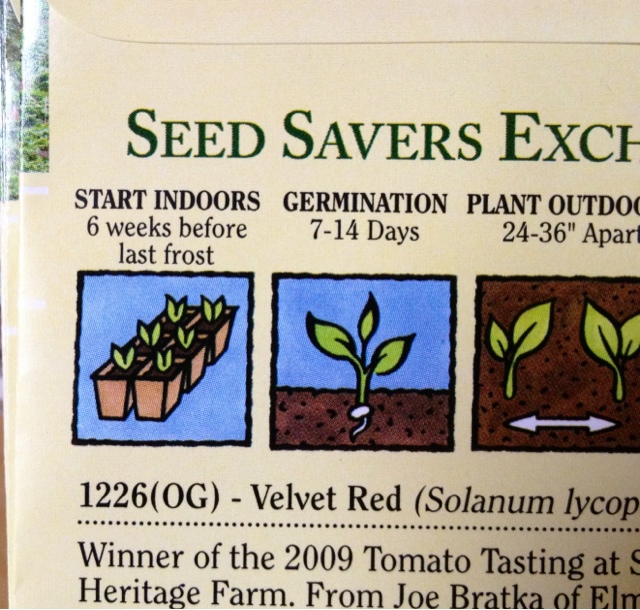
All of my seed packets for tomatoes, from several different sources, say to plant the seeds indoors 6-8 weeks before last frost. Now, this year that could hardly make any sense, but even in normal weather years, if I was to put my tomatoes in starter mix in February I would have skinny ass tomato seedlings by April Fool's Day. And yes, I would be a fool for following those instructions.


I would not plant my leggy tomato seedlings out in the garden at the beginning of April. I still go for a not completely conventional May 15 plant date depending on how the cool weather crops are fairing. When those are done, the tomatoes can replace them as late as May 30 (the old-time conventional date). They will grow rapidly with the soil activity up because it has warmed properly. Even when the air temps are warm, the soil may still be cool, and your tomatoes will languish. Same reason you shouldn't put your cucumbers seeds or pepper starts in before May 15. I'm not saying you shouldn't try, but if you're new to this, best stick with matching your seed starting dates to real world planting dates.


I will begin seeding my tomatoes this week. Meanwhile the broccoli rabe and fennel will need to be transplanted to the beach farm (where it is significantly cooler). The lettuce I got in a bit late, so those seeds are just popping up now. With warmer weather approaching, those tomatoes seeds should sprout and grow pretty rapidly in their little pots. I will have to keep them in check to hold off planting until May whatever.


Comfort Food


Pork sauce, aka meat sauce. To some, ragu, but not us. Occasionally I buy pork at a large supermarket in the neighborhood with this meal in mind. They label it pork fat, but usually it has very little fat, and what it does have can be trimmed easily. And it is unusually cheap, always, as if it was a cast off that they couldn't sell (seriously, like 2.5 pounds here for about $3). It makes good pork sauce, and carnitas en salsa verde, too. Tomatoes added, later.

Incidentally, I do not need a recipe for sauce, but I do like to look at recipes for sauce. Last summer I was shopping around for fennel seed seeds (Foeniculum vulgare, Finocchio Sylvatico) and I found a source mentioned on a website devoted to Calabrian cooking. The author of that site, Rosetta Costantino, had a cookbook, My Calabria. Betsy got it for me for Christmas. This is her sauce, but I added the little portobellos. Her sauce is my sauce. Many of her Calabrian recipes are a stones throw from what my grandparents cooked, in fact it's the closest I've ever found to their cooking, including their demand for fennel seeds! I think I would be a better cook if I lived in Calabria.

Those fennel seeds have been planted in the start tray, outside, in the, ahem, cold frame. Let's just say that its going to be pretty toasty in there. I also seeded some Finocchio Romanesco, the "bulb-forming" fennel. And, lastly, for now, some Cima di Rapa Sessantina, or broccoli rabe. It's an Italian spring, I guess. I'm opting out of brassica this spring, waiting for the more ideal summer planting, for which I have broccoli Romanesco, purple cauliflower, and two types of typical broccoli.

I had little to do at the beach farm today, but I had to pay my year's rent. The garlic is growing quickly now, putting on a couple inches since my last visit. The plot looks good -weeded, wood chipped paths, things growing. There will, however, be no garlic here next year. The NPS will be tearing up the whole Tilden garden in October and it seems they will do what they can to keep us from planting over winter. They've shortened the season to April fifteen to October one. They've no idea.


Extra virgin olive oil
Three cloves garlic
Sea salt
Tomatoes
Pork meat, your choice
Basil

Pan fry the meat first, drain fat, cut off extra fat. Olive oil in a sauce pan. Add sliced cloves, but don't burn the garlic. Add meat, add tomatoes, add basil and salt. Low heat for as long as you need. Sauce should be thick enough to stick to pasta.


One Weird Tomato


That's what I was thinking until I decided to check the 'sugar sweetie' packet it came from. Hmm, when I planted these, I knew they looked different from all the others. Cilantro all the way -the whole packet filled with cilantro seeds.