community garden

Final Touch


I hadn't been to the beach farm in two months. It was hard to go, out of busyness as much as emotion, but it was time, or rather time was running low, so this past Sunday, blustery, cool, and unfavorable to contemplation as it was, I went.


The buckwheat never got turned under which, in retrospect, appears a good practice given no other fall planting. The tangle of light carbon comes to be an effective mulch, keeping down weeds and shielding the soil from eroding winds. It should be turned under next spring.


In our other, short-lived plot, the unharvested fennel bulbs died back from frost and have since re-animated. I let them be.


Just down the row, under the blackened skeletons of tomato vine, speckled romaine has sprouted. The spring romaine must have successfully self-seeded, something I have yet to see in any lettuce I've sown.


Adjacent to graying, dry fennel stalks and the soggy flesh of decayed eggplant, our parsley is embracing a return to normal temperatures. I pinched some.


From the shed I collected some belongings, a bin, two types of spreaders. I left my wheel dib prototype hanging along with rarely-used garden tools and Wolf's jug of wine.


On this last visit to the beach farm, I was visited by what I think is a young eagle. I missed and will miss the autumn congregation of migratory birds and their electric cacophony. 


Finally, the beach farm was a great place to bbq with friends. I think this post by Marie, of 66sqft, brings it home. We had some great neighbor gardeners -Jimmy, Wolf, Joanna and others. They'll water your garden when you are away, rib you for your weeds, then offer you a cold beer, and they always took heed of my experiments and that is how I earned the nickname: the professor.


Two plots available. I recommend F12.


Beach Farm Virtue


The beach farm is winding down, and quite frankly, so am I. I've been lucky to visit about once every two weeks. My cover crop of buckwheat has grown, flowered, gone to seed, seeded, and sprouted once again. No harm, but folks are beginning to whisper into cupped hands. I have not planned for garlic, nor an autumn crop of cool weather greens. A volunteer sunflower has appeared, its presence among the tattered buckwheat welcome and self-sustenance a virtue.


Japanese eggplant, preferred by this cook, continue to produce into the cooler days.


They take quite awhile to begin, and then decline slowly toward the freeze.


I've harvested all the tomatoes fit to harvest. 


The bigguns mostly look like this, although, I did get a few worth ripening at home with only cosmetic issues, namely -black spots. We'll eat those this weekend, before Betsy returns to Minnesota on Tuesday.


The fennel is home to several swallowtail pillars. 


And the chard, grown from seed several years old, is still quite good. 


The Portrait


If you've ever wondered "what does this guy look like?" or have thought that I'm am just a bit anonymous (like they did), this post is for you. A couple of Fridays back, a New York photographer named Ben Hider, came to take my picture. He sent me a link to some of the shots, from which I selected the two below (all photos courtesy Ben Hider). Despite the mid-day, overhead sun, harsh shadows and my self-conscious avoidance of any lens, I think he did a bang up job.

Ben has been a customer of Hudson Clove for three years running, and last autumn he asked if he could take some shots of me out at the Amagansett farm. For one reason or another, that never happened, and of course this year I am growing in the Rockaways, and the garlic has been harvested. Good enough, said Ben, and he made the journey anyway, first on the A train from the Financial District where he is the official photographer of the New York Stock Exchange, and then a bus from the last A station. We spent two hours chatting and maybe twenty minutes on either side of the lens. 


Harvesting hundreds of small Roma tomatoes and on the phone answering silly questions about life on Saturn and what I could do with a paper clip that isn't clipping paper (these are creativity questions and I dislike them). Why? I (and another) was being focus-grouped. That lasted about 24 hours, after which I excused myself, having little to say about a Unilever shampoo from a gardener's perspective. Had they read this, they could've saved us all some time. Had I remembered that experience, I could have simply said no.


I even smile when asked nicely.


Return To The Beach Farm


We made a bee line for the beach farm not long after we returned from Minnesota. August weeds had become September's monster and the order among the tomatoes had decomposed into a fermentative morass.


Anthracnose, Bacterial Speck, Late Blight, and the Wilts had infected tomatoes in the new plot. Any large tomato was infected, none of which were edible.


Many lay rotting on the ground, split, fermenting in the warm sun, fizzing spittle and stinking of solanaceous putrefaction.


Tarry-looking specks and alien pods grew on some tomatoes making them rather unappetizing.


Fortunately there were eggplants that only lacked for water.


And the chard that I did not pick. Cooler weather will inspire harvest. Of course, the fennel is a monster. I'm leaving it for the enjoyment of the creatures and my occasional nibbling of flowers.


Speaking of nibbling, there has been a good amount on the tomatoes in the lowest reaches, so it was no surprise to see this bunny making his rounds on a quiet afternoon.


 Despite all the disease, our mid-July planted, retail Roma starts, produced a bumper crop of little tomatoes.


On Sunday, quite a beautiful day here in the city, I processed enough tomatoes through the mill (Norpro) to make 8 quarts of tomato juice and pulp. Perfect.


Beach Farm Bye Bye


By the time you read this we'll have completed our 1250 mile drive, in our twenty two year old van with cat in tow, to Hennepin County, Minnesota. I'll blog from there when I get the chance -there's been a lot of rain there, so I'm expecting August mushrooms. Also, I got a replacement Olympus XZ-2, just days before the price went back to $599 (double what I paid, but then I had to buy it twice!). Today was the first day the camera got out of the house and I am very happy to be able to occasionally disappear into photography during our time in Minnesota. 

It's hard to believe our two plots were all garlic only three to four weeks back. I haven't seen the beach farm since then, when all the garlic was pulled and buckwheat seed planted in the newly empty space. 

Our new plot is kinder to warm weather vegetables than it was cool weather garlic.


I've let the bulbing fennel bolt. Just haven't been around for a proper harvest.


I'm amazed at the size of the Swiss chard stems -like baseball bats, believe me they are bigger than they look here. The leaves are gigantic and we can't harvest them fast enough. The weather has been chard perfect. These were started from fairly old seed, too. Good to know not to throw those out too soon.


Let the cilantro bolt -that is the plan. Took me years to figure out how to cultivate cilantro and the answer is to plant seed, hope for the best, and should it sprout and grow then allow it to self seed and it will hardly ever require replanting.


Some lettuce has bolted and I'm wondering if it will seed itself and true.


I wanted the other plot to rest after years of cultivation, so I planted what amounts to probably too much buckwheat. It's growing like mad now, necessitating a weeding along the edges of the row of vegetables I planted three weeks ago.


On one end, basil.


On the other, Japanese eggplant.


And the middle? Sweet peppers.


Without much tending other than a few applications of organic fertilizer 5-5-5, they seem to be doing okay. Some have begun flowering and fruiting.


 The sea of buckwheat should grow another foot or two.


And threatens to swamp a random tomato plant and the row of vegetables. Buckwheat is a vigorous grower, used not only as a green manure when turned it, but also to keep weeds in check by shading them out. Of course, some eat the seeds and some the flowers. Not me, however, not me.


We have some green tomatoes, although all my neighbors have red. After all, we planted in July, after the garlic was lifted, and hope tomatoes will be ready when we return from Minnesota.


Nothing special this year (general 'plum,' 'beefsteak' and 'cherry') as I bought only from Larry's, although there may be an heirloom or two in the plots that have volunteered from the prior year.


Ahead Of Myself


By the time you read this I will be probably somewhere on the empty highways of coastal Georgia. Before I could leave for this journey to Florida, I needed to harvest as many of the early varieties as possible. Here we have about three dozen Asiatic 'Asian Tempest,' the fiery hot Korean strain that is often extremely fussy to grow.


Until this season, where I have produced more 'Asian Tempest' than any other strain. They held up to early spring better than most of the occasional bolters (I lost nearly all the Turban 'Xian') and then suffered little of the fits and spasms they've had for me over the years. While they grew well, they never get large, most heads rounding about 1.75 inches in diameter.


I brought some eggplant, peppers, tomatoes, and basil to fill the blanks post harvest. As long as it rains, at least once while I am away, these should do just fine.


The beauty of planting between the standing garlic is that they act to break the constant onshore winds that tend to leave little starts like these prostrate.


The bulbing fennel beginning to, well, bulb.


The chard, which I started from old, old seed at least two and a half months ago and planted sometime in mid May, has really taken off. One plant has a stem, or is it a root sticking above ground that is easily an inch and a quarter or more in the round. I clipped all the large leaves over a week ago and already they are producing very large leaves.


In one glance, Silverskin garlic to the left, Creole garlic, fennel, cilantro, romaine, flat leaf parsley, tomatoes, and then at the farthest right Artichoke garlic. When the Artichoke comes out, if it hasn't already, there are tomatoes sitting in front of our apartment waiting to be planted.


Last Tuesday


This came after, when the friends arrived, yet I put this first because, in some fashion, we are traveling out of sequence. This day was a week ago, the day garlic harvest started in earnest.


I pulled most of the French grey shallots, so healthy and green I questioned my timing. This year, my timing is rattled by a cool spring, new plot, and my greatest offense -traveling right in the middle of harvest season. The garlic you see is a Turban strain known as Xian, and I have very little of it. While the harvested garlic plant has very little odor, the naked shallots are pungent as can be.


The Asiatic strain 'Japanese' was completely harvested last Tuesday. I was comfortable harvesting these even a little early as the Asiatic strains tend to demand it or they lose their skins. However, this last week turned out to be exceptionally dry, and another week in the ground would have probably done no harm and sized them up some. A word about sizing-up garlic by delaying harvest: a day or two isn't going to do much, you really need to wait at least four days, or more if possible to really notice a difference. Keep your eyes on the weather and wait another week if it remains dry and the leaves are still quite green.


Of course, since the temperatures have remained below 85 degrees F (probably less at the beach farm), the lettuce continues to produce. The only issue has been the lack of moisture, and my unwillingness to heavily douse the rows because of their proximity to the garlic.


These heads, Romaine and Iceberg, were pulled last Tuesday, before this past dry week, and currently live, roots and all, in my fridge.


The rig, for gas pipelines, encroaches, and was closest last Tuesday.


Evening At The Beach Farm


The iceberg is shaping up.


And the romaine ready to go.


I have only a few Artichoke garlic this season, but some are sizing up nicely.


I only planted a handful of French Grey shallots, and they looked pretty meek in early May. Now they've come into their own and are looking strong and healthy, but I'll have only enough for my cooking.


From this angle the new plot looks garlic-full, if a little sparse. See the shallots at the edge, right side.


Some of this season's Creole strains, "Creole" on the left and "Pescadero" to the right. Always a challenge to grow, and even more so to grow large, these plants happen to be shaping up as well as any I've grown. Dare I say the best, yet, based on their stem size. Now, to avoid the Creole curse -witches' brooming.


From this point of view, you can see how much garlic didn't survive the spring season. All that space is now planted with bulbing fennel, lettuce, swiss chard, and parsley. After the Turban and Artichoke strains are harvested, tomatoes and peppers will be planted in their place.


Over in the other plot we have the tangle of high season. Hidden in this mass is the nearly ready Asiatic strain "Japanese," but also Rocambole "Russian Red" and "Killarney Red," Asiatic "Asian Tempest," Porcelain "Music," "Georgian Fire" and "German Hardy," Purple Stripe "Chesnok Red" and Marbled Purple Stripe "Siberian."


Now the harvest game, contemplating the right moment for harvest and then seizing it. Expectations are for a season later than usual, which is good because I will be away in sizzling Florida for 10 days come late June. I do expect to have the Asiatic, Turban and hopefully the Artichoke all harvested before I depart.


And of course, there are scapes. I will be plucking them over the next few weeks, first the Turban and Porcelain, then the Rocambole and Purple Stripe. I may just keep some on the plants for the visual, but also to see how that affects size and longevity of storage.


So we grilled our first trimmings, but couldn't drum up too much interest from our guests.


As the sun settled down, I took a good, long look at the two gardens, then harvested romaine, ruby red, and one iceberg lettuce head. Although I am not growing a substantial amount of garlic this season, I have enough to offer and it's looking quite good. I am excited to bring it to market via Hudson Clove, and will probably offer labeled bundles as I have in seasons past. The cure will take place in the studio where there is more than enough room for this quantity of bulbs and the humidity and temperatures are the best of any option.


Approach Of Summer


I made a mid day trip to the beach farm to harvest lettuce for the coming week and, as it turned out, to head off the growing crabgrass that loves eighty degree days and dry conditions.  I planted some of my remaining romaine and chard, although it is awfully late for these little starts. I expect they will bolt before they size up.


Milkweed grows at the edge of our plot, and I let it for the good it does and the harm it does not.


The garlic is now sliding into its summer appearance (not unlike flower garden in July), a tangle of less turgid, slowly yellowing to browning leaves. Please note the UFO in the upper left, above the neighbor's fertilizer bag.


And, as expected now that June is upon us, the scapes are pushing up, some more advanced than this Rocambole. This Friday I will harvest (and grill) our first scapes of the season.


The earliest of the early, the Asiatic "Japanese" or "Sakura," is cloving. Before this process, spring garlic looks similar to "green onions." These and the "Asian Tempest" will be ready in a couple of weeks.


Some romaine lettuce I've yet to harvest. I will probably take this on Friday. Romaine holds up to the heat well, and I think it makes it taste better.


This is a new type of romaine lettuce, flecked with red on bright green, that I grew from seed. 


It is awfully hard not to harvest these big leaves from the Iceberg lettuce. Inside, the head should form, but I've never grown this type of lettuce before and am not feeling its potential to do so. I may have to harvest this before it wants to bolt.


In the other plot there were three heads of what I mistakenly thought of as bolted lettuce. I pulled them up and threw them on the weed pile. I found another and tasted a leaf, and then it hit me -I've planted escarole! I left the three to wilt on the weed pile, figuring it a wash and left the fourth planted. After all my work was done I tasted a leaf of the still planted escarole, a leaf not all as bitter as expected. I grabbed the wilted from the pile and began to rinse the roots of soil, then pulled the remaining one and did the same, and bagged them all. Within the hour the escarole returned from the wilted dead, completely rejuvenated, the very Lazarus lettuce you see here.


And, in a neighboring plot, the one turned over by its new gardener after I planted peas, potatoes, and greens, there is a growing vegetable mishmash from which I harvested some pea shoots for today's salad.


An Elephant In The Room


The elephants are sending up scape, but no one is talking about it -yet. I will be surprised if this one, and the others like it, planted along the fence line isn't clipped by a passerby. The beauty of the elephant is its extended display from unique bulb and beak, to papery spathe's slow peeling, then a stellar explosion of white, lavender, or purple (I believe purple, but surprise me). In the meantime, I head out to the beach farm to check on the status of scapes, but mostly to harvest and plant more lettuce.


A Line In The Sand


I went down to the beach farm on Saturday morning to check on the garlic, most of which is doing well in my main plot. Here is 'Asian Tempest' and 'Music.'


Purple Stripe variety 'Chesnok Red' is doing just as it should be. I've learned through my two past seasons that soil unimproved with organic matter, particularly compost, will produce poor results in anything but the hardiest of garlic varieties. When the soil is balanced, rich in organics, any variety has shown to do well.


This Marbled Purple Stripe strain, 'Siberian,' is the case in point. This is the most vigorous of the purple stripe strains, one that did moderately well at the Amagansett Farm. Because of this, I planted them in three rows at the boundary of my plot, in soil that rarely gets worked because it is at the edge and somewhat in the shadow of my neighbors planting. In other words, this area was the walking row. Growth here is not nearly as vigorous as the other rows of the same plot, the plants have yellowing leaves, and have had a good amount of rotted cloves.


All the greens seed has sprouted in the neighboring plot, and the peas too. I feel a little bad about it, but not too much. I'm sure whoever has this plot will make do, in fact they should harvest. Having new neighbors is not always easy, as I've learned over the last year at the apartment. I do try to get along with everyone at the garden, although sometimes I hear gripes, not usually about me, but about others. Gripes generally concern petty things, or things one cannot change, or people one refuses to confront. Gripes tend to remain gripes.


I headed over to the other plot, the one I applied for last summer after the rush on empty plots. As evidence for my previous observations about worked soil, I submit this image of the other plot's garlic. Easily fifty percent, varieties that have done well for me before, have not survived. A major disappointment. I've been planting lettuce in the rows vacated by dying garlic.

A neighboring gardener asked me if garlic was all that I was planting, to which I answered no, that I would be planting tomatoes and what not as the garlic empties out. He then gave me some unsolicited advice about spreading fertilizer around individual plants, like the lady formerly on this plot had done. Okay. Then things got weird. 

Before I go on to tell this story, I need to say that I'm not unfamiliar with the squabbles that seem to pop up like weeds around "community" gardens. I have no doubt that this is the reason these gardens are so heavily governed by rules. My tenure here has been relatively trouble free, although, as I said before, I've been the recipient of some gardeners' gripes and my policy is to listen, but stay out of it. I come here for peace and enjoyment, and to learn through growing, and the last thing I want is to participate in conflict.

So the gentleman, neighbor to my new plot, says that he wants to give me a heads up. Oh, what's that? Well, people have been complaining that my plot is too big, that it impedes the movement of the wheelbarrow at the corner. Well, yes, I can see how that might be a problem. He goes on to say that he has no problem, it's others who have the problem. Fine. I then made the observation that, as you can well see in the photos below, that my offending plot edge happens to line up with all the plots, so these "others" can't seriously make the case that I've extended my plot beyond the normal limits, can they? Well, apparently, yes they can

What happens next boggles my mind. He asks me why I have to drag him into this. To which I must serve that he brought it up. Now he's angry, and makes his case that my plot goes beyond the allotted ten feet width, is five inches farther into the walkway than his, that he wants no part of this problem and I should leave him out of it. What can you say to that?


You know, it's not really the supposed five inches of extra girth that is getting in the way of the wheelbarrow turning, but the sink, which you can see. It blocks the pathway by just under two feet at the intersection. I mention this, but he'll have none of it, argues that I am now advocating for the removal of the sink, a sink that has been there for four years (unlike me). I point to its protuberance, but do not advocate for it's removal, after all it is useful, just poorly situated. However, I also state that I do not want to take my plot back enough to fit the wheelbarrow, particularly now while garlic still grows along that very boundary, when it is rather obvious that the sink is blocking its passage and again, that my plot lines up with every plot. 


What is absurd to me is how evident all this is. I should have just said I wasn't interested, but something tells me that would have been provocation enough to set this guy off. No matter what I do, I'm new to the corner and I should consider myself notified of the politics already in place. Who needs this aggravation? It's gardening. On the beach.


Fits and Starts


I started my greens this weekend. Two kinds of romaine and a buttercrunch, bulbing fennel, and Italian parsley. This watery scene is the starting tray, under cellophane wrap in the window.


At the beach farm more losses, particularly in the newest plot and particularly Turban and Creole. Disappointing yes, and now the maggots have found the rotten flesh. But I also direct-seeded a ton of mustard, arugula, and mizuna, snap peas and pea greens. Now that I am eating so many salads, I'm looking ever more forward to this bounty.


I think I prefer this scene over the prior.


Rainy Day Beach Farming


The garlic is growing.


Some more eager than others. 'Music,' a porcelain strain, is always slow to start but is better for it.


Here, the earliest of varieties -Turban strain 'Thai Purple.' To the right, another Turban 'Xian.'


'Xian' is a much desired Chinese strain. Turban garlic has always grown quite well for me, but with this lot nearly every clove has rotted. I must remember to contact the farm. Contact the farm (reminder).


'Japanese' or 'Sakura,' another desired strain of the Asiatic variety, has been showing signs of weakness, but nowhere near as much as 'Xian.' It is also a very eager grower.


The regulars at the garden are now calling me the scientist. I am experimenting with mixing my own fertilizers, which I think is a good thing, although despite their claims I am not being scientific (measuring, observing, recording) but I am using my soil test results as the basis for my additions. Above you see Feather Meal (long term nitrogen), Humic Acids (micronutrients), Langbeinite (potassium), Corn Gluten Meal (nitrogen and wee bit of phosphorous) and blood meal (nitrogen). 


Prior experience with corn gluten meal at the fowl-heavy beach farm warns me of the feast and stomp of local geese. Pretty heavy, they do significant damage while chomping down on bits of corn. My reasoning is (hello scientist) that I will be able to discourage them via the scent of bird feather meal (aka dead birds). No, there isn't a significant odor to it, but neither is there to the cornmeal and somehow the geese still find it.


Each row then got a pass of the rake, breaking the winter-skinned soil. After spreading the fertilizing mixture I made another pass of the rake to fix it in place and hope the birds will fear the feathers of the fallen (much doubt).


We had several nights well below freezing lately; it doesn't feel like a month has passed since there was snow on these plots. But soil temperatures are up, above 50 degrees F, and ready for potatoes.


Reds and yellows placed in a trench easily dug thanks to the saturated (by sandy beach farm standards) soil. Afterward I covered with a couple of inches of composted manure and the remains of my fertilizer mix.


Grow potato grow.


Garlic Shank Potatoes


Fridays have become a kind of domestic day this semester, often abetted by the promise of rain or cold. Things missed or avoided during the hectic work week are tackled, sometimes. A blog post, push harder on those taxes (they are complicated by farming), cook a little. Clean? Heck.


Beef shanks from Lowland Farm sprinkled with some of Hudson Clove garlic. Into the pan went the remaining braising sauce, frozen, from the two weeks prior pork hocks.


On garlic, I've come around to narrowing my choices for variety on the farm. Silverskin strains are in. They are small-cloved and less vigorous in the field, but they hold into the spring. Sure, some desiccate and some soften, but I've always managed to keep plenty well into May. I do this without any special storage conditions. Of course, fifty five to sixty degrees F and forty to fifty percent humidity would be ideal, yet I've kept mine in the studio where the humidity was glued to twenty five percent and the temperatures fluctuated from 70 through 90 this winter. I decided a month ago to bring them home where it was cooler with shifting levels of moisture. Still, most of the garlic has not sprouted or dried out. In other words -this is garlic to grow.


I learned something new about potatoes this winter. I had made the decision to buy only organic potatoes because conventionally grown are systemically treated with pesticides and fungicides. To keep prices in check I had been buying organic red, gold, and russets in three or five pound sacks. Here's what I learned -I shouldn't buy large quantities of potatoes beginning mid February because they'll sprout almost immediately. Shouldn't come as a surprise as garlic has a similar tendency, although I'm not at all familiar with the change of conditions required to promote potato budding and rooting. One bag of organic red and another of organic russets from two different farms (Colorado and California) sprouted within days to a week, so from now on, unless I will use them immediately, I will only buy individual potatoes after February.


So what to do with ten pounds of sprouting reds and russets? Against all proper advice, I think I will plant them at the beach farm. I've propped them in a window and will make a bed for them soon. The only concern is that these are not certified seed potatoes. Much like garlic, it is not common practice to grow potatoes from seed. This isn't because they do not produce seed, as is the case with garlic, but because potato seeds are highly erratic hybridizers, producing an incredible range of potato characteristics from sexual reproduction. This is a great trait if your a potato, but lousy if you are a farmer. So, like garlic, potatoes are propagated vegetatively.

Planting potato tubers is reliable and convenient but it also increases the chance of introducing disease organisms to the soil. Certified seed stock potatoes are grown and harvested, a selected lot then shipped off to a warmer climate (often Florida) and grown out for disease inspection all before the spring planting season. A farm's potatoes can be certified seed stock only if a great percentage of those potatoes growth-tested show no signs of significantly harmful diseases. When you plant store bought, organic food potatoes (conventionally grown potatoes may have been treated with growth inhibitors), there is always a risk of disease. I've discarded any damaged tubers and will plant only the healthy looking ones. No matter where you get your potatoes, there is always risk of disease. Let your level of caution be your guide.


Winter's Edge


Last Saturday, when the temperatures reached the high fifties, I made it a mission to get to the Beach Farm. I hadn't been in three months. The snow was still high in spots, bare ground in others. It was fun to think of how the wind and rain and objects colluded to mold the snow that had fallen.


Here, snow over a foot deep, sits in layers, a story of our winter's weather, a glacier on the rise.


And everywhere signs of November-planted garlic.


In the cool blue shadows, Allium sativum.


Where the sun has done its work, early garlic is proud.


Scanning the mounds and valleys, a pattern emerges.


Everywhere, garlic surmounts the crunchy snow.


 Upon quick inspection the crocus looked so neat, so orderly. Why?


Huh? Frost bitten? No.


Rabbits! Trimmed every set of leaves to the exact same height. Never even gave it any thought, the little buggers. Crocus sativus, tasty to rabbits with little to eat in the cold of winter. Good for rabbits, but not so much for next autumn's saffron.


The Fruit of Trespass


I think these are signs left over from Sandy.


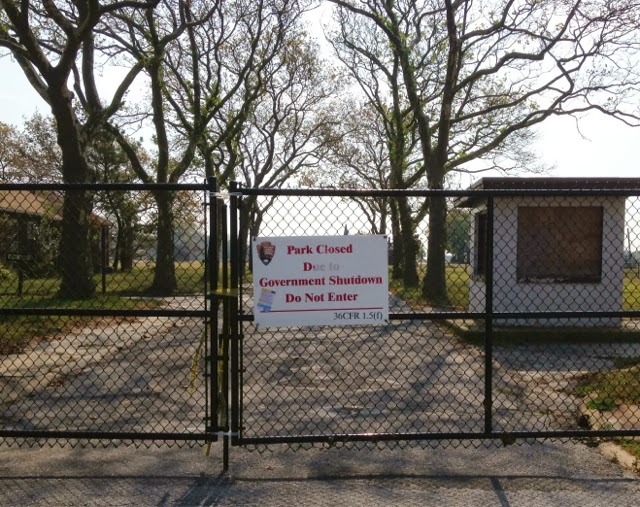
While I planned a beach head incursion, I was surprised to find the side gate wide open. I walked swiftly doing my best invisible. When I arrived at the garden I felt quite exposed, partly because of the removal of the olive shrub near our plot. I expected someone to exit any of the houses within eye shot, sounding the alarm, black SUVs screeching to a sideways halt, handguns drawn. Freeze muthafucka, you're in violation of the will of the Congress of the United States of America!

The doors never opened. It was quiet and balmy, even the geese were sedate. I picked my peppers, lamented the hundreds of lost fruits across the gardens, and checked my saffron crocus (they were not ready). I pulled a few weeds and then headed back toward the gate. As I did an older couple entered, walking their dog. 


These are the peppers of trespass.


Near the gate, a peculiar goat.


I headed for the beach despite the signs admonishing that choice. Bicyclists and runners, a few, came and went. The waters were rough, an extratropical system to the south.


Here, the fence, to keep people off the dune-less shore. Then, a large black SUV sprung from nowhere, stopping short before the sand. I stood doing my best invisible. Then I turned and walked away as an old man approached. I turned to see if the SUV ejected some authoritative gesture toward him, but no, nothing.


The government of NO. 


*Update* I well suppose we're again open for business.

Republican Garden Shutdown Week Two


Republican congressmen who oppose health care initiatives have shut down the government for nearly two weeks. For this reason the site of my only autumn gardening has been locked up and so for this reason these Republicans have said to me and my gardening peers -you will not garden as long as you support health care initiatives. Believe me when I say that many of my gardening peers are likely Republicans but since I do not see them away from the garden I cannot ask them how they feel about the Republican shut down of the garden.

I may have to make a covert trip. Under cover of night? Early in the morning dressed as autumnal haze? Will I be caught? Is anyone looking? It's a real shame about those last of the season tomatoes and peppers, isn't it? I know it's small compared to those who are bearing the real weight of the shut down but that is why it goads me. A fence and 30 extreme Republicans standing between me and a pepper.

I should dig a tunnel.

We went upstate on Sunday to look at properties. We are looking at work space and living space, close and afar. I'd like a more peaceful life, but then who wouldn't? I'd like to get home from work before 10 pm with more than one or two home-cooked meals a week. We work 12 hour days all too regularly. Wages at the college have stagnated since 2009. I take adjunct professor positions to make a little extra (paid for the farm). I do side projects (patio, electrical) to fix the van. I paid off my undergraduate loans this past May, but the studio rent goes up yearly by leaps and bounds.

I've decided to limit my farming to one tenth the quantity of this season. I've cultivated little taste for the driving. The hope is that we'll find space, wherever it is we go, to continue on at a slightly larger scale than this coming season. I will keep Hudson Clove alive and will sell some garlic next August. In lieu of hours of driving and weeding, I intend to refocus my energy on art making and also to say more about art. You may see that writing here (if not by another blog name).

The best news came in the form of an appointment to teach at next summer's Art New England. I will be instructing for one week on a subject of my own desire -landscape and meaning. The remuneration is good for six days' work -two thirds the compensation for an entire semester (15 weeks) and free room and board in lovely Bennington, Vermont.

On October 31 I will leave my studio of the last three years. They say it will take six to eight weeks to return my deposit. Of course it will. My studio mate of the last sixteen months will have to find a space. It's really nice having a friend where I work so I am sad that we will part ways. Believe me when I say that the era of artists renting industrial studios is near its end in NYC. Oh, yes, for the few it will still be possible via personal wealth, financial success in the gallery system, or the pitiful acceptance of renting a windowless 120 square feet for $500 and up a month.

As for our apartment, we are hanging on -for now.


Republican Garden Shutdown


Yeah it's been a hard week. I thought long about what I'd like to do on my day off. I chose the beach farm. It's been two weeks since my last visit and I'm sure to have peppers, squash, and maybe even a tomato to pick. My saffron crocus might be up so I brought paper bags to collect the flowers. But no, the beach farm is closed thanks to a Republican overreach quite grand in proportions. Good luck politicians. Expect your delivery of rotten garlic any day now. 
 
*Update* It's still shutdown.


Return of the Beach Farm


We lost a number of tomatoes on the vine because we weren't there to pick them, the weeds are tall and deep green, verticillium has done its damage to the heirloom tomato plants, only one green bean has sprouted, the volunteer butternut squash (where did that come from?) spread to every corner of our little plot. All the result of our benign neglect. But look at the harvest! There were still tomatoes to pick, and a butternut squash, and the peppers -they've really produced!


The pepper plants are tall, bushy, full of flowers and peppers. The sun scald is on the wane.


Bountiful sweets and hots.


The neighboring plot I cleared and planted with buckwheat looking a little weak. Shorter, thinner, paler, and flowering sooner than expected. Also, not one bee in sight. 


The buckwheat flower is said to be highly attractive to bees, so either there's no bees around or these flowers aren't the sh*t. When I visit the garlic farm tomorrow, I'll be on the lookout for bees. Soon both the beach and garlic farm's buckwheat will be cut.


First tomatoes plucked. Black Krim, Black Russian. Both excitingly delicious.


And the green New Mexico chiles were pan roasted, dry, and blended with farmer market tomatillos for mildly medium hot salsa verde.


A Scalding Sun


Who am I to say a pepper should be responsible for its own fruit? Shouldn't they be; couldn't they grow enough leaves to ease the peppers into this strongly lit world? I would think so, but alas my thinking is just wrong, my perfect peppers now defiled by the sun. Harrumph. 


Volunteer squash? Ocean washed seed from someone's garden. 


Tomatoes are short and stout this year.