vegetable starts

Summer Solace

One of the benefits of getting to one's vegetable garden first, before summer's work begins in earnest, is not having to think about the garden at all when you are knee deep in summer's work. It grows itself, mostly, with an intensity only paralleled by the solstice's long day. 


One of the beauties of growing garlic is that it's harvest hardly coincides with any garden task other than weeding. By now, the first of the garlic is near completely exhumed (briefly hesitated to dredge up this word), and like any darkling, it mustn't be cast into the bright light. The first pulling is in the shade of the porch, but the full harvest is likely to be dispatched to the cellar. Here, in the midst of harvest, is Xian, a Turban strain, and one of the best for flavor and earliness. Turban's lodge, or fall over, as a way of telling unsuspecting gardeners that they need help -getting out of the ground.


At about the same time sizeable beaks are swirling above the Asiatic strains -here Asian Tempest and Japanese. These will be harvested next, not long after the Turban strains, and sometimes before.


Meanwhile the Porcelain strains have had their scapes (flowering stalk) cut, ready to be pickled or grilled or sauteed or...just don't leave them in the fridge too long before doing something with them. Behind the Porcelain are the Rocambole (shorter in the middle) and Purple Stripe. 


The French Grey shallots have also been pulled. I find that the height of the crabgrass is a useful indicator for timing the shallot harvest. Left behind are the Artichoke and Silverskin strains, those hardy bulbs that we use through next winter and deep into the following spring. 


When the the crabgrass first sprouts, it's the best time to get your peppers in, but I didn't heed the crabgrass this season. No, I put the peppers in a couple of weeks early -listening to the lambsquarters maybe. They're doing fine anyways, although I do think they are showing a little too soon.


Broccoli? Yes! And from seed no less. In spring? Yes! And no cabbage moths to boot. A quick, small-headed variety seed-started on May one and hardly two months later boom -broccoli. Go figure. I've got some of those very same starts in their deep cells holding back growth inside the greenhouse. They'll be put into the garlic beds as they clear.


Green beans? Not so fast. I seed-started these in the greenhouse on May one and planted them out a two or three weeks later. Nice flowers, no beans yet.


Cucumbers before June 21? Why, yes. I purchased a cell pack of four Spacemaster cukes from Shady Acres and planted them in pots raised well off the ground.


They won't ever reach the ground, that's why they're called spacemaster. They do put on an impressive display of cucumbers and have produced a handful of medium sized eaters before the solstice. I've seeded my own, too, to replace these after they give up.


Tomatoes, well that's asking a lot, isn't it? But among our six strains (of three varieties -plum, grape, and, uh, heirloom beefsteak?) these grape tomatoes, called Red Pearl, are way good producers.


In fact the deer are warming up for BBQ season by snacking on our Speckled Roman plum tomatoes. I grew these at the Beach Farm, and deer aside, expect them to do really well here.


Dill, cilantro, basil, and at the very bottom, cutting lettuce. In the background -common milkweed that has grown in this spot for eons, or at least since this house was built, so maybe the late nineties. Infringing on their bed are the potatoes. They are so big they require their own post. Look for that.


Vegetable Early June


The vegetable garden, June 4. Peas growing in the same bed with broccoli and recently planted romaine lettuce. I had so many lettuce starts that I plunked them into nearly every bed. The next bed is green beans and a spot for upcoming chard seedlings. Third row has eggplant, peppers, and a basil patch. The following two rows are Red Pearl grape tomatoes (same as last year and magnificent), five Speckled Roman paste tomato plants, and four heirloom types that includes Striped German and Brandywine and two others I cannot recall. Our starts were from Shady Acres Herb Farm or started in our own greenhouse.


The curving garlic bed is new this year (well, tilled last November). The garlic is doing well although a little tightly planted. Doing really well is the Chesnok Red -a Purple Stripe variety. This one is said to do very well but I couldn't have said that in the past.


Here are our potatoes -five varieties including russets, golds and reds. They grow several inches each day. I am about to add compost to "hill up" inside the framed bed. More garlic to the right, and French Shallots as well. To the left is our herb bed that includes basil, dill, cilantro, parsley, thyme, oregano, arugula and cutting lettuce. I'm anticipating a productive garden and feel better about its organization over last year. When the garlic is harvested around late June, early July, I will add our late summer-early fall crops of broccoli, cauliflower, brussel sprouts, and kale. In the background are cucumbers in pots, a remnant bed of dead nettle and common milkweed, and the curving hedge of hydrangea that we transplanted from the south side of the house last year.


Garden Architecture


After 15 years, this greenhouse of redwood and polycarbonate, has finally come out from under tarp and mouse droppings. It was purchased for my project at Socrates Sculpture Park in Long Island City, Queens, in 2001, assembled amidst the acrid haze of September 11, and the structure became a refuge during a very dark time. The company, Gardenhouse, generously donated their profit by giving the structure to my project at their cost.

Our site, formerly Rex's dog pen, was excavated last fall and filled with Class 5 gravel (a mixture of 1 inch or less rock, sand and some clay), hand compacted by me this spring, and laid with the cheapest concrete pavers from a preferred regional box store. Redwood is great for this kind of structure because it really doesn't warp and is one of the best rot-resistant woods. The polycarbonate held up well, but I hosed down the panels last fall and the hard water left spots inside the double walls. Oh well, still have a greenhouse! 


Because thunderstorm winds are a concern, Betsy made L-shaped pins from two-foot long, 1/2 inch rebar which holds down anchoring straps at seven points along the perimeter. As they rust, the pins will bind to the soil which provides extra grip. Also around the perimeter, I laid landscape fabric and 2 inch granite gravel dug from nearby "landscaping" in anticipation of high speed rain runoff from the 45-degree pitched roof, weeds, and the little boost of rock's heat retention. The brick edging is an unfortunate compromise.

I am renovating a portion of our front porch deck so that I could use the old, long cedar planks as framing for our raised herb bed. After ensuring the rusty screws and nails were out, I ripped the boards on the table saw to cut out the rotted sides. The heart of these boards are perfect, so if you are looking for free raised bed material I would look for a deck carpenter in your area. Our boards haven't been treated in at least sixteen years, if ever, and each had a nice coating of algae and lichen. Still, I placed the up-side out and the underside toward the planting. You could do the same if you are concerned or unsure about the treated nature of free, old deck boards.


After building the first raised bed I rather liked the structure over the hastily made front yard vegetable beds of last year. I had potatoes to plant and thought a raised bed would be easiest for "soiling up" mid season. I tilled, built the two side walls out of 14 foot old cedar deck boards, added humus from the base of a giant old oak tree that spits out a fine, peaty substance from a portal 5 feet up its trunk, then added the rotting straw that covered the garlic beds, and finally several cubic feet of compost. I left the 40-inch end boards off so I could run the tiller through to mix these ingredients in. 


I dug a trench and planted the potatoes at about 12 inch spacing, covered the potatoes, then dug the center trench and so on. In a raised bed with rich soil I am anticipating that I can tighten my spacing. Don't take my word for it, however, see Rodale's 7 Ways to Grow Potatoes.


The greenhouse, nearly completed (still rocks for the back and side, one vent operator to install and some window cleaning). We moved our New Mexican Opuntia and Agave inside the greenhouse, mostly to avoid the cold rains, but also to get them more sun than the house could provide. The front of the greenhouse will be tilled and seeded for grass, then stepping stones or maybe brick walkway from the garage pad to the door. 


Inside the greenhouse, on a quick-built table made of cedar taken off the house last fall, are starter trays and cold-stratified milkweed seeds of seven varieties. I am generally two weeks behind on most projects, so these got started a little late, but milkweed enjoys warm soil sprouting (you'll notice even well-established plants are some of the latest to come up). The milkweed seedlings are sprouting and now share the table with summer vegetable seedlings and strong-looking starts purchased last week at one of our area's better unique and heirloom variety vegetable nurseries -Shady Acres.

If you are thinking of a free-standing greenhouse like this, I'd like to offer some considerations. Make sure you have a solid base to build on that is level as these greenhouses won't piece together well if they are bent out of form by off-level pads. Make sure you place it in a sunny location! Don't laugh, if you build in fall or early spring it could be quite sunny, but not from May through October. Do consider wind and overhanging branches. Gardenhouse says it can withstand a wind load of 85 mph. Why chance it? Make sure to anchor it in some fashion, put it in an area that provides a windbreak yet doesn't allow a large limb to come down on it (note that home insurance usually doesn't cover structures like these). Finally, if you have lots of paper wasps, they will love to explore your new greenhouse as a fine place for their nests of stinging motherf$#ers. I was stung four times last year, mostly because I put my hands near a nest I could not see. Paper wasps are very observant and will watch you as you get close. They will leave you be if you do not get too close, but if you do, in a flash one or more will drop on you and leave its painful stinger. In short, you may have to spray a long term pesticide on the rafters, as difficult as that decision is. Wear a mask, cover your skin and eyes, because it's hard to avoid getting doused when spraying up into a pitched roof. Don't forget places like under a table. The long term stuff should last all season, meanwhile you can use clear sealant to close up gaps that allow creatures in, and with some luck, the next year you will not have to spray.


When People Ask Where The Good Food Is


...I usually tell them its right outside.


Four heirloom tomato plants have produced more than most any I had ever planted at the beach farm.


I've been looking forward to the German Stripe, the latest to size up and ripen.


Japanese eggplant, 'Kyoto,' have been exceptionally prolific.


I put my green bean seeds in a little late, but still, they are producing now. 


Although my broccoli starts were a failure. Too late, as always.


But I was saved by this guy (sorry to say that I lost his name with a piece of paper) and Anderson Acres. You see the sign, to the left, that says start your fall garden. Yes! Getting starts together at the right time in summer is challenging given busy summer schedules and difficult weather. Hardly any garden business has starts available at this time of year, probably because there isn't much market for it. I'm so glad to have found them at the Minneapolis Farmers' Market in stall 311.


I bought a handful of these lettuce starts, broccoli, cilantro, parsley, and basil.


The fall lettuce.


Betsy's dill, the pickler that she is.


Our local hardware gave away (really, for free) many vegetable starts in July, most well past their prime. I focused on those sturdy sorts that do well in cooler weather -chard and kale. Small and weak when planted, they are now doing fantastic. We eat them every day.


A four pack of heirloom peppers from Shady Acres (whose stall Anderson Acres occupied at the farmers' market) has become quite a bounty of peppers. I've never had such luck. One plant has eight large peppers!


And they're beginning to turn red.


Of course, there are still tomatoes ripening.


These "cherry," or is it "grape," have been fantastic. The name I believe is 'Juliet' -a little sweet, little tart, and meaty -that is the key for me. I do not like watery small tomatoes that pop when you bite into them or crack after heavy rains. These I pick and eat right there in the garden.


With more to come.


The woods has not produced its usual bounty this year, except for the morels early on. Maybe we've missed them, having been so busy with work on the house and field. Of course, we'll keep looking.


Lawn Of Plenty


It was about mid-May when I decided to carve five small rows into the front lawn for this year's vegetable patch. It is the sunniest, flat space on the land here. In the distance, the driveway and a hedgerow of Hydrangea arborescens -a solution to coarsely articulated snow-plowing and a mass of foundation plants in the way of a future house project. Seven weeks from the day the tiller expressed itself, the vegetables are taking advantage of our long, northern days.


My first round of green beans didn't arrive, quite possibly because I didn't water the seeds enough or maybe due to three year old seeds. They were all French beans, ones that trialled well, hmm -three years ago. So I bought new seed from the big box (so many home projects!) and planted those. Meanwhile it had been raining heavily for a few days -that's when some of the old seeds showed up, 'Velour,' I think. So far no problems with bunnies -or deer, raccoons, hedgehogs, and whatever other vegetable munching varmint one can have. So lucky -that's all it is.


One four inch pot of flat leaf parsley has become eighteen by twelve inches of parsley -use it daily.


One four inch pot of cilantro has become two feet by twelve inches of cilantro -makes a nice pesto!


The garlic is still green, but I know well enough to start harvesting them. As these go, their rows fill with herbs, green beans, and eventually those brassicas I fully intend to start one of these days...


Four pepper plants from a cell pack of four heirloom varieties. This one set fruit super early.


A cell pack of Japanese eggplant have provided us with an orb -not the usual thin and elongated fruit. What gives? I do prefer the way less seedy elongated varieties. Oh, Japanese eggplant doesn't always imply elongated fruit? These are 'Kyoto,' a round eggplant, and I ashamedly renounce my ignorance!


One four-cell pack of, hmm, I forget the name, but cucumber. I do recall it saying compact, and this one is definitely compact. We grew them in pots, elevated off the ground in metal pot stands that happened to be here. A couple of things to point out: these four plants in two pots have been productive for their size and have not succumbed to mildew. They have yet to reach the ground and have many flowers per vine. I recall googling the variety at the nursery, Shady Acres! Ahh, they have a plant list- It is Spacemaster. Pick them pickle size for best flavor.

A word about Shady Acres. Heirloom. That's the word. Seriously, Minnesota has some catching up to do when it comes to organic garden supplies and heirloom vegetable starts. It is very difficult to find what I came to expect -even at Larry's on the corner in Brooklyn (Best Deal on Bloodmeal!). I edify every nursery I come into contact with, including Shady in regards to fertilizer choice. I heard about Shady Acres from my neighbor who is busy trying to grow Minnesota's largest pumpkin, and was grateful for the recommendation -they carry heirloom vegetable starts. For me this means they have a variety of tomato beyond Rutgers, Beefsteak or Early Girl for the person who simply didn't get to starting his own.


Potatoes. They grew incredibly tall, so high that they could no longer be soil-mounded. Then a week of heavy thunderstorm rains, about seven inches in all, ensured that they would lay flat until they turned back up toward the sun, which they have, albeit more prostrate than before. They have been flowering for a few weeks now, with new potatoes sure to be available soon. I've decided to wait on those, aiming for the bigger potato of the future.


The tomato plants are some of the healthiest I've grown. Again, an heirloom variety pack from Shady Acres provided the starts. Ours have been in the ground for about five weeks, have grown over thirty inches tall, and some are producing tomatoes. We also have a grape variety, four plants in total. We won't get a ton of tomatoes out of four heirloom plants, but this year required low input, experimentation, and observation.


What is remarkable is the health of each plant. No visible disease, no wilt or cankers, no blossom end rot (can we thank high Cal-Mg soils?), simply robust plants. Look at that impressive stem. It helps to be gardening in a spot that has yet to see any vegetable growing. We haven't had any Colorado potato beetles either, so here's to hoping that our little clearing is protected by the woods and wetlands that surround it.


Lastly, the bug-eating army of amphibians can't hurt. And what of the pansies? It hasn't been a very warm summer so far, but plenty of days in the lower eighties. Here it may be that pansies just won't quit.


Ahead Of Myself


By the time you read this I will be probably somewhere on the empty highways of coastal Georgia. Before I could leave for this journey to Florida, I needed to harvest as many of the early varieties as possible. Here we have about three dozen Asiatic 'Asian Tempest,' the fiery hot Korean strain that is often extremely fussy to grow.


Until this season, where I have produced more 'Asian Tempest' than any other strain. They held up to early spring better than most of the occasional bolters (I lost nearly all the Turban 'Xian') and then suffered little of the fits and spasms they've had for me over the years. While they grew well, they never get large, most heads rounding about 1.75 inches in diameter.


I brought some eggplant, peppers, tomatoes, and basil to fill the blanks post harvest. As long as it rains, at least once while I am away, these should do just fine.


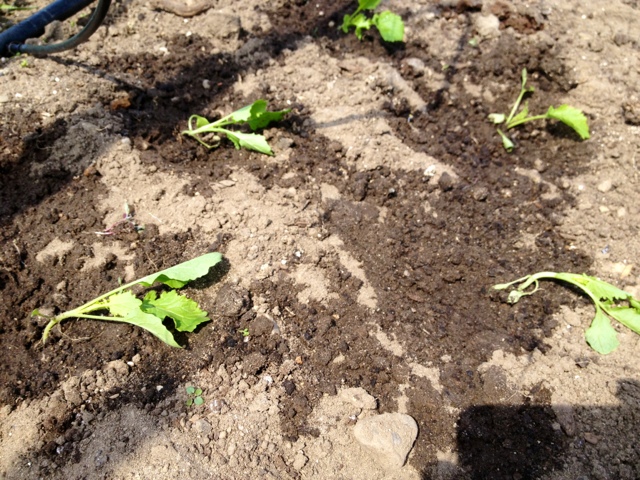
The beauty of planting between the standing garlic is that they act to break the constant onshore winds that tend to leave little starts like these prostrate.


The bulbing fennel beginning to, well, bulb.


The chard, which I started from old, old seed at least two and a half months ago and planted sometime in mid May, has really taken off. One plant has a stem, or is it a root sticking above ground that is easily an inch and a quarter or more in the round. I clipped all the large leaves over a week ago and already they are producing very large leaves.


In one glance, Silverskin garlic to the left, Creole garlic, fennel, cilantro, romaine, flat leaf parsley, tomatoes, and then at the farthest right Artichoke garlic. When the Artichoke comes out, if it hasn't already, there are tomatoes sitting in front of our apartment waiting to be planted.


Which Way The Wind Blows


This wind, especially in the open space of the beach farm, is rough. It underscores another problem quietly lurking -drought.

I'm planting broccoli rabe at the beach farm this morning. It's ready to go, although this wind and the fact that the Fed hasn't turned the water on, will give the young starts a tough time of it.

It's quite dry here too. Digging down, I don't hit cooler, semi-damp soil until about 5 inches. The rabe, I can hope, having doused them with a bit of drinking fountain water, will make it through the next 24 hours. Hope isn't enough, so I decided to hold off on most of them.


Rain Date With Broccoli


We spent the day at the beach farm, alas, no photos. We're still hauling in green beans by the quart, eggplants left and right, and carrot season has descended upon us (fat orange tops poking above the black earth). I've never had luck with carrots before, but I gather some things do get better with age. 

We pulled the cucumbers after harvesting 3 or 4 worthy remnants and planted snap pea seeds in their place. The paste tomatoes are ripening, but are not there yet. The others are producing one here, one there, with the exception of the cherries, which always provide. 

I planted 9 broccoli plants and 6 cauliflower, which I found in Maine of all places. I did get to have a moment with the grower-seller lamenting how impossible it is to find starts in the NYC metro region in August for fall planting, how August in Maine is the best time because of the temps, the blueberries, the lack of bugs, and now is even more so because I know I can find brassica starts for planting in NYC. The way life should be. 

I bought 24 plants. What was I thinking? I planted 15, gave away 6 and housed the rest in their containers, set into the farm soil.

This was our view, and lighting, when we arrived last rainy Monday.

And this our tent about to rise.

And here the two bundles we bought for two fifty each, money placed in the can at the driveway.

The tent, the next morning, bright white fog in place, still raining...


Trash Mob

I've just returned from the woods in Prospect Park where we, the assembled, disposed of 22 bags of trash comprised mostly of hundreds of condoms, wrappers, wipes, and lubricants. What else can you say about that? The woods was otherwise lovely on this first humid and warm day of the year; the scents of various flowering shrubs aloft in the moist woodland air. Saw some columbine, woodland geranium, coral mushrooms, and another very large mushroom which was all about, but must go unnamed. UPDATEDryad's Saddle or Pheasant's Back, Polyporus squamosus (thank's Marie)Next time we will get to plant, which I am excited about.

Now, after some well-earned lunch, I am off to Red Hook to check out the new Gowanus Nursery and see if they have a palatable variety of vegetables and herbs that I have not been able to start myself. Particularly looking for eggplant, poblano peppers, and a variety of basil beyond the sweet or genovese. I did a wonderful job of raising tomatoes, broccoli, and leeks from seed this season, but somehow missed all the others. If I cannot find what I am looking for at Gowanus, I'll drive on down to Chelsea.

I grew enough tomatoes (black russian, brandywine, bella rosa, orange pixie, sungold cherry, reisenstraube grape, milano plum, and san marzano plum) this year to offer my well-grown extras to several people. After the nursery visit, I'll drop off most of my remaining extras to friends up in Williamsburg, then heading to BAM for my first three D movie -Werner Herzog's Cave of Forgotten Dreams.

A Pea Grows In Brooklyn


It is well too soon to say for sure, but it is quite possible that sometime in mid to late May I will be speaking with Amy Eddings, host of WNYC's All Things Considered, in a segment which I believe runs regularly under the title "Last Chance Foods" -produced by Joy Wang. It was Joy who had contacted me after visiting this here blog. It's possible we will talk about growing peas and pea shoots, and now I'm thinking of growing every pea seed I have in my seed box. What is it about being interviewed that makes you wish you were an expert?

Speaking of peas, I noticed this pea growing not far from our stoop, sharing the nasty, nasty space with the utility poles. A pea grows in Brooklyn -indeed, but from where did it's seed hail?

These are the tomatoes, their growth stunted somewhat by sending them outside on sunny days. Some are beginning to yellow, cotyledons shriveled, and roots extending below their bond tube pots. Now they begin to demand potting up and whisper to hell with your peas.

I recently watered with more fish fertilizer, which I think instigated this bout with fungus at the pots' bottoms. I rubbed it off, filled the plastic containers with some soil, and shrug it off. Still a month before tomato planting time at the beach farm.

A painting I have been working on, with which I am finally hitting my stride. When it's time to plant the tomatoes, the park will look like this, and when the tomatoes are planted, this painting ought to be finished.


Whoa, Tomatoes


They really are growing too fast for my liking as I imagine this point where it's outside or nothin'. Yesterday they spent the day outside, which I am hoping puts the breaks on their rapid ascent. Today I will put them out too.

The largest ones are approaching 7 inches tall, and a few sets of leaves. I had hoped not to pot up, but now I am thinking I will put soil in the plastic bin and just let the roots swirl around in there until May 1st. Roots are already beyond the bottoms of the tubes.


Planting The Leftovers


The broccoli, leeks, and parsley
 Popped out of the box pretty easily 
And into the ground they went
And a new fabric tent was built
Because the wind was blowing
And the worms were present
On a neighbor's overwintered cabbages.
The broccoli planted three weeks ago
Hasn't grown an inch, nor the leeks or chard.
The soil is dry, despite the day's rain
And the Fed hasn't turned the water on.


It's April, Fool


If you're expecting snow this weekend in NYC, you'll probably be disappointed. The weather forecast is depending on evaporative cooling for it's snowfall, as temperatures near the surface are much warmer than freezing. Additionally, there'll be no cold air rushing in after the nor'easter type event, as is often the case. It'll warm up this weekend some.

Finally we're receiving some rain (radioactive as it may be), because, believe it or not, I've seen things drying out a bit -at least at the surface where the young'ns roots are. The beach farm broccoli and peas and leeks are just sitting there wondering why NYC weather is acting all average, all normal, instead of heating up nice and fast like we've been getting used to over the years. On the other hand, the freezing temperatures we've been having at night (although that's largely over) never did in any of my tender starts like it seemed sure would if it were November.

Of course, it's not November, it's about April and the sun is quite a bit stronger now, leaving much heat in the objects and ground around the plants to radiate all night. Speaking of the sun, you should see what it has been doing to my tomato starts. You should see them, but you can't because I haven't photographed them. They are cookin on our kitchen window seed starting shelf, and I mean that in the fast-growing sense. I cannot imagine raising them in their paper tubes for another month and a half -what, will I need to put tomato cages around them?!

I've recently taken up a new activity -one I've thought about for quite some time and finally signed-up. I'll report on it later, but I will say that it has to do with landscape, parks and hiking, and you can do it too.


Snow Is Good


Consider the combination of high and low temperatures that is being reported we (and our plants) are about to receive: 

  • Today:           45 and 27
  • Friday:           41 and 25
  • Saturday:       41 and 25
  • Sunday:         41 and 23!


In New York City, the nearby ocean, the moist air, and certainly the time of year, influence the temperatures. When our temperatures are in the forties for highs, the sky cloudy, partly cloudy, rainy, damp, the fluctuation between high and low has been, from what I remember, not significant, maybe 10 to 15 degrees. In fact, the average for these dates run about 45-53 for highs, with lows around 30-37. 

Last year, however, March 27th (this Sunday's date) had temperatures between 44 and 29 degrees F. Although colder than average, this is within the 15 degree fluctuation and with a low that is less troublesome at 29 degrees. This Sunday's low of 23 degrees makes for a temperature fluctuation of 18 degrees, which as numbers go, is just a few more than the usual 15. But three degree difference means that our tender, young plants will spend many more hours freezing, and, by my classification, makes for an unusual temperature event.

I have already raked up the leaves, transplanted perennials, and planted frost-hardy vegetables.  Only now do I understand why a fabric row cover that provides only two degrees protection can become a highly useful tool in the field. So consider this -welcome any snow that falls and remains over the next several days. One, two, or more inches of wet snow will help to protect emerging plants from several hours of freezing much like a row cover does -but possibly better. 

Update: Weather Underground has been slowly upping the low temperature forecast, but also lowering the high, so that now the temps lie squarely within the average 15 degree fluctuation. No matter, they're now saying we have a low of 25 on Sunday, which, believe it or not, is considerably better than 23!

Beach Farm Beginnings


It was pretty cold because of the bluster coming in off the ocean, but me and Betsy headed out early last Wednesday, before the big rains, to prep some beds for seeding and planting. Swiss Chard 'Rhubarb' seeds were planted, as well as more snap peas. We cleared beds of prodigious weeds (they do so well so early) for the coming spinach seeds, broccoli and leek starts. Minor thinking, also, about irrigation lines and a layout for the warm season vegetables. The cold and other must-accomplish things drove us back long before I was willing to finish thinking out the season.


The greens from last fall had survived the cold under the snow.

Last fall's late planted garlic is up.

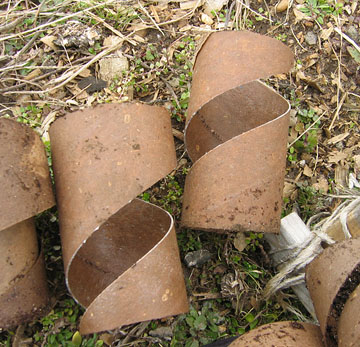
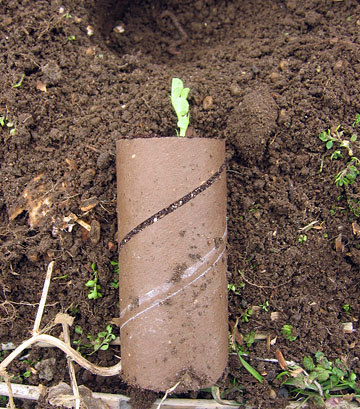
The bond paper tubes deformed quite easily, in fact more easily that tp or pt roll tubes.

And so the snap pea 'Sugar Ann' were placed in their holes. Good luck, it's quite windy out there.


March On


Today, in an indecisive mood, I found myself driving by the new Gowanus Nursery. I was a bit taken aback to see such a small footprint for the nursery -apparently located in the lot for a brick building that is being rehabbed and appears to be long from finished. It seems the owner, tired from having to move, has bought a building. The lot, however, is much smaller than the former, at least to my prying eyes. There were staff moving potted perennials around and construction workers in the building. I wondered how well things are going, how well they will go.

I lightly fertilized my broccoli and leek seedlings with liquid fish fertilizer tonight after bringing them in from the cold frame. I left the pea shoots in the frame for the night. Young peas are said to be hardier than the old and tonight I will test that information. I perused my National Gardening Association vegetables book (a fat book, with much info, that I don't believe is published anymore) as brushing up is useful for anything I do only once a year.

I realize I should have broken ground for spinach, chard, peas, cilantro, and greens already. What's up with inoculant for peas, never can find it locally, never have done it. I've no compost yet, and still want a truck load, not a bunch of overpriced bags. But it's looking like bags, patch at a time. Irrigation pipe sits on our floor, as well as netting and row cover fabric. Irrigation pipe should be laid before planting, yet the water is not turned on. Tomatoes need to be started, but at least the bond paper tubes are cut to size and waiting. All this and time soon to transplant perennials in the front yard. March named as such, on the march.