food

The Hallow


The leaves have largely left the trees yet there hasn't been much of a freeze. A few weeks ago I wouldn't have thought this to be, after that first bitter morning gave us the shiv. My projects continue, in fact some have come to flower, not a moment too early, like the sage, better late than not at all. Things have turned around through early mid November.


Broccoli laid out last April, still in bed, dreaming up florets. It's both in flower and production, an odd duck in brassica land.


Whereas summer planted broccoli is beginning to form heads that should never set flower.


October came with a few freeze warnings but has chosen a different path. Just once did a clear night after a warm day provide a frosting for the garden.


Eggplant is an impressive plant -it takes long to establish but is one of the last to go. Its tolerance of light frost is likely due to the insulation provided by its pubescent leaves.


Starbursts of fennel, they did not produce meaty bottoms or seed.

_________________

Halloween is the Christmas of autumn (see that the box store has both decorations on display simultaneously). It was named Hallowmas long ago (Shakespeare: "like a beggar at Hallowmas"), and stems from Hallow evening (Hallow e'ening). All Hallow's Eve, the 31st of October (it used to be in May), the evening preface to All Saints Day on November the first. On November the second we have All Souls Day because you cannot mix the especially good with the rest of us. We speculate that the Church ordained these holy (hallow) rites on these autumnal dates to commingle with the rites of the pagans. Remembering the martyrs and saints and even the common dead must have had a very different tone in the warm growth of spring.

The emotions and attitude of growing darkness, chilling air, graying, stormier days, and the browning of plant life despite plentiful harvests could lead a mind to superstition and omen. Superstition leads us to an awareness of sin, that our darkening days in the face of so much good fortune must be accounted for, and that we account for it by accusing ourselves of the darkness that we confront at the cold edge of autumn. What else could have been offered, holy or pagan, to salve the confrontation with the portent of one's death from cold, disease, or starvation? Think of the dead -the saints and the rest as you enjoy today's plenty in the sweet of a soul cake.

"A soul! a soul! a soul-cake!
Please good Missis, a soul-cake!
An apple, a pear, a plum, or a cherry,
Any good thing to make us all merry.
One for Peter, two for Paul
Three for Him who made us all.

 Down into the cellar,
And see what you can find,
If the barrels are not empty,
We hope you will prove kind.
We hope you will prove kind,
With your apples and strong beer,
And we'll come no more a-souling
Till this time next year."

By Christmas, as the larder dwindled from plenty to rations at the grim precipice of the full course of winter, the attitude of holy or pagan rites change to the spirit of hope, to the growing light as the earth begins its tilt toward the equinox, but also the superstition of redemptive suffering through the depths of winter. Why do I suffer? Because you are a sinner. Be mindful of this, suffer, and you will find redemption. The experience of spring is so wholly positive, so ineffably discordant with the experience of winter that our psyche again seeks superstition in the redemption rites of spring.

_________________

Several years ago a woman wearing a patterned skirt, equally of deep red and bright white, sat across from me on the subway. This color combination was visually captivating and I thought about why these two colors, put together, had such power. I considered things that come in red and white and two that came to my mind were Santa Claus and meat. Yes, fat marbled red meat. I thought about the promise of fatty red meat at the precipice of winter. I thought about venison at winter's solstice, its winter fat, but also of flying reindeer pulling Santa Claus in a red and white outfit. This fat, jolly piece of marbled meat or at the least sheathed in the colors of meat. What a gift to anyone trying to survive the winter, at its outset, when hope, hunting, the preservation of meat in freezing temperatures, and the ash-covered, fire-cooked meat (the irony that industrial era Santa comes down the chimney) are a bulwark against the longest season. Of course, I'm mixing histories and rites, but the psyche and the imagery so specific leads me to, at the least, wonder about such things.

Happy Halloween.


Hog Peanut


Amphicarpaea bracteata, the Hogpeanut, is common in our woods. It grows in sunny patches or where mature trees have fallen. By that measure, its habitat is expanding since so many trees have come down this year.


These flowers will produce small seeds in pods. The "peanut" of its name is a seed produced at or below ground by this plant's other self-fertile, closed flowers. These seeds are quite edible.


Hog peanut is a vine, although it does not have tendrils, and plays well with others outside of a garden. It scrambles along the ground in the woods, but arrives on the scene quite late, well after most ephemerals have retreated back under the soil. It also contributes as an uncommon, woodland nitrogen fixer.


When People Ask Where The Good Food Is


...I usually tell them its right outside.


Four heirloom tomato plants have produced more than most any I had ever planted at the beach farm.


I've been looking forward to the German Stripe, the latest to size up and ripen.


Japanese eggplant, 'Kyoto,' have been exceptionally prolific.


I put my green bean seeds in a little late, but still, they are producing now. 


Although my broccoli starts were a failure. Too late, as always.


But I was saved by this guy (sorry to say that I lost his name with a piece of paper) and Anderson Acres. You see the sign, to the left, that says start your fall garden. Yes! Getting starts together at the right time in summer is challenging given busy summer schedules and difficult weather. Hardly any garden business has starts available at this time of year, probably because there isn't much market for it. I'm so glad to have found them at the Minneapolis Farmers' Market in stall 311.


I bought a handful of these lettuce starts, broccoli, cilantro, parsley, and basil.


The fall lettuce.


Betsy's dill, the pickler that she is.


Our local hardware gave away (really, for free) many vegetable starts in July, most well past their prime. I focused on those sturdy sorts that do well in cooler weather -chard and kale. Small and weak when planted, they are now doing fantastic. We eat them every day.


A four pack of heirloom peppers from Shady Acres (whose stall Anderson Acres occupied at the farmers' market) has become quite a bounty of peppers. I've never had such luck. One plant has eight large peppers!


And they're beginning to turn red.


Of course, there are still tomatoes ripening.


These "cherry," or is it "grape," have been fantastic. The name I believe is 'Juliet' -a little sweet, little tart, and meaty -that is the key for me. I do not like watery small tomatoes that pop when you bite into them or crack after heavy rains. These I pick and eat right there in the garden.


With more to come.


The woods has not produced its usual bounty this year, except for the morels early on. Maybe we've missed them, having been so busy with work on the house and field. Of course, we'll keep looking.


Cooking Local


Allium tricoccum var. burdickii, prepped for cooking, common to our woods (99.5% are this variety) and delicious. They are milder and I think sweeter than the more common, larger-leafed, red stemmed ramp. I've made ramp pizza, pasta with ramps, stew with ramps, eaten them raw, put them in nearly everything. One of my favorite spring dinners is asparagus and eggs. Why not add ramps to the mix?


First, I made some polenta in our rice cooker.


Six organic eggs from our local farm park.


Fried some naturally cured bacon from the very same local farm park.


First layer asparagus and ramps, then eggs, and more ramps on top, cover, cook and flip once.


Stack polenta, bacon, egg, asparagus and ramp mixture. Add grated Parmigiano reggiano and black pepper to taste and I like to drizzle Arbequina olive oil over the top.


Ramp On

Ramps! I'd forgotten about them, curious as that is because I did have plans to plant them at some point in the future. As with any forage, I questioned my instinct, and kneeled down for a leaf tear. Unmistakable onion scent, however more, um, woodsy, earthy, funky even, with the slightest floral essence.  The taste? Earthy, mild onion and exceptionally sweet (especially after our 30 degree nights). Our ramp is Allium tricoccum var. burdickii, a contested species or variation of the Allium tricoccum found at ramp festivals of Appalachia and farmers' markets of the North American east.

I stood admiring my patch, how wonderful the woods can be, until the creaking timbers above my head urged me on. As I continued my walk I discovered another four or five small patches. A number low enough to recall each without resorting to markers or maps. Consistent preference for slopes (prompting Betsy to humorously suggest it as another origin of its name) and well-shaded, summering sites suggested that they should have blanketed our shady, sloping woods.


The next day, cool and damp after a decent rain, I stepped into a woods of rain softened, pliable leaves under foot. I floated. Squirrels and chipmunks went about their business unaware of my approach, but wary were the ducks that fluttered into flight the moment the chorus of frogs went silent. No matter, I wasn't out in soft shoes and sweater to see the ducks, I was out to collect a few ramps for dinner.

I began to spot more and more ramp colonies, in all corners of the woods, although mostly out back and along the south-facing side slope. They grew under most species of trees, often near the trunk, nearly always on a slope, yet in one instance on a flat near the great wetland. In all cases an abundance of leaf litter, and in none was there any garlic mustard (although prevalent nearby in at least a couple of locations). There are so many patches that I, like a squirrel forgetting his buried nuts, can hardly remember a portion of them. This is for the best, as there is plenty for the two of us, and we must ensure the continuance of the species.


Our ramps belong to the variation burdickii. The common ramp grows in dense colonies, with relatively large leaves, and most strikingly shows red or purple coloration just above the bulb along the lower stem. A variation burdickii colony shows fewer individual plants, has somewhat shorter, more slender leaves, and does not show purple coloration on its all-white stem. Burdickii flowers significantly earlier than its counterpart and is also more likely to reproduce from seed due, in part, to the colony's open habit.

Along with the popularity of ramps in restaurants and home kitchens, they have become abundant at New York area farmers' markets and on foragers' tables. New York State has declared Allium tricoccum var. burdickii as endangered, placing it on its protected native species list. It cannot be legally wild-harvested, although Allium tricoccum is still open to harvesting (for now). Given the rarity of burdickii, it is unlikely that you will find much of it in New York, but if you do, don't harvest.

If you find yourself salivating over a patch of ramps, check for a dense colony habit, then pull away some soil to look for purple coloration on the lower stem. If you're sure you've got the right ramp, only pluck a few whole plants from each colony, or better, just clip a single leaf from several plants. Ramps take several years to mature, and several more if the colony is severely depleted, so please contain your harvest zeal. The bulbs may be four inches below the soil surface, so dig deeply with a long, slender trowel without disturbing or severing several neighboring bulbs. Do not trample ramps or other plants on your way to them and be mindful of seedlings along the edges of the colony. Finally, beware of causing soil erosion on the wooded slopes ramps prefer.

In our woods we will tread lightly, doing what we can to minimize competitors like garlic mustard, Alliaria petiolata, and take a measured harvest. Tomorrow I'll cut a few new leaves to eat with eggs. Sure, I cook, but here's a local chef with the real ramps recipes.


Supper


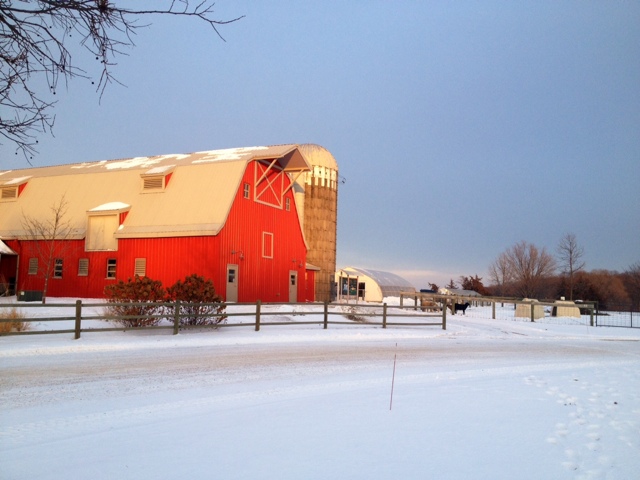
In the upper Midwest, and probably other regions, dinner is called supper and lunch is often dinner. For supper, then, I made the 15 minute, thirty mile per hour drive through town and then out of it, curving west, at thirty-five miles per hour, then forty-five, until just over the Dakota rail trail. Slowing down for an acute right, gassing it uphill, past the Gale house, the event barn, the market garden (frozen as it is), yielding left, toward the visitor center. One other car, facing west, shared the lot. I shuffled over packed snow-covered gravel, a soft left at the chicken coop, pushed the glass entry door, projected an unfocused hello and then scoped the upright, glass door freezers. 

All but two shelves empty. A sign reads pork is coming in on the fifth of December. I tally four roasting chickens, five "Frenched" racks of lamb, a single leg of lamb steak, copious beef liver and tongue, eggs, a head or two of cauliflower and romanesco broccoli, a basket of onions, garlic, and of all things, late-frost tomatoes. 

I pick out two whole chickens, a leg of lamb steak, one onion, one garlic (although I have plenty back at the house), cauliflower and broccoli. Before leaving I ask how long this can possibly last, to which the startled clerk replies, oh, we have no intention of going anywhere. It is hard to fathom this attitude of permanence, but I will work on it.


Out Of The Woods


After a nearly four week visit to Minnesota, we've finally made it back to Brooklyn, leaving my father-in-law behind, in his house in the woods. It gets harder every time, for him and for us, to stay and to go. Winter is a hardship, yet it also puts a hold on nature's aggressive reclamation of his works, and its own. The apparent stasis, only more white or less, is an assurance against his decline, putting mortality on the table just long enough to consider your own strategy for facing it.
________________________


I've made a few resolutions, not the New Year's type, but a generally longer lasting set of conditions upon which I live. It's a small list, targeted and specific.
  • Grow and eat my own vegetables whenever possible.
  • Buy vegetables at farmers' markets and our local co-op only.
  • Buy only meat that I can be reasonably assured has been humanely raised and slaughtered.
  • I will not drink any more soda, except the soda in my occasional gin and tonic.
  • Only buy organic potatoes
  • No more canned tomatoes

The first one is obvious, what more can be said. I think everyone who can, ought to. I also want to support our local farmers. As I made my rounds at the Grand Army Plaza market today I found too little produce available, especially organic. We've become so accustomed to all vegetables all the time, and I'm okay with that. So I think that we, including our government, need to encourage local farmers to make whatever investments necessary to get more local produce during the winter. Consider the California drought that has the potential to disrupt our food supply, particularly our winter greens. More investment in hoop houses and storage facilities would go a long way to increasing produce availability, particularly on those farms in the southern area of the local radius.

Meat. This has been on my plate a long time, but I cannot look at another image or read another story of disgusting, inhumane slaughter practices. If you haven't seen Food Inc., find it on Netflix streaming. I love pork, but I can't buy chops from pigs slaughtered by crushing them to death a hundred at a time. The label 'organic' is reasonably well understood in terms of feeding and health, but USDA Organic label says nothing of the way the animal has been slaughtered. Since corporations know how valuable the organic label is to the buyer, they have been working to drive the prices down and they do this by applying practices from non-organic production. My point is that USDA Organic isn't enough, but it's a sign post that can lead you in the right direction at the grocery. When possible I would rather buy meat raised locally, even if not strictly organic, as long as I can be reasonably assured that the animal was treated well in life and in death.  Buying the whole animal is the best way to keep the prices down and nobody I know can store the whole animal so that splitting among 4-6 couples seems to be the best practice. If anyone wants to go in on a whole pig with us, send me an email. 

Soda? Sure -I drink it. We were raised on this stuff. I should be 600 pounds. But I am not, and I want to keep it that way. Bloomberg and I can agree on this: we can cut out soda. 

Organic potatoes? I like to eat these whole, and when I do, they are a nearly perfect food. I grew some potatoes this past year on the farm and learned a good amount of what it takes to produce them. If you buy good quality seed potatoes, your biggest problem is going to be Colorado potato beetles. What do they do? They eat all the leaves, removing the capacity for the plant to grab the sun and turn it into tuber. The number one problem of organically grown potatoes is diminished yield due to these pests. Diminished yield drives up the cost to the buyer. Stores don't like high-priced potatoes, especially conventionally grown, so to keep yield up potato growers use lots and lots of chemicals, some systemic (meaning that the whole plant contains the toxins). Yield drives the cost difference between organic and conventional potatoes. Organic growers have little in their arsenal to fight the tenacious potato beetle, so we accept lower yields and higher prices. I refuse to eat systemically treated potatoes any longer and will buy only organic. This was really hard to accept today at the farmers' market because I also love to buy the different varieties that have become staples at the market, yet only the conventional growers had great variety. I didn't buy there, but found organic Yukon Gold at the co-op and organic purple sweet potatoes for $1.99 per pound. If you haven't had these smaller, sweet, intensely colored, eat the whole thing, sweet potatoes, you're missing out.

I've just used my last can of tomatoes. Canned tomatoes? Yes, now I will only purchase glass or BPA-free aseptic packaging (i.e. Pomi) although I'm sure I'll read something negative about the latter type someday soon. Since I've always been disturbed by the hidden chemistry of packaging and products, glass wins. I'll try not to break any.


Despite my new conditions, I lack an unreasonable rigidity. Notice that I am only talking about buying, not eating. When I am at a friend's house, I will not scour his pantry to ensure I am eating organic potatoes. When I am out at a restaurant I will not require inspection of their meats. These things are what I plan to do at home. While the list is small I feel that if I ensure that these conditions are met, the attitude will spread on to other things, organically.


New Friends, Old Market


On Sunday I returned to the New Amsterdam Market, in part to purchase a few things I had previously bartered for at the last market. My other reason was a meeting with a young woman currently in a semester-long art program here in NYC, has a blog, and is deeply interested in food and photography. For nearly two hours we discussed options for her future and then headed over to the market.


Yishi Xie, copyright 2013
Yishi's photo of my garlic and a wild mushroom pasta dish made in her dormitory room. 

Yishi loves NYC, but is not a citizen (she's from Chengdu, China), and has to return to a rural western PA college for her final semester. She's thinking of grad school, but after our conversation I encouraged her to find a job or internship here in NYC with a food mag/website or other food business where she can put her photographic and web-design skills to work and gain a sponsor.  She is an excellent photographer, smart, poised, and funny. I wish her the best. See some of her photos and words here.


Despite a nearly cloudless sky, it began to snowflurry. You can hardly make it out, but the white specks in front of the tower is snow.


The market with Yishi was fun and her Canon 5D inspired my iphone to do better. This lady knows way more about eating than I do -her palate is a compass. It was local, hard cider day at New Amsterdam Market, and I was looking for something dry, not sweet, and thought Doc's Pear was best. Yishi aimed for sweet and she nailed it -the Black Bird Cider Works' Red Barn is excellent. We had ours with roast chicken and vegetables last night.


Each about six or seven for the 23 oz bottle. Doc's is easier to get in NYC, but as of now I think there is only one place offering Black Bird -here.


Happy Thanksgiving everyone. Eat well, give thanks.

Last of the Potatoes


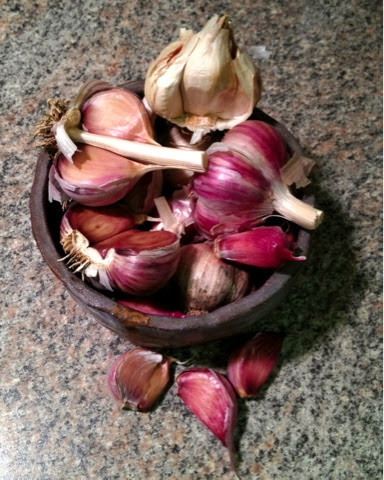
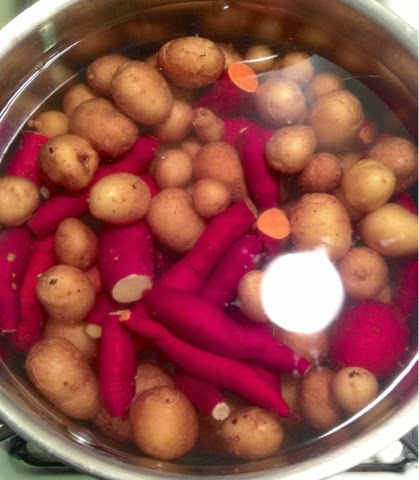
I'm boiling the last of my Amagansett grown potatoes and a handful of sweet potatoes given to me by a farmer out at the barn. They'll be softened by the boil, then tossed in a hot pan with olive oil. Towards the end I'll put some butter on and chopped garlic. I've noticed my Artichoke variety garlic has gotten downright buttery raw, now. So good. The one at the top of the bowl is Artichoke. It's important to know how garlic changes as it sits, sometimes for the better, sometimes for worse. 


New Amsterdam Market


In a little less than three weeks I will have my first garlic sale event at New Amsterdam Market. I've never been, so I've been image searching the market to get a sense for the space, tables, and overall aesthetics of the market. I think the pictures give a good sense of the atmosphere. Don't laugh, either, it is that kind of creation. Robert LaValva, the architect of the market, has insisted on designing a sense of place so that all the tables, signage, and what-have-you are identical no matter what the vendor is selling. It's as if the civic space/marketplace has become the product, not only the venue, and the local producer/vendors participate in his work. I get that and I think Hudson Clove's aesthetic sensibility fits well into his scheme as far as I can see from my Google image search.

Now I will make some low-rise pine wood crates to cradle the different varieties of garlic and shallots and maybe a two tier pine tower to display garlic bundles. Should saffron come into play, at a later market, I will need to devise a system for packaging and selling the threads. Maybe you can tell me how much saffron is enough saffron in a package? Marie, ideas?

Finally, you should know that New Amsterdam Market and it's environs are under threat of corporate development. Please read this article in Serious Eats, as it tells you all about it and why New Amsterdam Market is worth saving. The horror of the American suburb is its utter homogeneity, its total fear. Every new mall and false village filled with the same franchises dulls our collective senses. Fearful people who dream of opening new businesses but have little new ideas or the stomachs for risk -they open a franchise. Risk-taking residents try the new Potbelly sandwich instead of Subway. High end or low end, it's all the same, and I hope ingenuity can withstand the forces of homogeneity this time around.


Suffering A Sea Change


Mayor Bloomberg has announced his plan to combat the effects of rising seas on our urban population and infrastructure. Applause for having a plan, but I want to point to a couple of things.

In NYC, most of us who live on the water do it because its a splendid place to live, but for most of our history the waterfront, if it was occupied at all, was occupied by industry and shipping. The damage to it by flooding was often less critical than it is to the residential and retail space that have replaced it. It is clear, however, that if we didn't build on the boundary of the sea and the land, there would be little to spend billions defending against. The sea and the land are always in flux, giving and taking, and if you want to build something permanent in this space, you best design adaptive structures and infrastructure. All I can say is that we, not the sea, are our own worst enemy. We build directly on the sea, we cause a phenomena that results in sea rise, destroying a generally storm-resilient coastline, and then aim to build a way to protect ourselves from the monster we created. An old, but decent overview of shoreline protection awaits you here.

________________________


Mayor Bloomberg insists that hydraulically fractured gas be kept out of the city's water supply regions. Why? Because he agrees that the risk of polluting our clean water supply is simply too high. Yet he then proposes that the city's response to human-caused global warming is to pump way more gas into the city because it has been considered less harmful to the climate. New pipelines are coming in at every angle, including through the Jamaica Bay Wildlife Refuge and Gateway National Recreation Area. Where is this new gas expected to pipe in from? Of course, it's the fracked states of the Marcellus Shale and maybe one day from our own State of New York. I don't believe in a double standard. If it's too risky for us in the city, it's too risky for everyone.

___________________________


Just a month ago I had a meeting with New Amsterdam Market. I reached out to them last December because I thought their model of bringing high quality, local foods to New Yorkers best matched my farming practice. Their offices were flooded by Hurricane Sandy and they had to relocate, so they were late in responding to my interest. As it so happens, the other reason they took so long to respond to my letter was that they are effectively being removed from the Fulton Fish Market. Yes, as it turns out, the City of New York (which means Bloomberg and Quinn) has envisioned the South Street Historic District, a waterfront, with new development of the residential, retail, and commercial kind. In fact, this plan is embedded in Mayor Bloomberg's plan to protect NYC from future sea level rise! What? Yes, it's true. Even a plan to protect the city from future flooding is an opportunity to develop public spaces with private dollars. Whereas a market with little infrastructure could tolerate occasional flooding, a new mall, hotels, residences and closed food markets will be a disaster to clean up after a flood. It simply makes little sense unless you view it through the lens of big money. As a consequence, this year New Amsterdam isn't having its regular markets. That's just great since they welcomed me to join their market to sell my garlic!


A Day Of One's Own


Today was the first day in so very long where everything I had accomplished was completely on a whim.

I went to a barber. For those who don't know, I've long hair, usually tied in a tail. I may have been getting my feet wet before a total commitment, or I may have just been cleaning up. The last time I was in a professional chair was nearly 20 years ago.

Then I went to B&H photo to handle cameras. Never buy a camera you haven't handled. Not that I'm buying, but I've been a new camera customer for almost three years now -ever since my old Canon a80 went. I've had borrowed cameras, and since last Christmas, I've relied solely on the iPhone 4S camera. It's good, but it cannot do it all.

The new cameras offer more and more of what I've been looking for, things B&H employees scoffed at me for suggesting during past handling trips. Small is good, so while I enjoy the feel of certain Nikon models, and while I'm comfortable with Canon systems, all their mirrored cameras are probably out. I enjoyed the ease and functionality of the Canon G15 and the size and looks of the S110, but I like the picture quality of a larger sensor.

Cameras are adding features fast. Buying one is a little like buying a computer (my iMac is 2004 vintage). Canon, Nikon -these say photography, but Sony exudes consumer electronics, and Sony's business is being destroyed by Korean businesses like Samsung (who's cameras are still weak). But they've been making cameras that do much of what I need and better than Panasonic, the consumer electronic company that really kicked open the small, interchangeable lens, larger sensor, mirror less, swivel screen door.

After disappointing all the sales people at B&H, I had a sit down lunch, nothing special, but time-taking. How unusual.

On my way home I needed to pick up some things for tomorrow's meal, this year being hosted by my Sandy-displaced cousin and his girlfriend in a borrowed apartment on Spring Street.

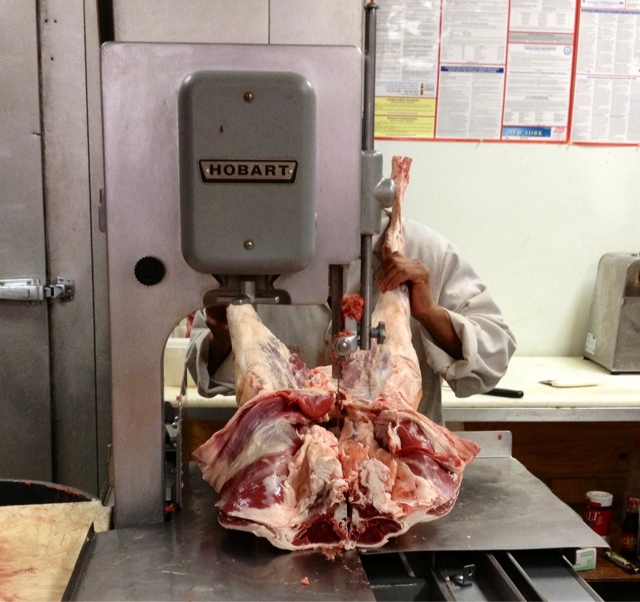
Jeff wanted beef, particularly tenderloin. I stopped at the halal butcher where I buy whole chickens, smoked steak, and occasionally filet mignon. I got that, but new signage encouraged me to ask about a whole lamb. I asked about a whole leg, and impulsively bought. I felt guilty, as if I had too much, but this is the most economical way to buy.

I spent some time on the phone looking for straw bales from Long Island farmers. No simple task, particularly with a mind for the bottom line. I gave up for the time, laid my head back for a nap.

As I type this on the mobile, I'm listening to the Freakonomics radio program. Have you listened to tonight's episode, about local foods? What do you think?

Incidentally, my leg of lamb comes from Pennsylvania, if my butcher is to be trusted.


Your Eyes Are Like Limpid Pools Of Chicken Fat


For those out of the loop of that reference -these are the words of Wimpy to his newly dear Olive Oyl. In response to Popeye's anger, Wimpy proposes an eating duel. 

Until recently, I spent a little more on a three liter container of XV olive oil for pan frying and much less on a 17 oz bottle of DeCecco "All Italian Olives" XV olive oil for dipping, salads, flavor. This oil is a consistently fruity xv olive oil. I had always bought this DeCecco oil at one of our local "farms," Golden Farms, where it sold consistently for less, as did their Organic Valley milk (two 1/2 gallons for $7), among others.

For months now, workers at Golden Farms have been picketing along with labor groups in front of the store. Months ago we decided to stop shopping there. It really is our only serious grocer within quick walking distance, but we've gotten used to traveling farther. Honestly, I just wish the owner would resolve the issue so this contentious corner can go back to the place I by Bonne Maman preserves at 2 for $5. Yet I can't understand why the owner isn't fined by the city if he is not paying what the city says he is supposed to pay.

Anyways, we had run down the last of our DeCecco. Months ago, Frank, owner of Caputos on Court Street, had given me a lesson in extra virgin olive oil. I told him then that I wasn't ready, but this past Saturday, I made the leap and bought the two above: one Italian, one Californian.  Frank had asked me if I wanted peppery or fruity, but I ended up picking neither. The Californian is solidly grassy, really, like eating a fresh cut lawn, and the Italian more like green butter. What impressed us was the body of  both oils, that they had body at all, that it didn't act as a liquid so much as a fluid food.

Given how we use these oils (I still bought a 3 liter for frying), they really weren't all that pricey. Roughly 10 bucks for the Californian and $13.50 for the Italian -or maybe the other way around (I hate fluorescent price tags on my shelves and rip them off immediately). The same size as the DeCecco (1/2 liter) but more complex, integrating better with the simplest companions like bread or tomatoes. In fact, I think I just discovered my dinner.


Sprechende Sauce


The "Speckled Roman" saucing tomato -perfect. Maybe the juiciest long (roma, plum, saucing, paste or whatever we're calling them) tomato I've ever grown. Good flavor, good looking and moderately productive.

Through the saucer. Great tool, but the mesh is made of nickel or maybe zinc-plated steel, or, in other words -a rusting tool. Recommendation is to oil it, but I'm not fond of that. Little hard to clean the screen too, but I can say with confidence that this tool will put the screen pan my mother used to use, that I now own, out of business.


Honey Garlic


This humble, dirty head of garlic is amazing. It's an Asiatic varietal called 'Japanese,' with at most 5 cloves per head and creamy yellow flesh. I harvested nine plants yesterday at the beach farm, nine plants which were given to me for free because other cultivars I purchased were quite small. These too were small, but I'm so glad that they sent them. Ahead of my satisfaction, I ordered a good quantity (although sale quantities are limited by most farmers) for next year's crop. It will take a few years to get these up to good numbers.

One head detached from its stem at harvest and was grilled. The cloves will begin to bubble through the skin -that's when you know they are ready. Grilled garlic has the consistency of a baked potato, but the flavor and sweetness are completely different. And this garlic, this garlic, tasted, to my palette and those I shared with, like clover honey! A distinct floral note above the starchy sweetness. I was blown away.

I highly doubt that this cultivar would produce the same after curing and I suspect it would be robustly garlic-flavored. But green, fresh from the ground, unbelievably like honey.


Less Grocer


More fancy market?

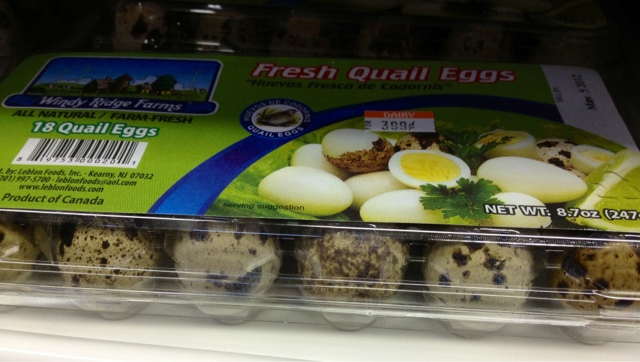
I went to our local C-town today because they always have a wide variety of meats. But something was different. The beers had moved, and this end cap -it had quail eggs?! I wrapped the corner and ah, I see, 1/4 aisle of organic and fancy. Well, kudos to C-town for adapting. Foodtown, at the other end of the hood, tried years ago with a renovation that simply grossed me out (dust everywhere, but store open!). I only go to Foodtown for the Murray's chicken and self-checkout -yes, I like to check myself out. Who doesn't? But check that out -quail eggs from Canada at C-town. Times they are a changin.

Auspicious Times


Today I ordered my lunch salad as I tend to do. Healthy salad, for the newly minted 42 year old. When I got to the register they charged me more than the usual. They said I ordered six items, and the deal is for five. Whatever, sometimes I can't even name five, but on principle, I counted the items, and they relented.


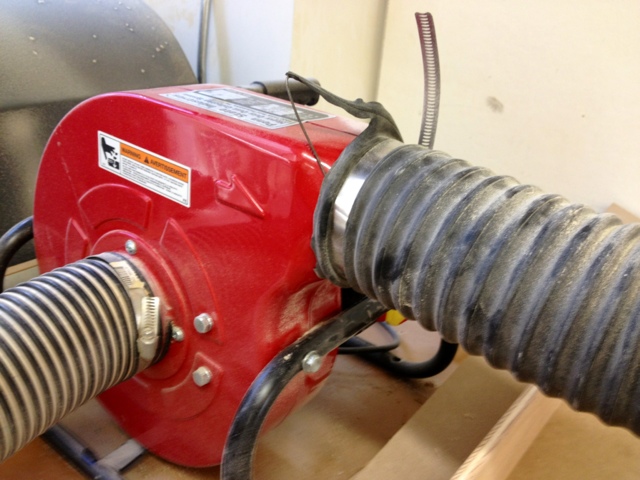
When I got to work, I opened the salad and out crawled the sixth item. A ladybug! And probably upset with the balsamic pesticide they dumped on, too! I thought, oh, that is good luck, a ladybug in my salad -probably in there to eat all the aphids! Being the animal lover that I am, I had to concoct a scheme to put the red critter outside without leaving my open-windowless space. The best I could come up with was this:

I removed the pipe from the outgoing port, dropped the ladybug in, replaced the pipe to the port, and turned on the blower. It must've been quite a ride, and I do hope it was a success. If so, the critter would have ten stories to figure out it needs to open its wings. Maybe then it can find its way to all those young rose tips full of the aphid undead on Manhattan terraces. Good luck!


Comfort Food


Pork sauce, aka meat sauce. To some, ragu, but not us. Occasionally I buy pork at a large supermarket in the neighborhood with this meal in mind. They label it pork fat, but usually it has very little fat, and what it does have can be trimmed easily. And it is unusually cheap, always, as if it was a cast off that they couldn't sell (seriously, like 2.5 pounds here for about $3). It makes good pork sauce, and carnitas en salsa verde, too. Tomatoes added, later.

Incidentally, I do not need a recipe for sauce, but I do like to look at recipes for sauce. Last summer I was shopping around for fennel seed seeds (Foeniculum vulgare, Finocchio Sylvatico) and I found a source mentioned on a website devoted to Calabrian cooking. The author of that site, Rosetta Costantino, had a cookbook, My Calabria. Betsy got it for me for Christmas. This is her sauce, but I added the little portobellos. Her sauce is my sauce. Many of her Calabrian recipes are a stones throw from what my grandparents cooked, in fact it's the closest I've ever found to their cooking, including their demand for fennel seeds! I think I would be a better cook if I lived in Calabria.

Those fennel seeds have been planted in the start tray, outside, in the, ahem, cold frame. Let's just say that its going to be pretty toasty in there. I also seeded some Finocchio Romanesco, the "bulb-forming" fennel. And, lastly, for now, some Cima di Rapa Sessantina, or broccoli rabe. It's an Italian spring, I guess. I'm opting out of brassica this spring, waiting for the more ideal summer planting, for which I have broccoli Romanesco, purple cauliflower, and two types of typical broccoli.

I had little to do at the beach farm today, but I had to pay my year's rent. The garlic is growing quickly now, putting on a couple inches since my last visit. The plot looks good -weeded, wood chipped paths, things growing. There will, however, be no garlic here next year. The NPS will be tearing up the whole Tilden garden in October and it seems they will do what they can to keep us from planting over winter. They've shortened the season to April fifteen to October one. They've no idea.


Extra virgin olive oil
Three cloves garlic
Sea salt
Tomatoes
Pork meat, your choice
Basil

Pan fry the meat first, drain fat, cut off extra fat. Olive oil in a sauce pan. Add sliced cloves, but don't burn the garlic. Add meat, add tomatoes, add basil and salt. Low heat for as long as you need. Sauce should be thick enough to stick to pasta.


Fresh Young Lean


Chicken.

A roast chicken was in order. In my neighborhood, if you want a chicken there are only two choices worth considering -Murray's or Halal. Tonight, I went with Murray's from one of the local big stores. I didn't notice until I got home how much the packing dedicated itself to promoting current trends in food awesomeness.

The cutest thing, the thing I believe was humorously parodied on the show Portlandia (couple in a restaurant want to know about their chicken), is the Farm Verification label. With it, it says, you can find out where your evening's chicken came from and learn about the family that raised it (I sure hope little Billy is doing well in school). I entered the code at the prompt on Murrayschicken.com, and the code returned the words code not found. Hmm. I hope my chicken's family is okay.


Corporate Pepper


I stepped out this morning and discovered the white foam perishables container on my step. Already -they've arrived. I hadn't informed the Sunset produce representative who contacted me that I had blogged about the episode after I lodged a complaint that their peppers tasted like mothballs. Poor form? Maybe, so I won't be able to relay our exact conversation, but I think I can deliver the gist.

First contact was the rather stiff, corporate kind. The rep called it an 'off-flavor' and appreciated that it was brought to their attention. They wanted to have my number for a phone conversation and the original packaging. I couldn't deliver either, so I forwarded the rep a hi-res photo of the package that I used for the last blog post.

Sunset Inc.'s style of communication became a bit more conversational after I sent them the image. Afterward, I was told they were able to get any important information needed from it so that they could do a 'full product trace.' They did believe the incident was 'isolated,' however, they would be contacting the grower to ensure that 'best practices' were 'occurring at the farm level.' They assured me that no other complaints of this kind had been filed.

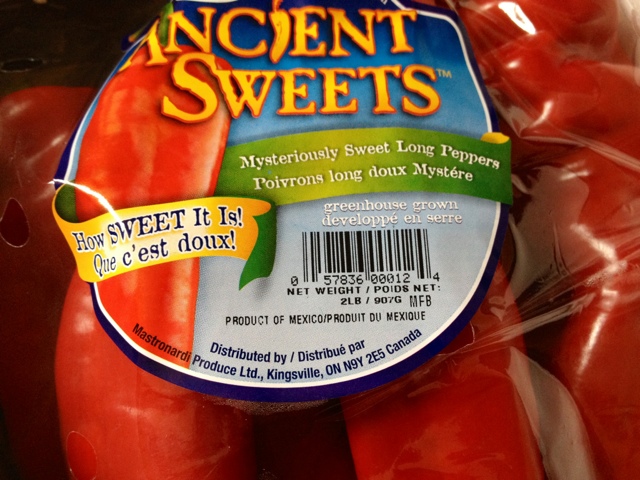
To 'reaffirm my confidence' in their product, they politely asked if they could have my address so that they could send me a complimentary package of Ancient Sweets. I cannot say enough how much that name gets under my skin, but still I said yes. There was no way they were going to send me another mothballed pepper. In fact, they probably have a locker full of the biggest, cleanest, sweetest, bestest long red peppers just for this type of problem. I placed the quarter at the bottom so you could see how large these peppers are. Incidentally, this new bag of peppers was grown in Mexico, not Nicaragua, as my original package had shown.

In the final communication the representative thanked me for 'allowing them to show their gratitude' and apologized for the 'inconvenience' and 'off-flavor.' Their 'Procurement Team' had been in contact with the grower yet found nothing outstanding that would lead to that taste. New peppers are just about out the door of their 'facility' and I should expect them shortly. And the last sentence from the last email regarding my mothballed peppers:

'As a reminder, always wash your produce with cool potable water before consuming.'