farm

Feeling Out Boundary


For years I have been looking across the wetland, visually leaping from this side to that. I hardly noticed it was a farming plot, hardly recall seeing corn or soy. When visitors see it from the upper floor in the snowy winter, they say how nice it is that we have a view of a lake, which is of course, an illusion. For quite some time I wanted to follow the edge of the wetland, crossing the wide drainage that marks southwestern boundary of our land, and I knew well enough this had to happen in winter. It turns out March is a good time, the soil is deeply frozen, and the air might be fifty degrees.


At the beginning of this great March melt, snow becomes puddles, ground frost begins to let go.


Water is beginning to move. A warmish day, sunshine, and then an attraction to any hint of burbling, the sound of moving water, is the first symptom of spring fever.


Crossing the wide drainage at the southwest corner of our lot where electrical infrastructure meets the woods, marsh grass and cattails meet the scoured land of the gravel mine. This is a boundary I've often met, but never crossed.


Along the western edge of the wetland we find the most Eastern Cottonwood, Populus deltoides. It likes wet feet, and can be found on wetlands, along streams and rivers, on lake edges, and occasionally upland. Large trees with trunks often bending and soft wood, they are prone to break. This is the source of its common name, I think, not the downy white fluff it distributes in late spring.


The wooded hillside slopes sharply, then levels out in a zone that accommodates occasional flooding. I have found that the four-legged and the two-legged creatures like to share paths whether made by us or by them. Here, we walk along a well-trodden deer path, one well-scoped by bow hunters.


As we gain on the farm field, the land rises up just enough to take it out of the soggy soil well-defined by the Cattails, Typha latifolia. Here I see a close resemblance to an oak savanna, a wonderful little spot containing grasses, annual and perennial plants, a large Bur Oak, Quercus macrocarpa (I think) and several smaller ones.


Growing too are large buckthorns with their countless berries. The oaks probably pre-date the buckthorn. New oaks are unlikely to be seeded, sprouted, and survive the shading without the regular fires that give oaks an edge.


Lichens (maybe orange Xanthomendoza weberi and grey-green Physcia aipolia) grow on even the lower oak branches. Rampant buckthorn growth will shade out the lichen too. I have to start seeing the positives of buckthorn, what were they again?


The farm road, which bisects the wetland and forces the drainage through a culvert.


The immaculate, stone free, black earth of the farmed hill to our south. I wonder why cover-cropping is not practiced in this region and have yet to do the research. I suspect that there might not be enough growing season to get soy or corn and sprout a cover before a freeze sets in, but then I am guessing. According to the MCWD, an agency that monitors our watershed, our sub watershed is draining phosphate-laden water to Dutch Lake. This field is near the head of the shed and yet another guess is that it's providing a good part of that input. Residential septic systems and lawn fertilizers are providing the rest. 

My knee-jerk response is to worry that it soon will have homes on it. The owner leases it to a local farmer, and from what I can find, its owner does not live on the property which totals 68 acres of woods, wetlands, and farm fields (other than this farm field, which is isolated by topography, woods, and wetlands). A quick search shows the owner as Stone Arch Development, but a google search for that shows only a corporation named Stone Arch Organizational Development. Adding more complexity to property ownership, the notion that our own "development" is acceptable, but any future development should be off limits, or at least out of sight. 


At the culvert, water flows in from the big marsh.


And flows out toward the south, draining another few miles of wooded hillsides, residential yards, and horse fields until it reaches Dutch Lake, and ultimately into Minnetonka, overtops into Minnehaha Creek, sent over the falls, then into the Mississippi, and off to a stint in the Gulf of Mexico. 


Turning back to the north we get the only wide open view of the woods within which we live, apart from satellite views. The cropped view highlights the house, toward which I drew an arrow. Witnessing the open, bright marsh and dark woods together was an eye opening experience.


A Walk Around The Block


Across the road (it's wrong to call it a "street"), a stand of Quaking Aspen, Populus tremeloides. These are roughly forty feet tall, and maybe thirty years old. The trees grow in clonal stands, suckering off roots from the initial seedling. These stands can go on for hundreds or thousands of years if fire burns through at supportive intervals. The bark color can vary depending on the region, but in our locality they trend toward the white of a Paper Birch.


Our five mile walk around "the block" takes us by several properties with horses. That tells you something about the nature of the neighborhood (please don't feed the puns). The lots are large, generally over ten acres, many with rolling meadows and wetland basins (but little standing water). Taxes are high (but not by New Jersey standards), and there are probably property tax credits for agricultural uses ("Green Acres"). When you are this close to the city and agricultural, you need resources, you need to make the land "productive" or you will pay. The pressure to change the zoning is real and looming. Another post, another day, about what I call the development shadow.


Given such low-density zoning in this part of the "city," you'll find fairly long views often punctuated by a fairly large house.


You may also find a property named to conjure up salad dressing.


There's a little, err Long, lake, a remnant of a much longer lake, hemmed in by two fingers, one of which is a pronounced esker. In the distance, two blue ice-houses.


In winter we can walk (or drive) on the lake. In the distance you can see the road cut, traveling up the esker at its junction with the other ridge that encloses this body of water.


On this side, three fifths around the block, more horses and a varied, glacially-sculpted terrain.


The late sun gives glow to tilled acres and woods alike.


The cedars that grow on open, upland sites burn with the setting sun.


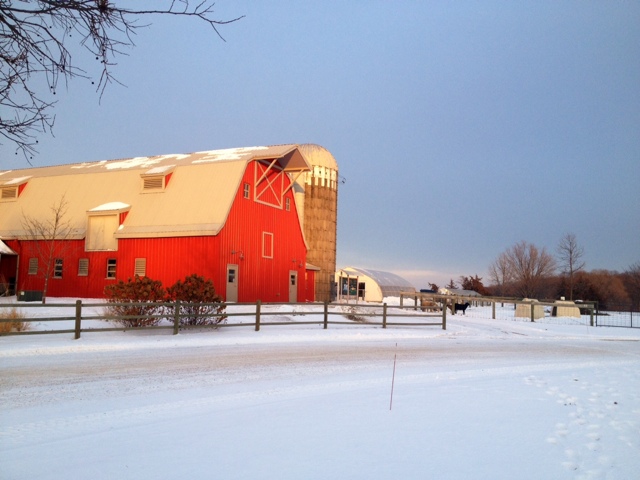
As do red houses.


To the northwest, some fields open to cultivation and livestock.


More rare, a field's infrastructure. This was dairy country awhile back.


Now, an attempt at viticulture.


To the west of our place, a partially-filled, old gravel pit has become a horse boarding operation. Rex had questions about how the open pit affected the hydrology of the area, and now that it is filled, more so. From what I've seen, and what I read, we have a complex hydrology, to be expanded in a later post.


Along the county road at dusk, about a half mile from our place, a stand of last season's weeds.


_______________________


On March 1, 2015 I will discontinue posting on NYCGarden. You can continue to read my posts here.


Supper


In the upper Midwest, and probably other regions, dinner is called supper and lunch is often dinner. For supper, then, I made the 15 minute, thirty mile per hour drive through town and then out of it, curving west, at thirty-five miles per hour, then forty-five, until just over the Dakota rail trail. Slowing down for an acute right, gassing it uphill, past the Gale house, the event barn, the market garden (frozen as it is), yielding left, toward the visitor center. One other car, facing west, shared the lot. Over packed, snow-covered gravel, a soft left at the chicken coop, pushing the glass entry door, an unfocused hello and then scope the upright, glass door freezers. 

All of two shelves empty. A sign reads pork is coming in on the fifth of December. I tally four roasting chickens, five "Frenched" racks of lamb, a single leg of lamb steak, copious beef liver and tongue, eggs, a head or two of cauliflower and romanesco broccoli, a basket of onions, garlic, and of all things, late-frost tomatoes. 

I pick out two whole chickens, a leg of lamb steak, one onion, one garlic (although I have plenty back at the house), cauliflower and broccoli. Before leaving I ask how long this can possibly last, to which the startled clerk replies, oh, we have no intention of going anywhere. It is hard to fathom this attitude of permanence, but I will work on it.


Supper


In the upper Midwest, and probably other regions, dinner is called supper and lunch is often dinner. For supper, then, I made the 15 minute, thirty mile per hour drive through town and then out of it, curving west, at thirty-five miles per hour, then forty-five, until just over the Dakota rail trail. Slowing down for an acute right, gassing it uphill, past the Gale house, the event barn, the market garden (frozen as it is), yielding left, toward the visitor center. One other car, facing west, shared the lot. I shuffled over packed snow-covered gravel, a soft left at the chicken coop, pushed the glass entry door, projected an unfocused hello and then scoped the upright, glass door freezers. 

All but two shelves empty. A sign reads pork is coming in on the fifth of December. I tally four roasting chickens, five "Frenched" racks of lamb, a single leg of lamb steak, copious beef liver and tongue, eggs, a head or two of cauliflower and romanesco broccoli, a basket of onions, garlic, and of all things, late-frost tomatoes. 

I pick out two whole chickens, a leg of lamb steak, one onion, one garlic (although I have plenty back at the house), cauliflower and broccoli. Before leaving I ask how long this can possibly last, to which the startled clerk replies, oh, we have no intention of going anywhere. It is hard to fathom this attitude of permanence, but I will work on it.


Farm Park


Minneapolis has a farm within its park system, Gale Woods Farm.


They raise cattle, sheep, pigs, and chickens, in addition to a number of crops. They expose school groups to farming and offer volunteer opportunities. The park is about 15 minutes from our place.


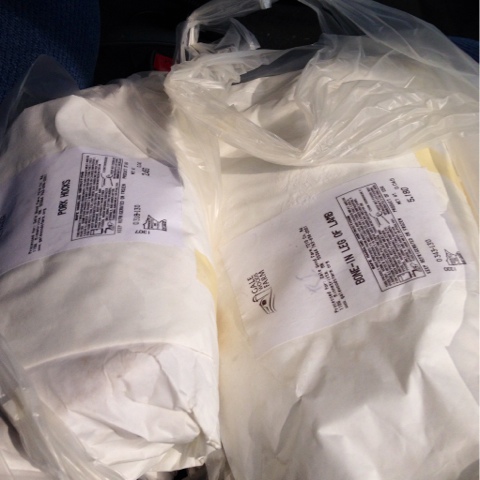
You can buy pastured meats at a fraction of the NYC price (5 lb leg of lamb -$36). As far as I know this is unique to the region, is hardly known even to locals, and is a great resource in a region that has not quite made pastured meats accessible to the urban population. Food is generally more expensive in the Minneapolis region than it is in NYC, variety is dismal, international foods are harder to come by, and produce is not well-stocked or good looking. There is a grand farmers' market in Minneapolis, but it's a drive into downtown. Fortunately, smaller markets are popping up including one in our town despite the fairly short season.


Group Hog


If you've been following lately, you know that I made the decision to eat only humanely raised and slaughtered meat from now on, or for as long as I can find a way to pay for it. If that proves difficult, I will simply need to eat less meat. So, like anyone searching for something these days, I hit the Internet looking for farms. After digging through the densely packed Eatwild site for New York or New Jersey farms that were both within reasonable driving distance from Brooklyn and had a whole hog price that was within my price range, I emailed three. Of those three, only one contacted me, and that was Lowland Farm. Located in Warwick, NY, the farm is under a two hour drive and their whole hog prices were bested by only one of my picks, a farm that is 2 to 3 hours drive farther from us than Lowland. It didn't hurt that my favorite hard pear cider is produced in the same town, just up the road.

Jason, the farm manager, emailed me almost immediately, and immediately I began to ask questions. I was fortunate that in less than a month hogs were going to the slaughterhouse. Some farms do not slaughter midwinter at all, and my guess is that a winter slow down enabled Jason to spend additional time answering so many questions. Once I had a basic understanding of the process, I enlisted five additional households to share the hog, because who has room in their apartment freezer for 150 pounds of meat? Of course, enlisting five households also meant tending to several different needs and wants and questions. But Jason stood up to that challenge and once we settled on a cut and cure list, I sent it, along with a $300 deposit, to the farm in Warwick, and then we waited.

Mid-February their hogs traveled to Pennsylvania for the slaughter. A farm the size of Lowland has USDA rules to follow, including the required use of a USDA inspected facility. If there is any weak link in farm to table, it's the slaughterhouse. As you might expect, it's not an open process, although Jason did what he could to reassure me that it was as humane as one might hope given the killing of several animals in a single day. The slaughterhouse is also the processor, which means they butcher, cure, package, and freeze the meat. I can't say that I am entirely unhappy with the processing, but some things were left to be desired. For instance, the curing process is the conventional model of salt, sugar, and nitrite. Another is the processor's habit of not providing the unusual cuts, such as the feet, the cheeks, and even the leaf lard. I am told it is cost prohibitive for the processor to scald the pigs, so that skin is not provided on any cuts. I am curious what happens to these parts if they do not get sent back to the farm, and even more curious about the parts we do not request. We could work around the cure issue by requesting only fresh cuts, leaving them to be cured or smoked by us. Of course, I don't have a smoker or the knowledge to cure meats, but I don't require my ham or hocks cured and there's much you can do with fresh belly. However there is little we can do to receive those parts we find desirable, like skins for Chicharrón, braciole, or a succulent shoulder roast.

There is no way to know the weight of your hog until pickup, so in order to get a handle on the tally I had to devise a price schedule based on the averages given to me by Jason. One thing that must be understood when buying whole animals is that we pay for part of the animal that we will never eat. Our tally is based on the hanging weight, the weight of the whole hog after evisceration. Our hog, at 237 pounds hanging, was fifty pounds heavier than the average. For us, that amounted to roughly eighty pounds -or $360. Now before you holler about that, understand that this price is always included in the cost of any meat, whether it is bought by the cut on farm, at your butcher, or at the grocery store. On top of this cost, I added gas and tolls to our groups tally, bringing our per pound price to $7.06.

Now, if you are inclined to buy only ribs, ground pork, or shoulder, you could spend less buying only those cuts if the farm has them in the freezer. When you buy the whole hog, you pay the same price for ground pork as well as thick-cut loin chops, loin roast, cured ham, bacon, and tenderloin. Not only is the price equalized when buying this way, but we are also guaranteed those cuts. Consider, as well, if you were to purchase pork at a NYC Greenmarket, where the $7.06 we paid per pound comes in lower than nearly any cut, including ground pork. While I am sure there is a great magnitude New Yorkers who don't think twice about the cost of pasture raised meat at Greenmarket, I feel confident stating that cost is the single largest roadblock to buying humanely raised meat. If you want different cuts, buying the whole hog is the lowest cost way to do it.

Saturday, the first of March, was pickup day. The weather was warm, hovering around freezing, and the sun was bright. I was excited to see the farm, to step over the notion that this kind of participation is merely nostalgic or cute. Me and Dino, one of our group, left Brooklyn at 8:30 am, crossing the Brooklyn Bridge, virtually without traffic, heading to the Willis Avenue Bridge, then up the Deegan toward I 95 southbound and the GWB. Once over the Hudson, we headed up route 4, then 208, clearly taking the scenic route. We arrived at the hills, farms, old homes and weekenders of the New York-New Jersey Highlands in under two hours. Pine Island, that agricultural deposit, sat below, in the Walkill River valley, due northwest.


Slowly cruising the farm road toward the Lowland store, we passed several cows eyeing us with curiosity.


We parked adjacent to a stone wall boundary, just to the side of the pig barn. Behind the wall, bee boxes.


Inside, manning the store was a friendly gentleman (I've forgotten his name) who managed to carry out three very heavy boxes, each filled with cuts of frozen pork. Here, we discovered our hog's hanging weight (237 lbs), wrote a check for the balance, and packed the van. There was really no sound place to eye through the boxes, to unpack them, considering all that was there and the sense, too, that you want to get your frozen meat to its destination as soon as possible. A check-list would be useful here and I've suggested that to the farm manager. As it turned out, I had no idea our order was missing the much desired leaf lard and cheeks until we divided the cuts at our distribution point. I emailed Jason later that day, and he apologized, offering to provide us with a credit for these on my next visit to the farm.


I thought it may be difficult to see the young pigs, but that didn't turn out to be the case. I enjoyed seeing them, and their surroundings, but didn't think twice about eating the hog that two weeks prior was rummaging around this very same space -a long stone barn with timber beams and billowy straw. When we entered, the pigs, most only 16 weeks old, scurried as fast as possible to the farthest reaches of the barn, but within a minute or so they came scampering back to check us out.


A full sized hog, not unlike the one which gave its life for us.


The young and mature are separated by fencing, but they interact in ways you undoubtedly will find cute.


The young hogs scampering towards us after some apples were thrown into the pen.


______________________________________


My counter top collection of different cuts. The ground pork, to the left, is considerably darker than the pork I've purchased at our local co-op. The hock, to the right edge, will be used for a spectacular and unconventional osso buco sometime in the future. The one point five inch thick center loin chops, bone-in, we had Sunday. Juicy, but a milder pork taste than my preferred dark meat cuts. I need a recipe! Bacon, to the back, is cut twice as thick as your average store bought, but not too chunky -just right. Each slice has a nice balance of fat and meat. Betsy and I have not had bacon in our refrigerator for years; now we have three pounds. For my taste it is a little too salty eaten solo, but sits well once you fit it into a sandwich. We generally do not salt our food much, so whether or not there is too much salt is hard for us to judge. I would prefer genuinely smoked bacon, not salt, brown sugar, and nitrite cured -but this is standard practice, and we are unlikely to find a processor who will do otherwise at this price.


The jowl is huge, several pounds, cured, and tender beyond my expectation. I frequently buy guanciale, an Italian specialty bacon, but use very little at a time. A jowl this big encourages thicker slices. Although not at all cured like guanciale, the taste it adds to foods is phenomenal. I cut it into smaller chunks and placed it in the freezer.

Everyone received certain cuts, but then we haggled over what remained -the tenderloins, loin roasts, additional chops, bacon, and hocks. A breakdown of the 29.5 pounds of pork our house received:

-Shoulder roast of several pounds
-Fresh ham of several pounds
-Four 1.5 inch thick loin chops
-About three pounds of ribs
-One large shank
-Very large cured jowl
-Three pounds of cured, sliced bacon
-Five pounds of ground pork

I am quite happy with the quality and service I received from Lowland and I look forward to building a relationship with them. If you do not have a car, you can always visit NYC Greenmarket to find pasture raised meats. There are butchers in town who also carry pasture raised meats, including Harlem Shambles in, you guessed it, Harlem and Fleisher's in Park Slope. Undoubtedly there are others, too, and as always there are the local co-ops and organic meats at Whole Foods and other large stores. But, if you want to connect directly with a farm, see the animals, and save a few dollars, there's no better way than to buy straight off the farm.


February Farm Market


I go to the farmers' market in the depths of winter for the apples. I haven't purchased a grocery apple in a dozen years. Fuji is my go-to, winter apple .


Carrots, mounds of carrots -purple, yellow, and the obvious orange. I buy them all. If they were organic, I would appreciate them even more. The two organic farmers who sell at Grand Army in winter do not sell winter carrots.


Here's another reason. Flowers. Outside. In winter.


There are many more meat farmers at Grand Army this winter, but I do not partake. The price is usually out of my league. Ground pork at this stand was on sale, $6.50 -down from $9.50. I partook. Since my decision to buy only humanely raised and slaughtered meats (which usually means capital O, organic), I've been buying meat at the co-op on Cortelyou. We are definitely spending more, but we are still eating meat because I buy only the lower cost cuts, and the co-op keeps prices down by not sourcing hyper local and not using the smallest producers. Buying this way has limited my options just a bit too much.

A little over a month ago I decided I wanted to buy from a local, small producer of pasture raised meat. A whole steer would have been biting off more than I could chew, so I sought out a farmer raising hogs as well. When you buy a whole hog, the price is multiplied by the post-slaughter weight, what is called the "hanging" weight, which means you will pay for weight you do not eat. This is usually about 40 pounds, or put another way -about $180. Add to this my cost of gas and tolls for pickup and delivery, and the cost goes up another $60.  The remaining 140 pounds of hog will be butchered, divided into cuts, frozen fresh or smoked, labeled, and sent back to the farm.

I found six households to go in on the whole hog because who can afford $1000 for hog? More importantly, who can fit a hog in their urban freezer? Each household will receive about 28 pounds of cuts, and each will receive ham roast (smoked or fresh), shoulder roast, several ribs, several loin chops (1 inch thick), belly bacon (smoked or fresh), and ground pork. Based on the prices in the picture above, these alone should drive the cost well over each household's $170 investment. The remaining cuts, which include the tenderloins, extra bacon, ribs, and loin chops, hocks, smoked jowl, cheeks, ears, tails, organs, and leaf lard, will be haggled over by the group. We'll all meet at a central, Brooklyn location so the extras are divided as fairly as possible. I think we will see a price of about $7 per pound for all cuts, which is less than I pay for a pound of ground pork at the co-op.

Of course, the decision to do this goes beyond cost, but to do better, to treat animals and the land as best as we can. I do expect better flavor, but that is not my primary motivation. If all goes well, this will be our model, and possibly expand to include another six households to bring down the pickup and delivery costs even more. Maybe we'll venture into steer territory too, but let's not put the cart before the ox.

Update: I corrected the math above, bringing down the price a bit.


Republican Garden Shutdown Week Two


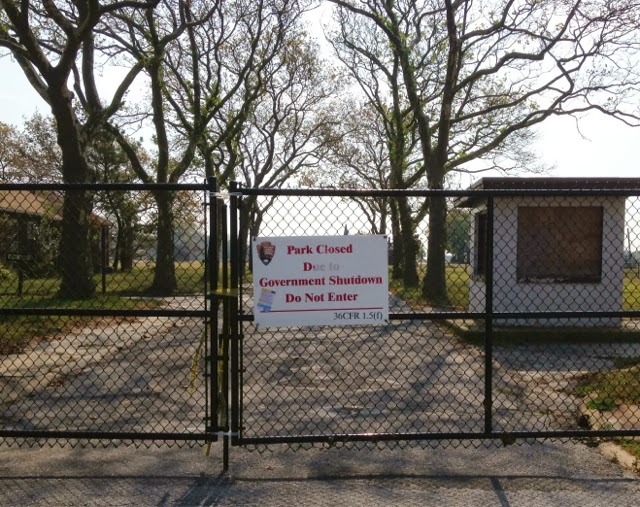
Republican congressmen who oppose health care initiatives have shut down the government for nearly two weeks. For this reason the site of my only autumn gardening has been locked up and so for this reason these Republicans have said to me and my gardening peers -you will not garden as long as you support health care initiatives. Believe me when I say that many of my gardening peers are likely Republicans but since I do not see them away from the garden I cannot ask them how they feel about the Republican shut down of the garden.

I may have to make a covert trip. Under cover of night? Early in the morning dressed as autumnal haze? Will I be caught? Is anyone looking? It's a real shame about those last of the season tomatoes and peppers, isn't it? I know it's small compared to those who are bearing the real weight of the shut down but that is why it goads me. A fence and 30 extreme Republicans standing between me and a pepper.

I should dig a tunnel.

We went upstate on Sunday to look at properties. We are looking at work space and living space, close and afar. I'd like a more peaceful life, but then who wouldn't? I'd like to get home from work before 10 pm with more than one or two home-cooked meals a week. We work 12 hour days all too regularly. Wages at the college have stagnated since 2009. I take adjunct professor positions to make a little extra (paid for the farm). I do side projects (patio, electrical) to fix the van. I paid off my undergraduate loans this past May, but the studio rent goes up yearly by leaps and bounds.

I've decided to limit my farming to one tenth the quantity of this season. I've cultivated little taste for the driving. The hope is that we'll find space, wherever it is we go, to continue on at a slightly larger scale than this coming season. I will keep Hudson Clove alive and will sell some garlic next August. In lieu of hours of driving and weeding, I intend to refocus my energy on art making and also to say more about art. You may see that writing here (if not by another blog name).

The best news came in the form of an appointment to teach at next summer's Art New England. I will be instructing for one week on a subject of my own desire -landscape and meaning. The remuneration is good for six days' work -two thirds the compensation for an entire semester (15 weeks) and free room and board in lovely Bennington, Vermont.

On October 31 I will leave my studio of the last three years. They say it will take six to eight weeks to return my deposit. Of course it will. My studio mate of the last sixteen months will have to find a space. It's really nice having a friend where I work so I am sad that we will part ways. Believe me when I say that the era of artists renting industrial studios is near its end in NYC. Oh, yes, for the few it will still be possible via personal wealth, financial success in the gallery system, or the pitiful acceptance of renting a windowless 120 square feet for $500 and up a month.

As for our apartment, we are hanging on -for now.


Fly Over Country


I rather don't like the moniker, although I understand it. It's easy to dismiss the vast interior of the United States in countless ways, but I don't think we should, for more reasons than I can get into. 

Wendell Berry said "Eating is an agricultural act." Think about that. Agriculture is the foundation (still) of our civilization and like it or not, we are all agriculturalists. We farm by eating. Every bite is a clod turned by plow, every gulp an ounce of aerosolized pesticide, each nibble a nameless, faceless laborer stooped in the field. 

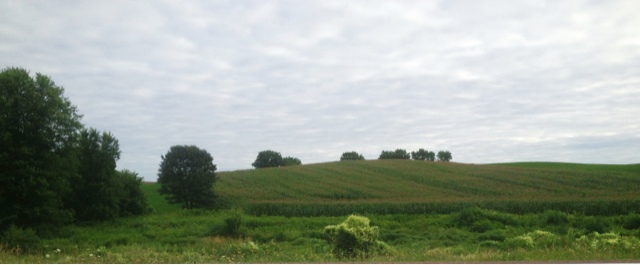
Corn and soy are the most intensively mechanized and industrialized crops grown. It's all you will see on Interstate 80/90, between Pennsylvania and Wisconsin with the exception of an apple orchard in Ohio and tomato field in Indiana. There are no laborers in these fields, only the occasional machine. As I passed through, two weeks since my last drive, it had become Roundup season. Brown as the severest drought; a visual disturbance, as much as a chemical one. 


A yellow plane made a severe descent, disturbing too, in the manner of an imminent crash. But then it arcs upwards, circles around and completes the same maneuver. As I pass the woodlot, I can see its purpose, and it seemed ostentatious, like a car transformed into spectacle, or an excessively loud Harley, to fly a plane in that manner, to spray pesticides by machine, without an eye for the kill. 

Interstate 90/94, in Wisconsin, traverses a patchwork of corn fields, cow pasture, bogs and woods. The highway cuts the line between the sweet Midwest and acidic north woods. Corn is grown, cows milked and cranberries harvested; boundaries manifest greater diversity. I was taken by the blossoming of the knotweed Silver Lace Vine, at the boundary of farm fields and highway. It rose up, a green white light. 


After The Rains


I could hardly sleep knowing I would be rising at 3:30 in the morning. It didn't help that the upstairs tenants were noisy as always. So, when I awoke at 2:58 am, I got out of bed and readied myself for the drive to the farm. Brooklyn is unsavory at four on a Sunday morning. Still so many people up, yet those who rise early are also about. There is more traffic on the highways than one imagines at that hour. I could relax, however, by the time I made it to Nassau County, and then the road was nearly empty by central Suffolk County, before this part of the Earth rolled into the visible rays of the sun.


Driving through the Hamptons was also a quite hospitable at 5:30 in the morning. Every place I usually turn to for breakfast was still closed on a Sunday morning, but thankfully the chatty, vibrant ladies of Hampton Coffee were open for business before 6 am. And, for those interested, their restroom was spotless.


All was covered in early morning dew.


Hard not to notice the elephant garlic scapes as they rocket to the sky.


The plan is to market these to local florists. Any florists in the house? At what stage are they most appealing -open, closed, half-way?


Generally the field looked better than I imagined given the report from my farming neighbor stating that my field was a pond. The surface water had 24 hours to drain since the last of the rain, and all had from the cultivated rows.


The weeds and the clover cover I planted had grown as expected in the three days since my last visit. Everything, but the garlic, was significantly taller.


At the edge of this year's plot the water still stood.


At the northern extent of my field the water was a few inches deep and the weeds acclimated to the soggy soil made themselves known. I slogged through the mow cut, hardly making it as my boots sunk ankle deep in the mire. I then crossed to the adjacent lower field that had recently been cultivated. A real nightmire.


The field had received nearly 5 inches of rain in 24 hours. That's nearly a month and a half's worth in one-forty-fifth the time. But that doesn't make it any less of a problem for growing a crop that generally accepts dry soil conditions. I can only hope that this soggy condition doesn't exacerbate this spring's growing problems.  I'm also not sure that I can make use of the northern third of my field for garlic. I'll have to work with the Trust to find an equitable solution, possibly drier land.


Checking on flood damage was only one reason to head to the farm. The reason I left so early was to be able to harvest garlic scapes to deliver to my neighboring farm for this week's farmers' market. He needed them by 7 am, and as luck would have it, we both arrived at the gate at exactly the same moment. Unfortunately he had a hard time selling them. Apparently there isn't much taste for the garlic vegetable in the Hamptons. I hope he has better luck at his Thursday market. I also cut 5 pounds (250 scapes) for shipment to the Skowhegan School of Painting and Sculpture kitchen. Scape season will be on for another 3 weeks and I hope I can sell more, lest they become compost.

Scape cutting was finished by 8 am, so the remainder of the day belonged to weeding punctuated by breaks designed to alternate from my weeding posture. I walked to the edge of the field and I spotted a remnant of an old plot. Evidently used for growing herbs, it had chamomile flowers, culinary sage, thyme, bronze fennel, and some purple lettuce.


I also discovered this bed of strawberries.


I bumped into a turtle crossing the road. They are such funny and cute creatures.


And I noticed peas growing in the wheat.


Unfortunately, the East Coast just endured yet another bout of heavy rains, only two days since the passing of the last event. The field in Amagansett received 2 inches of rain on top of the five of Friday. Hudson Clove has been socked with all kinds of difficulties this season, but most can be tackled throughh better soil preparation, including grading and amending to compensate for wet soil. After harvest I will be able to concentrate on the good work of preparing the land for next season. Proper liming, adding gypsum, compost, turning under the summer buckwheat crop, contouring for better drainage. That's about all I can do without moving to another field. With luck I will be able to plant some of my garlic in November, but it's too soon to tell. Although I planned to do this to increase my yields and acclimate the planting stock, I may have to buy a significant portion of my planting stock this season to make up for losses. This practice will greatly add to my costs and at some point becomes a deal breaker. 


Rain Date


This post describes my June sixth trip to the garlic farm in anticipation of the heavy rains from Tropical Storm Andrea.


I went to Agway to pick up another load of lime and to place my buckwheat order, changing my normal path to route 24 through Flanders. Long Island's famous Big Duck was moved along this road sometime during my adult life, but I remember it moving several times since I was a kid. Long Island was known for potatoes and duck farms, two industries not as common around here these days. Our duck was built in the 1930s and its moniker became architectural terminology to those in the field -a building in the shape of its product is known as a 'duck.'


The trees in the area have finally come into their summer greens and the field grass is just beginning to reach upwards.


The crop  is looking a little better than weeks prior, a general greening up, with the Silverskin strain showing the most improvement. I do not know if this is because I fed them with a calcium-magnesium and Fertrell 3 mix, because it was warming up and drying out, or all of the above. However, the Turban and Asiatic strains generally look poor, making it difficult to identify when to harvest. They are browning down now, but the bulbs are not up to size, nor have fully developed cloves. Given the proximity to harvest, the coming rains will not be all that welcome.


This is the saffron crocus, from green to brown in a month's time. Soon the weeds will completely conceal the crocus and I have no time to hand and knee this plot. These crocus require dry, or at best well-drained, summers and they are not going to get that here. I made this choice when I was under the impression that the Trust would rent Hudson Clove land on the North Fork where there is quick-draining sandy soil. The soil here, Bridgehampton Silt Loam, is a nearly powder fine silt loam that holds water moderately well if not nearly as much as clay. I think for the crocus to survive, I will need to affect the soil drainage significantly. I will also look into digging them up for summer storage and then replanting in late September.


Working a field requires the skill of observation. I have that in droves, but I'm now trained on signs of standing water like never before. Earlier on I had seen indications of moving water, puddles in walking rows, and the tell-tale smoothing of soil where water had stood. In other words, I had seen the micro, the after-effects, but not the big picture, the macro. It wasn't until Cornell had suggested soggy soil as a factor in my unhealthy garlic that I began to notice how thin the cover cropping was adjacent my center rows. The low weed count in this area became another obvious indicator of standing water. Then the contour of the land revealed itself as a pronounced 'bowl'. A new problem, or rather an old one, that now needs to be addressed.


Knowing that rain was on its way, and being early June, I pestered my farming neighbor to mow the cover crops planted last December. The grass was going to seed and the peas were in flower. We were probably a week or two late on this, but it is easy to lose focus when so much else needs to be done. Apparently this pea cover should be mowed down by late May because that is when it has fixed the most nitrogen in the soil. As for the rye, just cut it before it sets seed for added organic matter. Sometime next week, my neighbor will disc it in.


This was the radar while we were out in the field. Hudson Clove's first season on Long Island was book-ended by two tropical storms -Sandy at the start and Andrea toward the finish. How rare on both ends.


I wrapped it up a little earlier than usual, although only ten rows were weeded, as the rain clouds approached. I left before dark.


Memory Lane


After a short visit to the garlic farm last week I finally had time to head to my old neighborhood. I wanted to know what has happened to what anyone I grew up with would simply have called the farm


On a wedge of land between Oxhead Road and N. Washington Avenue, this property and the neighbors around it were largely a mystery to me and most of my friends even though it was only a half-mile away, as the crow flies. Sure, we went by it all the time, but never set foot, never interacted. I didn't even know, or do not remember that I knew, that the farmer was a black man, Long Island's only African American farmer. 


I was relieved to see that the triangle wasn't filled with new, plastic-sided homes, but something was different.


I rounded the pointy tip, the most acute corner I know, to read the sign which did its level best to explain. Hobbs farm, I had now recollected the name, was no longer in the family. 


The old barn had me thinking a church was involved. I could see that there was a a segmented garden -maybe a community-type plot.


And so I left it, glad to see the farm was still there, but sure that it was no longer as before. And since I was but a half mile from my childhood home, I decided to pass on by to see how it has changed since my mother was forced to sell it as part of her divorce settlement.


Maybe there is a German word for the feeling one gets when they see the shape of their childhood house dressed in different clothing. I know those oak trees like I know the back of my hand, I can walk around them in my mind, isolating lichens and patterns of bark. I know the scent of the thin soil, the patches where only moss will grow, the colonies of black ants. I do not know those cars, or those new shrubs, or how they've changed the orientation of the drive.  I don't know who is inside my room.


My school bus stop, down the road, between those pines. Remember the anxiety of your first time, wondering whether or not you're in the right place, or worse, that you had missed the bus entirely. Running for the bus, yelling wait! A bus from the south was always better than one from the north.


On our road, we lived at the pinnacle of what we called a hill. The drainage was poor here, so that after heavy rains, a large puddle would form. It seemed that all the town could do was to place what we called cannon balls on either side of the pond. I was fascinated by these sooty black orbs with flame atop. I cannot believe I never tried to take one home (or did I?). Standing water was not common to our stretch of the woods, so I was also in love with these puddles, several inches deep, which we had to skirt by passing through the yards in order to get to or from our bus stop. I was disappointed when a formidable puddle in the morning had drained by the end of a school day.

To the left I jumped a ramp on my bike and went over the handle bars. To the right I passed through at night, jumping the fence to get to friends. This is where we trick or treated until we switched to eggs. The house at the top of the hill, on the left, belonged to a man who burnt his trash. The house on the top to the right had a free-roaming dog named Randy who always managed to visit our barbecues. The house at the top belonged to a man who died in his driveway as he worked his chainsaw on trees fallen by hurricane Gloria.


Just a few doors down, behind this house, I rode my first horse. Led by a brunette in riding pants and boots, three times around, it cost only a dime. I may have been five or six. 


The Sophomore


I made my way out to the farm Monday morning to collect 300 pounds of alfalfa meal from the Riverhead Agway. They had expected me two weeks prior, but given the nature of the storm, Nemo, I declined. Rounding Quail Hill Farm near 10 am, I was greeted by a road block. A massive snow-blowing truck was throwing snow 50 feet to the south. After ten minutes, I was tempted to run the van over the farm road, but I didn't, probably wisely.


After a potholed, rutted journey over a road that could only have been devised to keep traffic out, I made it around to the private road. It's a road to grandiose, stony facade and column, poolhouse and pond, and I parked because farmer has me feeling more entitled than artist ever has. 


Blocking the road, yes, but wouldn't a friendly farmer's wave do, a wave from he who toils on the land, provides the stony facade and column a vision of the pastoral, reassures him and her that agriculture is not peasantry, but all the more pleasantry? So, yes, I parked on the private road, and from here a simple wave to just over there could rouse me to unblock their passage. But then nothing much came of it.


The farm road was covered in snow of variable depth, impassable by minivan or rather the promise of digging out was just as great an impasse, so that I hiked in.


Easy enough on old snow, frozen then melted, rained on and refrozen, now crusty.


Enter the farm from the eastern gate and we first notice the saffron patch, which I thought appeared remarkably sound given recent weather. A surprising amount of growth put on since the studio-bound sprouting, early November planting, and December flowering - a full two months late.


This hardly looks like a farm in winter, but a farm in drought. The decision not to mulch was a difficult one, born of cost and wind. I still cannot determine a mulch that will stay put in the face of so much daily scouring.


If you look closely at the field, orderly, pale greenery emerges. Bare soil warms rapidly under the strong February sun. A month ago most rows had no emergence, but the warmth of just a few days last week and the bare soil have given the eager varieties (notably the soft-stemmed and variable hard-stemmed varieties) the signal to push up. Rocambole, Pocelain, and Purple Stripe varieties appear to have the will to stay put, a botanical mind for the mild bipolarity of winter. This wasn't an issue in the cold zone farming upstate, but as my experience at the beach farm bore out last season, Long Island's coastal warming contributes to the early growth. But it's just that warming that allows us to grow every variety. All I can do is prepare better next season, plant a little deeper, and be mindful of the higher amplitude climate patterns offered by the warming arctic.


I had hoped that all the snow of the last month would provide a protective blanket for the crop, but the heavy winds removed most of the snow just as quickly as it had accumulated. In fact, the reason for the road closure was that much of the snow that had fallen two days prior to my visit had blown off the fields and onto the road.


The most eager growth belongs to the Turban variety. Above, to the right, is the strain 'Thai Purple' and to the left is 'Tuscan.' Several 'Tuscan' had begun to sprout before planting time, recalling now how planting was delayed by lease issues and our tropical friend Sandy.


During Long Island winters like the kind we've been having for years now, temperatures rarely dip below twenty degrees F, especially this close to the ocean. Extreme jet stream events brought extraordinary cold to the region this January, delivering occasional nights with single digit temperatures, fierce winds and damage to the eager strains. While garlic is a tough plant, energy will be lost to regrowth and stress will create opportunity for disease.


Another problem has been heaved cloves. By a long shot, not nearly as much as the other farmers' garlic, but enough to make me pissy. Every clove lost to something like this is a bulb lost to market. Pulling them out is incredibly tough, made all the harder by frozen soil just below the sun-warmed surface. The first dozen or so came up in January, while the soil was still soft as recently tilled, and those were tough to remove, their roots so firmly embedded in the ground. This visit, a month later, revealed another dozen or so. I'm not completely convinced that this is caused by rapid, intense root growth pushing the clove two, three or four inches up above ground. Maybe it's frost heave, given the moisture, the freeze thaw, the patterned cracks in the beds. Next year there will be deeper tilling, deeper planting, bed firming, and possibly some mulch because this problem is unacceptable.


To the left of the signs you see rows of minor hills running perpendicular to the garlic beds. This was the cover crop planted in December, back when warmer days seemed the norm. Nothing has sprouted there, and honestly I have no idea if it should. A cover crop in winter could help with another vexing problem.


The soil conservationist's nightmare. The snow that remains puts in stark relief all the blowing farm soil. If it weren't for this display, an untrained eye would hardly realize that any soil was being lost to the wind. I don't like it, not one bit. I have winter clover to plant around March one for my main walking row, an area roughly 1200 square feet. I have no equipment to roughen the soil compacted by our feet, nothing but a new, five pound, six-inch rake to break the soil. That will be a long day.


From here, my whole acre, the larger parcel intended for next year's crop. Despite crankiness about my sophomoric missteps and a blustery, incessant wind, I thoroughly enjoyed walking the rows. Spring approaches, and early summer's work beyond understanding, winter's rest and the warm, strengthening sun are solace.


As I hiked out, down the curving road toward the wood and van parked on the private road, the sun behind me lit the trees brilliantly. These trees on the south prong of Long Island's fork glow in the sun and are toned evenly under clouds. They are unlike any I've seen. The species, yes -white oak, aspen, beech, but the brilliance of the bark across species appears different here and I wonder if it has to do with the lichen and the ocean.


February Farm


Windy at the farm, yet surprised how much I enjoyed the time walking the rows. I had to hike in, then out, and was struck by the warmth of a February sun and the beauty of the trees' branches entangled with the sky.


Snow For The Farm


The minor snow that has fallen on eastern Long Island will be helpful at the farm during the colder days and nights ahead. The turban varieties, ever eager to grow, were the first to sprout in early December and will benefit from a layer of insulating snow. The rest still underground, but not too deeply thanks to light soil and vigorous root growth, will also benefit from the 32 degree blanket. It wouldn't take much time to bring freezing temperatures several inches below ground with several days of hard freezing temperatures and no snow cover. Garlic is tough, however, and regularly survives much lower than the twenties and teens. Although, surviving it isn't exactly needing it, so I'll take the snow.


Tomorrow


Despite the forecast of dense fog (a fog I've already seen emerging in Greenwood on my way home from the studio this evening), I plan to head out to the farm tomorrow morning. The temperatures are warm and I want to take advantage of that as well as inspect the rows for winter growth. I would like to try out my new nejiri gama, a sickle-type hoe, and measure for irrigation. Irrigation?

Yes, I have six or eight rows not planted, and I plan to plant, ahem, experiment with growing tomatoes, New Mexican chile, fillet beans, potatoes, lettuce, mixed greens, pea greens, and probably others, all from quite a distance -Brooklyn. So I will need to measure for irrigation piping, to be installed with a timer and yet to be determined emitters.

I will head out to what is becoming my Agway, in Riverhead, to order this spring's nitrogen -alfalfa meal (I've pretty much ruled out blood meal -too expensive to ship and no one has it locally, in bulk) and start poking around for barn space. I am also going to pick up lime to spread with my new Minneapolis-area thrift store-purchased drop spreader. You cannot beat $5.99 for a 22-inch drop spreader! It's a black plastic Earthway model, which I plan to outdo by building my own that straddles a 40-inch row, has heavy duty all-terrain tires, and a large hopper using the thrift store unit as a model.

A drop-type spreader is important because it leaves lime and fertilizers exactly where you place the machine, whereas the common broadcast spreader flings these materials quite broadly. Not only is a broadcast spreader wasteful and inaccurate for row farming, but the one that was left on farm has proven to not even be able to handle the terrain without tipping over (that was fun).

Now, if I am to grow 40 foot rows of say, tomatoes or potatoes, what on earth will I do with the produce should I be successful? Well, not to get ahead of myself, but I rather think I will set up a small CSA-type scenario, maybe a FAFSA -friends and family supported agriculture. I won't take preseason shares as does a typical CSA farmer, primarily because growing from such a distance is still quite an experiment, but will sell shares of produce near harvest. This is a safe, albeit tentative (my operation is still rather tentative) way of dealing with the risk. Methods of economical distribution still to be worked out in 2013, however the following year, should I continue with this madness, I will plant enough garlic to support a physical market location and that location would be the outlet for any additional produce.

Sounds like a plan, right? Well, I'm still taking suggestions. Next up -ordering seeds.


On Farm Fracking


Imagine a farm. Do you see an old fashioned windmill? You might. Those old workhorses of farm water pumping have been staples of the American farm scene since the mid-19th century.

Today, farms, particularly those in Iowa but elsewhere too, have been taking advantage of high average winds. Wind farms are often installed on farmlands where they do little to interrupt the practice of farming, take up little space, and as far as I can tell from the towers I've visited, are quiet.

As some of you know, NYS is embroiled in handwringing regarding the institution of horizontal gas drilling using the process of hydraulic fracturing. I need not get into the details here, but suffice to say that it is a process that is heavily dependent on water and chemicals, creates millions of gallons of fluid waste that is salty, radioactive, and chemical laden, creates air pollution in the form of truck traffic, dust, and noxious chemical aerosols from the condensing process, all locally as in -on farm.

Farmers are hurting financially and that is particularly true for dairy farmers in New York State. I cannot blame a farmer for selling the rights to the health of his land for a large lease payment and royalties when so much is not going in his favor. But, at the same time, as a consumer of local farm foods, including dairy, meat, and vegetable, I cannot accept the practice as a solution to our farming problems.

Wind farms and farming are good companions. I do not believe we can solve all our energy problems with wind, but I do believe that wind farms can help sustain farmers. But that should not be all they are doing to grow sustainably. They should be diversifying their product, reaching out to new markets, seeking ways to be more efficient with technology. Government farm bills can be written to aid the smaller farm, and USDA programs for slaughter and packaging could be instituted for the smaller, local, high quality producer. I believe it's time for mid-sized producers of cured artisanal meats and cheeses, adding value to farm produce and feeding the growing interest in local sourcing and high-quality products. Aren't we ready to trade in our Oscar Meyer for la Quercia? We can do this New York, but not if we sell out to immediate gains at future expense.


I will refuse to eat any produce or product that I can reasonably discover is produced on "fracked" land. I know I am not alone on this. We can reasonably assume that fracking on farm land in the southern tier will push up the price of farm land in the Hudson Valley and elsewhere. This will drive up the costs of already higher-priced produce from these regions. The net result, I believe, will be lower consumption of high quality local foods and consequently, less local farming. This is the effect fracking in New York State may have on our access to local, high quality produce, meat, and dairy, to say nothing of the possible pollution of our air, streams, rivers, and estuaries.

Demand to know what the state plans to do when a spill occurs, or flooding rains take out a waste water pond. Demand to know how the waste water will be treated by your local sewage treatment plant discharging into the Mohawk (a Hudson tributary), Susquehanna, or Delaware. Demand to know the safety of drilling waste water brine spread onto your local roads in lieu of road salt (which washes off the road, right?). Demand to know where the millions of gallons of water will come from for drilling. Demand to know who gets priority to water should there be a drought. Demand to know what's coming out of those condenser tanks on your farm.

Yes, we all benefit from cheap gas, in the short term. I do, you do, all of us. Which is why we must get together -we're all in this, to choose another way for the long term health of New York's farmland.

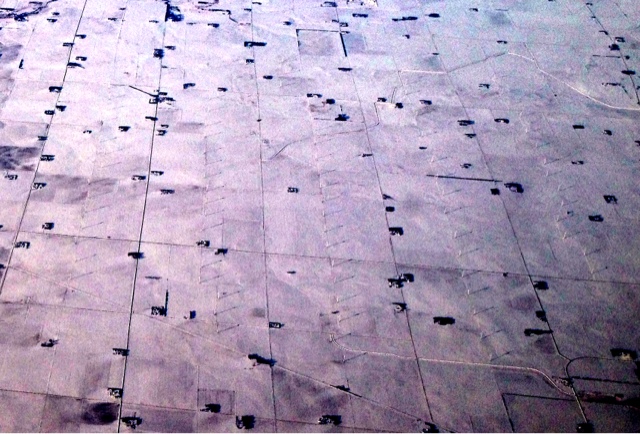
Iowa farms with wind field

A Road Whence


Turn right, here, to step onto the farm. Or, take the road projecting outward and away, curving, merging softly with grasses. 

A look back, all appears not as where I stood.

Taking the curve, the road now brief, with graminoid muff. 

And in a few short paces -the wood this road bisects. "Yet knowing how way leads on to way (R. Frost)," I turned back to see to what was needed.

Today we are hitting the road once again, making our way to Minnesota for the holiday. We tire of this driving, and each year plan to do it differently. But cat care, alternate side parking, and air fares at the last minute too, all conspire to have us driving. We plan to take make three 8 hour drives instead of two 12 hour stretches, a luxury given to us this year by extra work and a Tuesday Christmas. I will, at some point on this journey, make my way to Florida to see my mother and sister, and then return to Minnesota for the drive back. 

Check out my posting, thanks to a slowly improving Blogger Mobile app (two updates this year, but pictures still blur and lack placement), at Letters From the Big Woods. May you have a peaceful and joyful Christmas and New Year.


New Fields


I've been stalking this field for months now. We met in April for the first time, and now, 6 months later, I'm ready to get my hands dirty. Yet, no lease, or any official business on site other than our vague verbal agreement that I would be on this land at some time in the future, has me keeping my distance, has me looking on from afar.

The seed is coming in, the weather cooling, time growing short, and finally, finally, the organization has confirmed a meeting date, this coming Monday, 10 am, Amagansett time. Issues must be addressed, documents signed, tractor work discussed, implements implemented.

The land trust is taking a big risk with me- artist, city guy, employed, no farm experience, 3 hour commute. Each day I learn new difficulties for the farmer, the paperwork, labor, expenses, depreciation, codes and zoning, taxes and exemptions that have little to do with actually farming, but everything to do with having a farm business. It's no wonder the trust has a hard time filling their acres. It's no wonder that giant farms are the norm. Fulfilling all that is required can put a new farmer out of business before he even gets going.

I will try to keep it simple. I'm planting 8000 cloves and corms. Entirely unlikely that it will be profitable, but if I keep it simple, I may just break even.


Hudson Clove Live


Garlic ordering is on. The HUDSON CLOVE tab on the top left is now live -taking you directly to my garlic site. The site is functional, although a work in progress, and you will be able to order and pay through the site.


My mission here is to introduce into NYC the variety of organically-grown garlic that is available in other regions of the U.S. and world.  At NYC Greenmarket, you can buy two kinds of garlic -mostly conventionally grown Porcelain, while Keith's farm sells an organic Rocambole. No one grows and sells Silverskins or Artichoke, Turban or Asiatic -but they should! You want Turban and Asiatic because they will be cured earlier than anything farmers currently bring to market. Artichoke and Silverskin because these will last a long long time in a cool spot in your apartment and that means fresh garlic in the winter and maybe spring. The reason farmers aren't growing them is mostly a matter of practice, but also a matter of education and to some extent the difficulty of growing these varieties at scale. Ultimately, I would like to see my crop produce seed standard bulbs, so gardeners can buy seed bulbs that are already acclimated to our climate.

If you are willing, consider your purchase as a way to pay for last season's seed or a way to pay for half of this season's seed. Maybe you would rather pay for a portion of this season's acreage? Your bundle will pay for 10% of a year's rent -that is significant! Whatever your reason, this small amount helps support my chance to grow on a real farm with perfect soil for an even better garlic crop next season. 

Whew. Okay, the shop is open. We will have a pickup weekend this Saturday and Sunday at my studio during the GO weekend if you would rather not pay shipping and/or you would like to see my paintings. We will be open from 11 am to 7 pm, both days. If you order via our site, I will email you directions for the pickup. Or, you may simply come by and if I have any remaining garlic you can purchase it. Thanks!